
Buy Sweet Potatoes From Indonesia: 2026 Buyer's Guide
Complete guide for international buyers sourcing premium sweet potatoes from Indonesia. Quality standards, export logistics, and supplier selection.
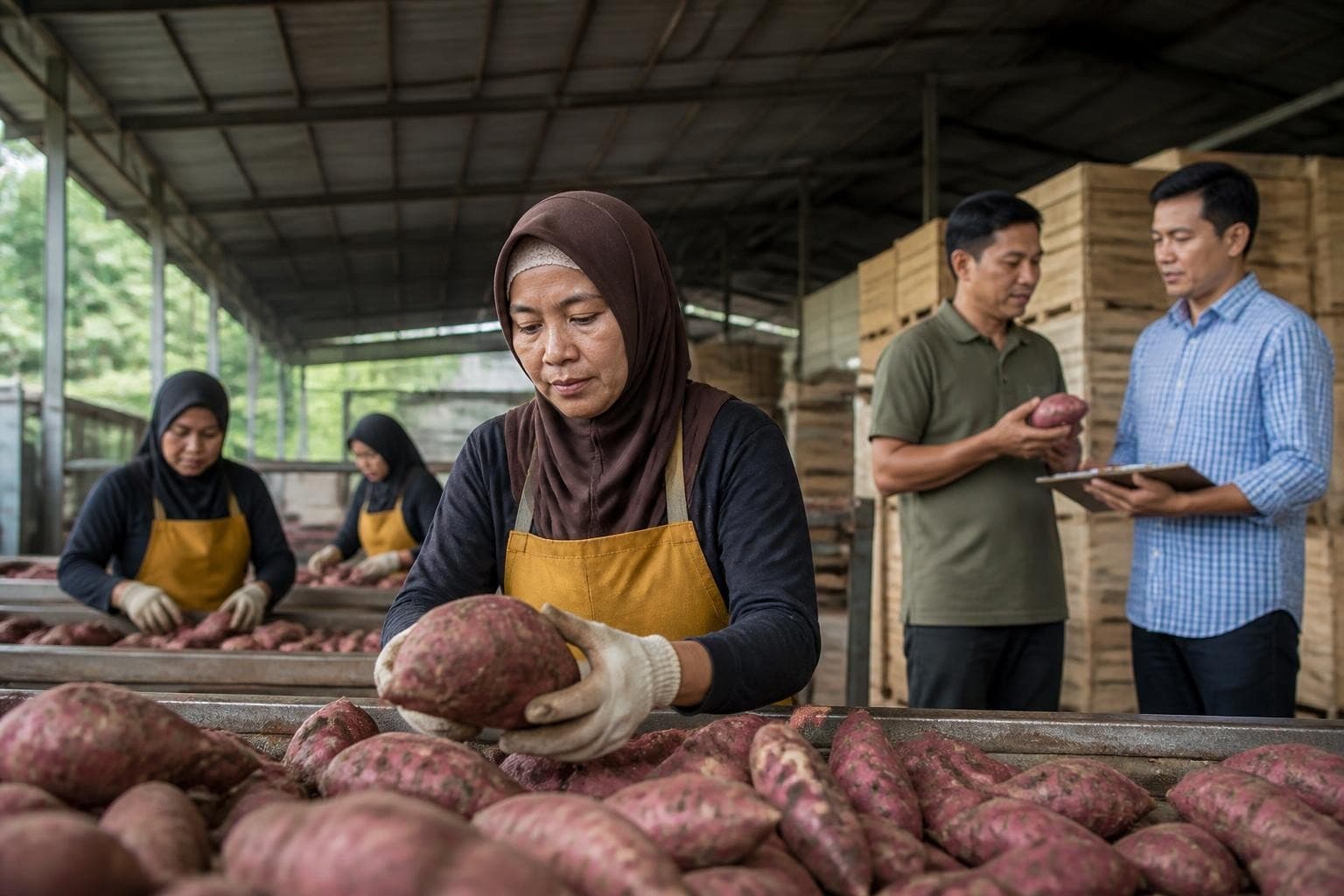
When international buyers evaluate global sweet potato sourcing options, Indonesia has emerged as a compelling origin for premium quality tubers with consistent supply chains and competitive pricing. The decision to buy sweet potatoes from Indonesia offers importers, distributors, and food manufacturers access to diverse varieties, favorable growing conditions, and established export infrastructure. As global demand for nutritious root vegetables continues to expand in 2026, understanding Indonesia's sweet potato industry becomes essential for buyers seeking reliable partnerships in Southeast Asia.
Indonesia's Sweet Potato Production Landscape
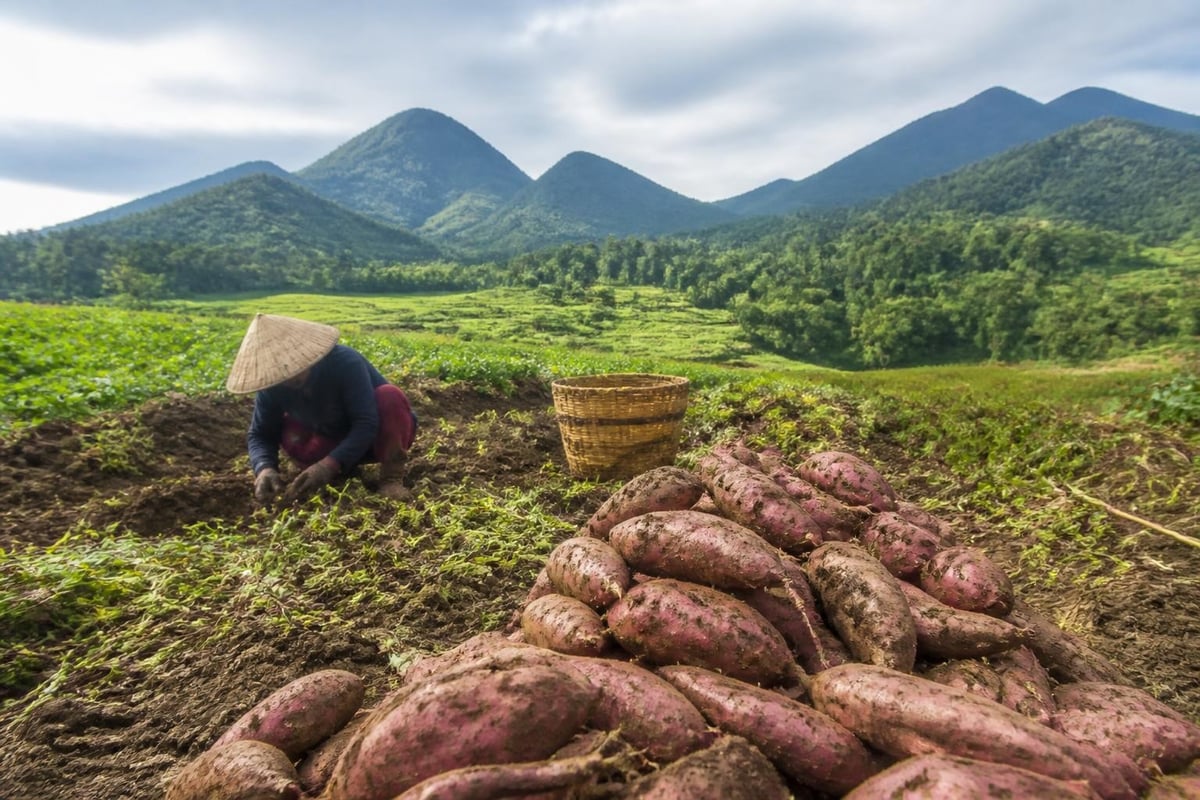
West Java has developed into Indonesia's primary sweet potato cultivation region, with specialized farming zones producing multiple varieties suited to international markets. The province's volcanic soil composition and tropical climate create ideal conditions for tuber development, yielding sweet potatoes with superior texture, natural sweetness, and extended shelf life compared to competing origins.
Partner farms in West Java employ controlled cultivation practices that balance traditional agricultural knowledge with modern quality standards. When buyers buy sweet potatoes from Indonesia, they benefit from farming systems designed specifically for export-grade production rather than domestic consumption.
Key Growing Regions and Varieties
| Region | Primary Varieties | Harvest Season | Export Volume Percentage |
|---|---|---|---|
| Bandung Highlands | Cilembu, Japanese Purple | April-August | 35% |
| Garut District | White-flesh, Orange | Year-round | 28% |
| Tasikmalaya | Murasaki, Honey | May-September | 22% |
| Sukabumi | Mixed varieties | March-October | 15% |
The Cilembu variety, known for its honey-like sweetness when baked, commands premium prices in export markets. Research into genotype-by-environment interactions in West Java has identified stable, high-performing varieties that maintain consistent quality across different growing conditions, reducing supply variability for international buyers.
Production practices directly influence export quality. Studies examining fertilizer application effects on local varieties demonstrate how controlled nutrient management enhances tuber characteristics that matter to buyers, including dry matter content, skin integrity, and storage stability.
Quality Standards and Grading Systems
Professional exporters apply multi-tier grading systems that align with international buyer expectations for size uniformity, appearance, and shelf life potential. When you buy sweet potatoes from Indonesia through established suppliers, products undergo systematic quality checks before export approval.
Export Grade Classifications
Premium Grade (Grade A)
- Diameter: 6-9 cm
- Length: 12-18 cm
- Skin condition: Smooth, unblemished
- Shape: Uniform, minimal irregularities
- Target markets: High-end retail, specialty stores
Standard Grade (Grade B)
- Diameter: 5-10 cm
- Length: 10-20 cm
- Minor cosmetic variations permitted
- Suitable for: Mainstream retail, food service
Processing Grade (Grade C)
- Variable sizing permitted
- Ideal for: Chip manufacturing, frozen products, purees
Quality assessment includes dry matter testing, sugar content measurement, and physical damage inspection. The sweet potatoes shelf life for export depends heavily on proper post-harvest handling and grade selection, making systematic classification essential for buyers managing inventory turnover.
Export Documentation and Compliance
International sweet potato trade requires comprehensive documentation addressing phytosanitary standards, food safety regulations, and import requirements specific to destination countries. Indonesian exporters must navigate these compliance frameworks to deliver legally compliant shipments.
Required Export Documentation
- Phytosanitary Certificate issued by Indonesian Agricultural Quarantine Agency
- Certificate of Origin from authorized chamber of commerce
- Packing List with detailed product specifications
- Commercial Invoice with accurate valuation
- Fumigation Certificate (when required by destination country)
- Health Certificate for certain markets
The Indonesian Agricultural Quarantine services provide official inspection and certification processes mandatory for export clearance. Understanding plant protection regulations for sweet potatoes helps buyers anticipate compliance requirements when planning shipments.
When importers buy sweet potatoes from Indonesia, they should verify that suppliers maintain current certification and understand destination-specific regulations. Documentation errors represent a primary cause of shipment delays and customs complications.
Pricing Structure and Market Dynamics
Indonesian sweet potato pricing reflects production costs, variety premiums, seasonal availability, and global market conditions. Current market pricing data for Indonesian sweet potatoes shows farmgate prices ranging from $0.35 to $0.75 per kilogram depending on variety and grade, with export unit values typically 40-60% higher after sorting, packing, and certification.

Price Influencing Factors
- Variety selection: Premium varieties command 20-35% price premiums
- Grade classification: Grade A products cost 15-25% more than Grade B
- Order volume: Bulk purchases over 20 metric tons receive volume discounts
- Packaging specifications: Custom packaging adds $0.08-$0.15 per kg
- Destination market: Freight costs vary significantly by region
Buyers should evaluate total landed cost rather than focusing exclusively on FOB prices. The decision to buy sweet potatoes from Indonesia often proves cost-effective when considering quality-adjusted pricing and supply reliability compared to alternative origins.
Harvest Cycles and Supply Planning
Understanding Indonesian sweet potato harvest patterns enables buyers to plan procurement calendars, manage inventory levels, and anticipate seasonal price fluctuations. Unlike some tropical crops with single annual harvests, Indonesian sweet potatoes offer staggered availability across different growing zones.
| Month | Primary Harvest Regions | Expected Supply Level | Quality Characteristics |
|---|---|---|---|
| Jan-Mar | Sukabumi, Garut | Medium | Good storage potential |
| Apr-Jun | Bandung, Tasikmalaya | High | Peak quality period |
| Jul-Sep | Multiple zones | High | Optimal sweetness |
| Oct-Dec | Garut (continuous) | Medium-High | Consistent availability |
Peak harvest periods from April through September deliver maximum quality and competitive pricing. Buyers who import sweet potatoes from Indonesia during these months benefit from wider variety selection and enhanced negotiating leverage with suppliers.
Packaging and Export Preparation
Professional packaging protects product quality during international transit while meeting buyer specifications and regulatory requirements. When you buy sweet potatoes from Indonesia from established exporters, packaging systems should balance protection, ventilation, and presentation requirements.
Standard Export Packaging Options
Mesh Bags (10kg)
- Cost-effective for bulk shipments
- Excellent ventilation
- Standard sizing: 10kg, 20kg
- Suitable for: Wholesale distributors, processing facilities
Carton Boxes (5kg, 10kg)
- Enhanced protection
- Retail-ready presentation
- Customizable branding
- Target buyers: Retail chains, importers serving premium segments
Ventilated Plastic Crates
- Reusable option
- Maximum protection
- Higher initial cost
- Ideal for: High-value varieties, long-distance shipment
Details on sweet potatoes export packaging standards help buyers specify requirements during procurement negotiations. Proper packaging directly impacts arrival quality and reduces claims related to transit damage.
Logistics and Shipping Considerations
Indonesian sweet potato exports utilize multiple shipping modes depending on destination, volume, and buyer urgency requirements. The majority of shipments move via refrigerated containers through major ports including Jakarta's Tanjung Priok and Surabaya.
Shipping Mode Comparison
- Refrigerated Container (20ft): Holds 18-22 metric tons, transit time 15-35 days to major markets, optimal for quality preservation
- Ambient Container: Lower cost, suitable for short-haul destinations, requires careful loading and season selection
- Air Freight: Premium option for samples or urgent orders, limited volume capacity
Temperature management during transit proves critical for maintaining premium Indonesian sweet potato quality. Recommended storage temperature ranges from 13-16°C with 85-90% relative humidity to prevent chilling injury while controlling sprouting and decay.
Transit insurance, container tracking, and clear incoterms agreement protect both buyers and sellers during international shipment. Buyers should clarify responsibility for logistics costs and quality guarantees when negotiating purchase agreements.
Supplier Evaluation Criteria

Selecting the right Indonesian supplier determines long-term sourcing success beyond individual transactions. When buyers evaluate options to buy sweet potatoes from Indonesia, systematic supplier assessment reduces risk and establishes foundation for reliable partnerships.
Critical Assessment Factors
Farm Network and Traceability
- Direct farm partnerships versus broker relationships
- Geographic diversification of growing zones
- Traceability systems from field to container
- Capacity to scale volume on demand
Quality Management Systems
- Grading facility capabilities and equipment
- Cold storage infrastructure
- Internal quality control protocols
- Testing laboratory access
Export Track Record
- Years of export experience
- Market diversification
- Customer references and testimonials
- Claims history and resolution approach
Financial Stability
- Company registration and legal standing
- Payment term flexibility
- Insurance coverage
- Banking relationships for trade finance
Choosing among sweet potato manufacturers in Indonesia requires due diligence beyond price comparison. Visit supplier facilities when possible, request sample shipments, and verify certifications through independent channels.
Market Demand and Export Statistics
Indonesia's sweet potato export industry serves diverse international markets with growing demand for nutritious, versatile root vegetables. Trade statistics for Indonesian sweet potato exports reveal consistent growth in both volume and value, reflecting Indonesia's expanding role in global supply chains.
Top Export Destinations (2024 data)
- Malaysia: 35% of total export volume
- Singapore: 22%
- Hong Kong: 15%
- Japan: 12%
- Middle East markets: 9%
- Europe and other: 7%
These export patterns demonstrate established logistics networks and proven capability to meet diverse market requirements. Buyers in existing destination markets benefit from refined shipping routes and experienced handling, while emerging markets represent expansion opportunities for both suppliers and importers.
Nutritional Advantages and Market Positioning
The decision to buy sweet potatoes from Indonesia aligns with consumer trends toward nutrient-dense, naturally sweet vegetables suitable for health-conscious demographics. Indonesian varieties offer compelling nutritional profiles that support premium market positioning.
Understanding the sweet potato glycemic index helps retailers and food manufacturers position products appropriately for diabetic-friendly and weight management applications. The sweet potato versus white potato nutritional comparison reveals advantages in vitamin A content, fiber density, and antioxidant levels that justify premium pricing in health food channels.
Retail buyers can leverage these nutritional attributes in marketing campaigns, while food manufacturers benefit from consistent functional properties in processing applications. Indonesian sweet potatoes perform well in products ranging from baby food to ready-to-eat meals and snack applications.
Building Long-Term Supplier Relationships
Successful international sourcing extends beyond transactional purchasing toward strategic partnerships that deliver mutual benefits over multiple seasons. When buyers commit to buy sweet potatoes from Indonesia through established relationships, both parties invest in communication systems, quality expectations, and supply planning that reduce friction and improve outcomes.
Partnership Best Practices
Clear Communication Protocols
- Designated contact persons on both sides
- Regular quality feedback loops
- Advance notice of volume changes
- Transparent discussion of challenges
Aligned Incentives
- Fair pricing that sustains supplier quality investment
- Volume commitments that justify farm planning
- Payment terms balanced for both parties
- Quality bonus structures for consistency
Continuous Improvement
- Joint quality standard development
- Collaborative problem-solving on logistics
- Shared market intelligence
- Long-term capacity planning
PT Cakra Baja Niaga exemplifies these partnership principles through direct collaboration with West Java farms, ensuring buyers receive consistent quality while farmers benefit from reliable off-take agreements and technical support.
Risk Management in International Procurement
Effective buyers develop comprehensive risk mitigation strategies addressing quality variation, supply disruption, regulatory changes, and market volatility. Understanding these risks before you buy sweet potatoes from Indonesia enables proactive management rather than reactive crisis response.
Key Risk Categories and Mitigation Approaches
| Risk Type | Potential Impact | Mitigation Strategy |
|---|---|---|
| Quality inconsistency | Customer complaints, returns | Detailed specifications, pre-shipment inspection, sample approval |
| Supply shortage | Inventory gaps, lost sales | Multi-supplier strategy, volume forecasting, seasonal planning |
| Regulatory changes | Customs delays, compliance costs | Monitor import regulations, work with experienced exporters |
| Currency fluctuation | Cost volatility | Forward contracts, price review clauses, multi-currency options |
| Transit damage | Quality claims, waste | Proper packaging, insurance coverage, carrier selection |
Working with bulk sweet potato suppliers who maintain quality systems and transparent communication reduces many operational risks. Establishing contingency suppliers in different regions provides backup options during unexpected supply challenges.
Indonesian sweet potato exports offer international buyers a compelling combination of quality, variety selection, competitive pricing, and reliable supply chains backed by experienced exporters. Success in this market requires understanding cultivation practices, quality standards, compliance requirements, and logistics considerations that differentiate professional procurement from opportunistic purchasing. PT Cakra Baja Niaga partners directly with West Java farms to deliver premium sweet potatoes meeting international buyer specifications with transparent quality systems and dependable export service. Contact our export team today to discuss your requirements, request product samples, or receive detailed quotations for your next shipment.
Looking to source premium Indonesian sweet potatoes?
PT Cakra Baja Niaga supplies export-grade Cilembu, Purple, and Murasaki varieties to buyers worldwide.
Continue reading
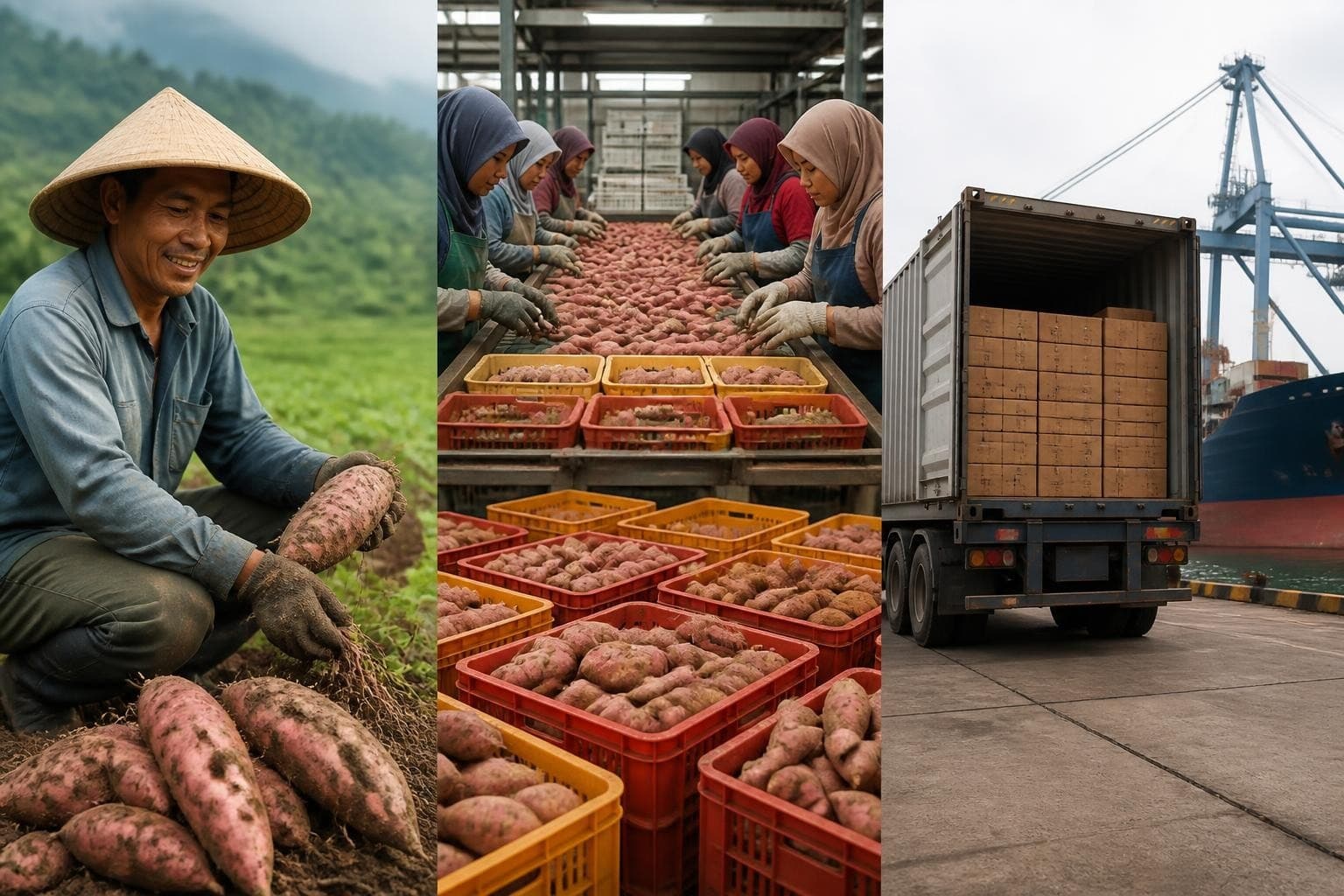
Wholesale Sweet Potatoes Indonesia: B2B Export Guide 2026
Source premium wholesale sweet potatoes Indonesia for import. Quality standards, export logistics, varieties, pricing & supplier partnerships.
Read article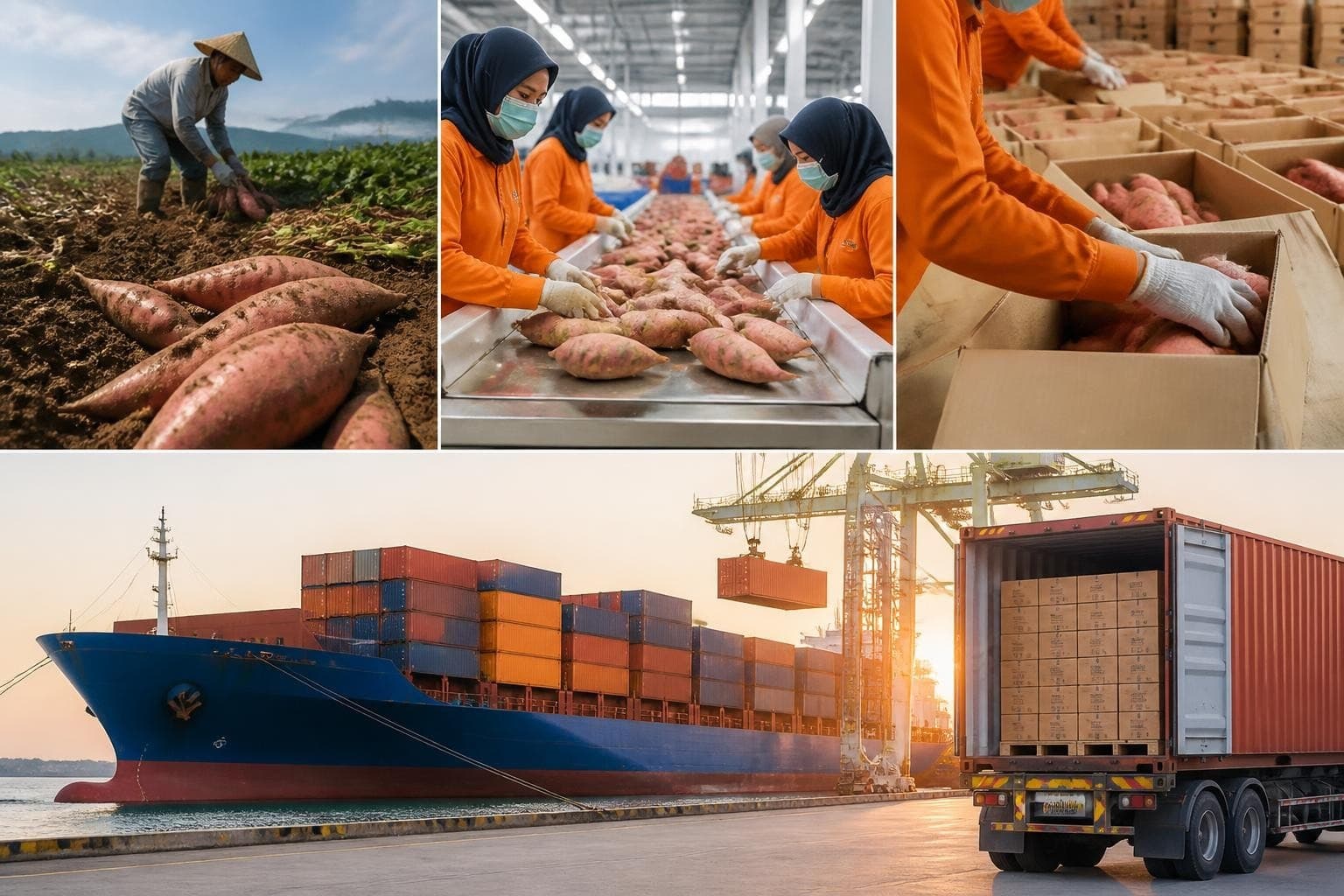
Sweet Potatoes Supplier Indonesia: Quality & Export Guide
Find reliable sweet potatoes supplier Indonesia offering premium export quality. Learn about sourcing, grading, logistics, and partnerships.
Read article
Sweet Potatoes Grading Guide for International Buyers
Comprehensive sweet potatoes grading guide for exporters and importers. Learn USDA standards, size classification, defect tolerance, and quality control.
Read article