
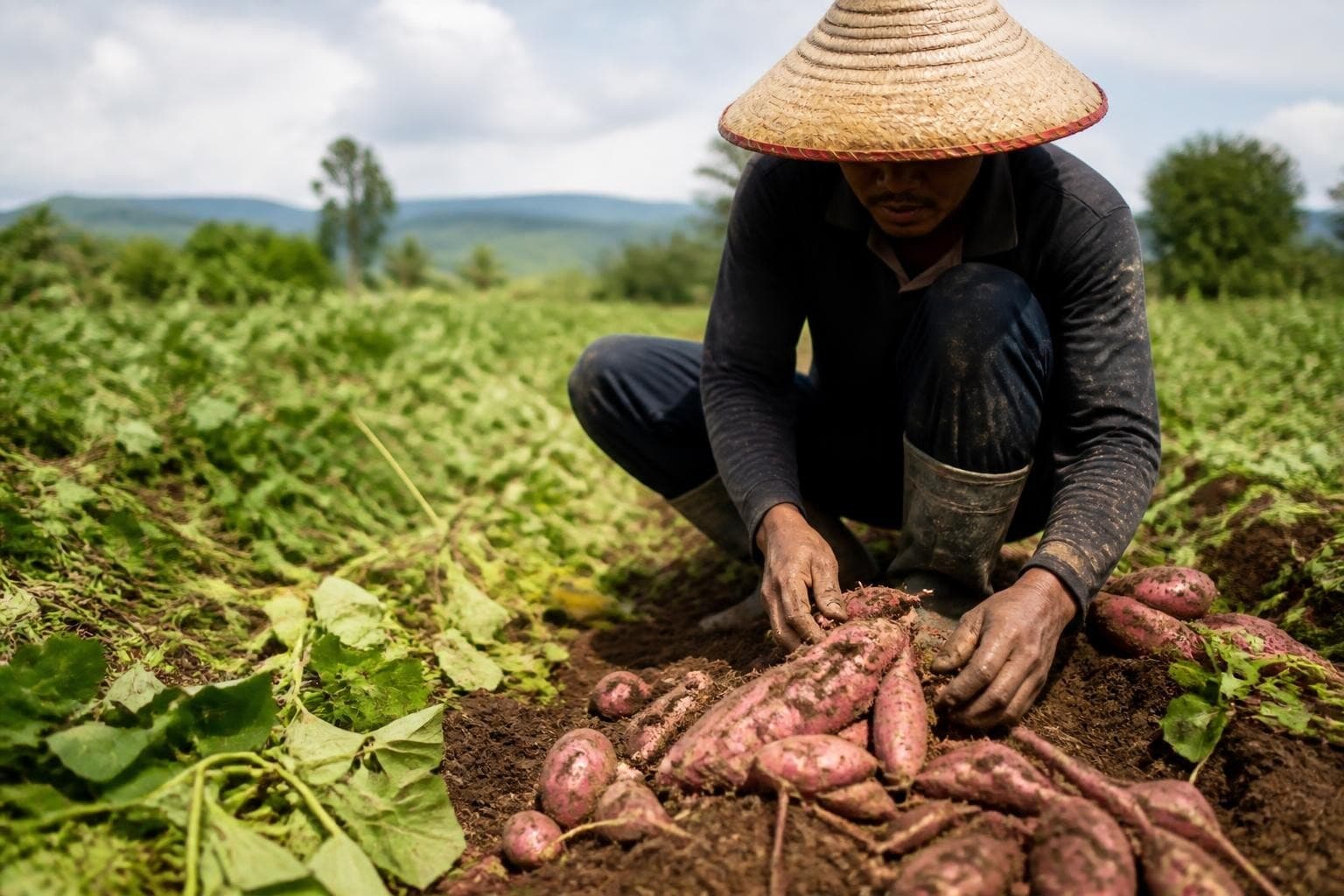
Sweet Potatoes Farming in Indonesia: Production Guide
Comprehensive guide to sweet potatoes farming in Indonesia, covering cultivation regions, quality standards, and export opportunities in 2026.
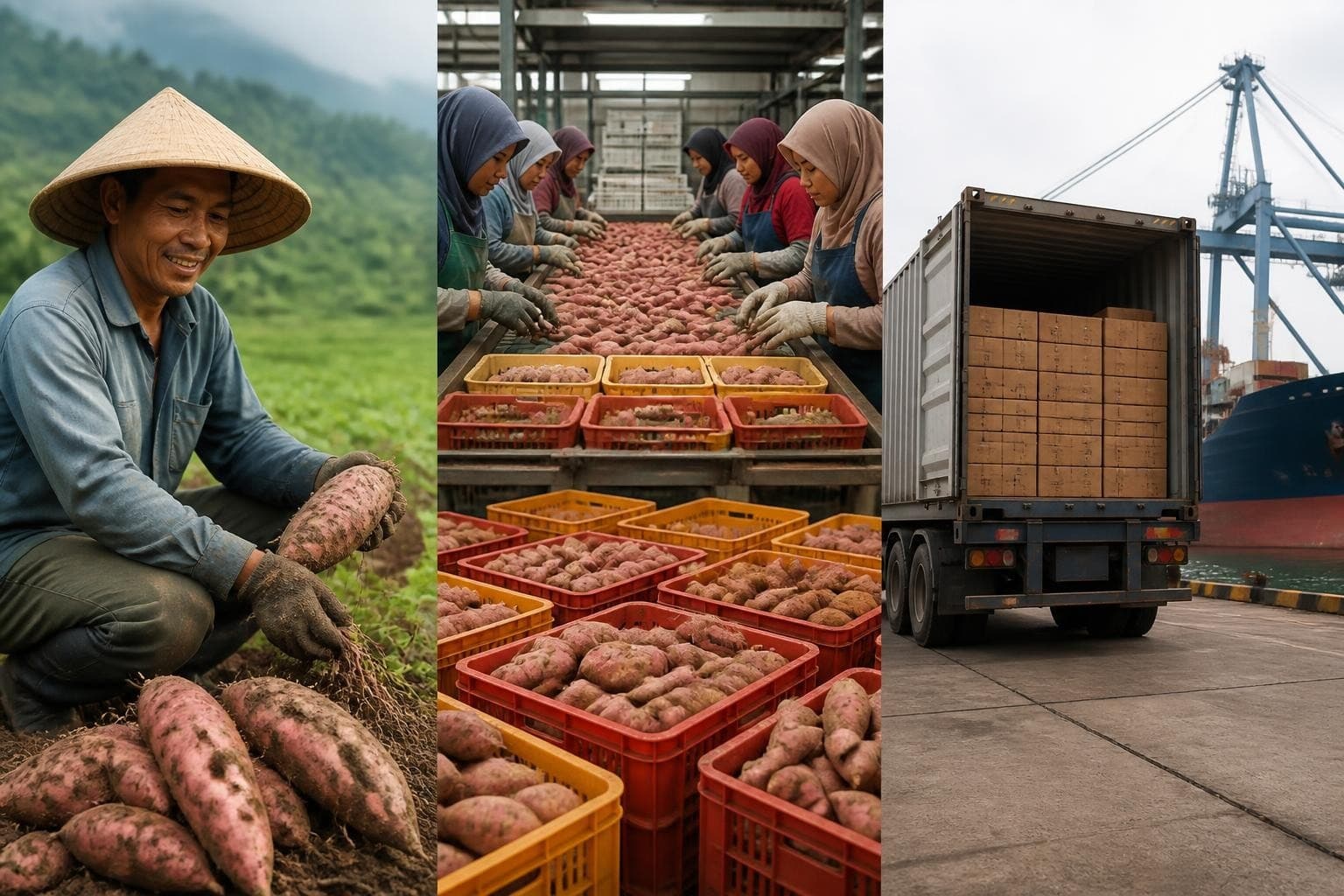
Indonesia has emerged as a significant producer of sweet potatoes in Southeast Asia, with cultivation spanning multiple regions from Java to Papua. The country's tropical climate, volcanic soil composition, and established agricultural infrastructure create ideal conditions for year-round production. For international buyers seeking reliable sourcing partners, understanding the fundamentals of sweet potatoes farming in Indonesia provides essential insights into quality, supply chain management, and export capabilities.
Geographic Distribution and Production Regions
Sweet potatoes farming in Indonesia concentrates in several key provinces, each offering distinct advantages for cultivation and export logistics. West Java leads national production, particularly in the highland areas of Garut, Kuningan, and Bandung districts. The region's volcanic soil enriches tubers with superior flavor profiles and nutritional density, making West Java varieties highly sought after in international markets.
Central Java and East Java contribute substantial volumes, with traditional farming communities maintaining generations of cultivation expertise. Papua, particularly the Merauke district, has expanded production significantly over the past decade, benefiting from government agricultural development programs. This eastern region provides comparative production data across different varieties, helping buyers understand regional quality variations.
Climate and Soil Requirements
Indonesian sweet potato cultivation thrives in altitudes ranging from sea level to 1,500 meters above sea level. Highland regions produce sweeter varieties due to temperature fluctuations between day and night, while lowland areas yield larger tubers with different starch compositions. The optimal temperature range spans 21-27°C, with annual rainfall between 750-1,500mm supporting healthy vine growth without excessive moisture.
Soil pH requirements typically fall between 5.5 and 6.5, which Indonesian volcanic and alluvial soils naturally provide. Proper drainage remains critical, as waterlogged conditions promote root rot and reduce marketable yield. Farmers in West Java have perfected raised bed techniques that enhance drainage while maximizing land utilization, a practice that contributes to the region's reputation for premium quality production.
Cultivation Practices and Farm Management
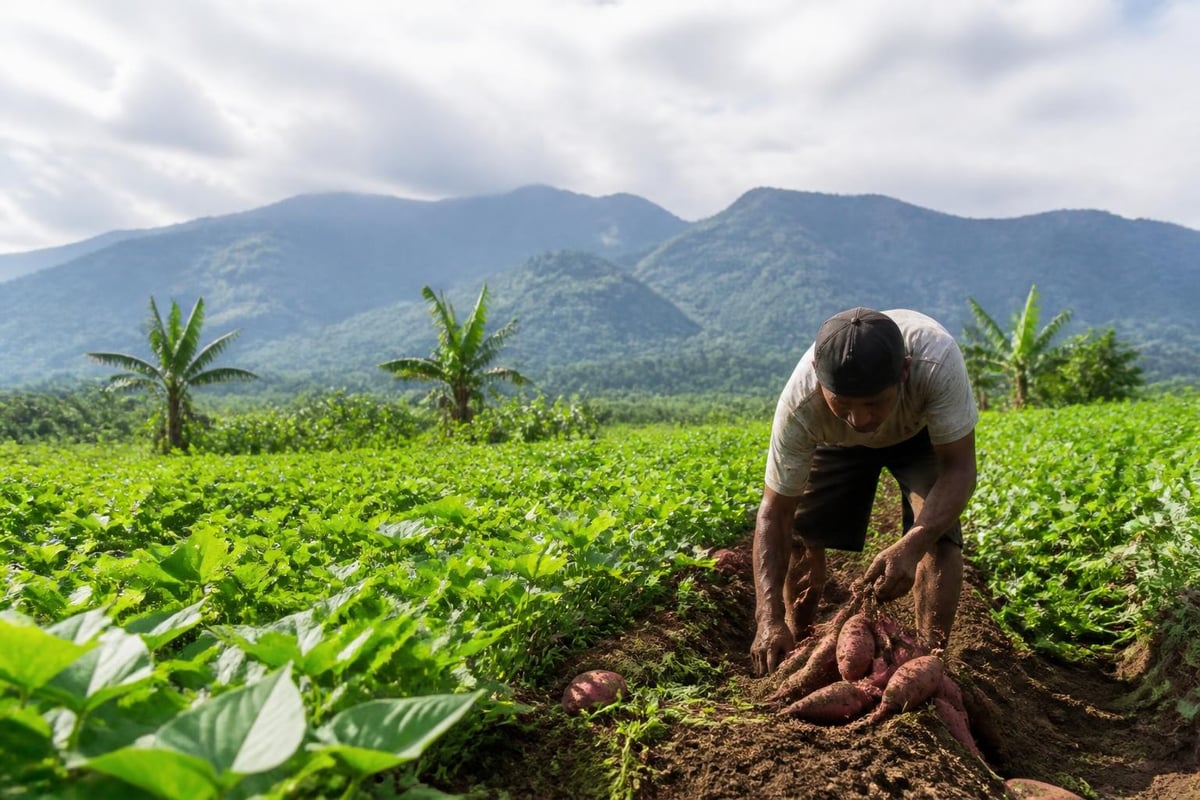
Modern sweet potatoes farming in Indonesia combines traditional knowledge with contemporary agricultural science. Planting typically occurs during the early rainy season, with farmers selecting vine cuttings from disease-free mother plants. Each cutting measures 20-30cm in length with 5-7 nodes, ensuring vigorous rooting and consistent stand establishment.
Key cultivation steps include:
- Land preparation with organic matter incorporation
- Ridge or mound formation for improved drainage
- Vine cutting selection and treatment
- Planting at 25-30cm spacing within rows
- Weed management during first 60 days
- Minimal irrigation in established fields
The sustainable development strategies employed by Cilembu sweet potato farmers demonstrate how ecological practices enhance long-term productivity. These methods balance soil health, water conservation, and pest management without compromising yield or quality standards required for export markets.
Irrigation Management
Water management significantly impacts both yield and economic returns in Indonesian sweet potato production. Research comparing different irrigation techniques among Cilembu farmers reveals that controlled irrigation systems increase net income by 30-40% compared to rain-fed cultivation. However, most smallholder farms rely on natural rainfall supplemented by manual watering during dry spells.
Drip irrigation adoption remains limited but growing, particularly among contract farming operations supplying export markets. This technology reduces water consumption by 50% while improving tuber uniformity, a critical factor for international buyers requiring consistent grading. The investment cost presents barriers for individual farmers, though cooperative models are expanding access to modern irrigation infrastructure.
Variety Selection and Market Preferences
Indonesia cultivates multiple sweet potato varieties, each with distinct characteristics appealing to different market segments. The famous Cilembu variety from West Java develops exceptional sweetness when baked, with natural honey-like syrup formation. This variety commands premium prices in domestic and export markets, particularly in East Asian countries where consumers appreciate its unique flavor profile.
Orange-fleshed varieties dominate commercial production due to high beta-carotene content and extended shelf life during international shipping. Purple-fleshed types are gaining market share, driven by increasing consumer awareness of anthocyanin health benefits. Understanding the diverse colors of sweet potatoes helps buyers match variety selection with target market preferences.
| Variety Type | Flesh Color | Primary Markets | Shelf Life | Key Attributes |
|---|---|---|---|---|
| Cilembu | Light yellow | Japan, Singapore | 45-60 days | High sugar content, honey notes |
| Beta varieties | Orange | Europe, Middle East | 60-75 days | High beta-carotene, disease resistant |
| Purple varieties | Deep purple | South Korea, Taiwan | 50-65 days | High anthocyanin, unique color |
| White varieties | White/cream | Traditional markets | 55-70 days | Neutral flavor, versatile applications |
Harvesting and Post-Harvest Handling
Sweet potatoes farming in Indonesia typically reaches harvest maturity 90-120 days after planting, depending on variety and growing conditions. Farmers monitor leaf yellowing and vine dieback as indicators of tuber readiness. Premature harvesting reduces sugar development and storage potential, while delayed harvesting increases the risk of pest damage and quality degradation.
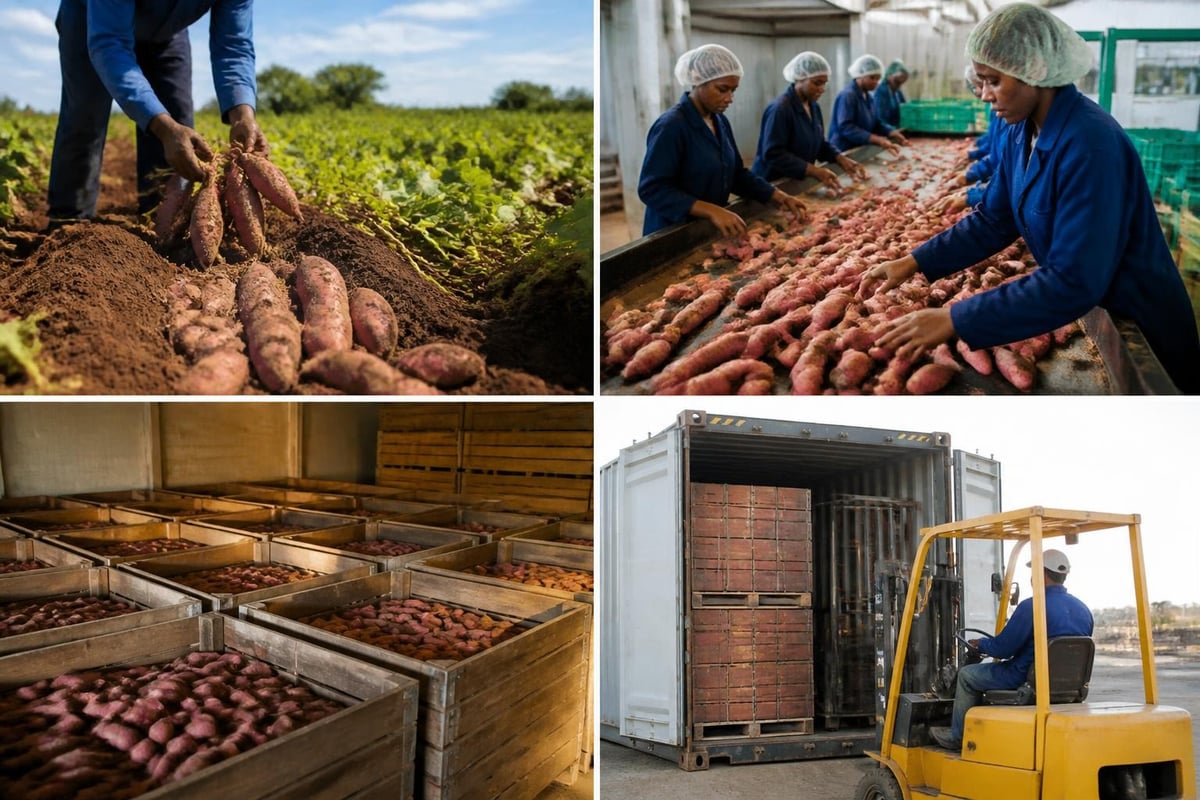
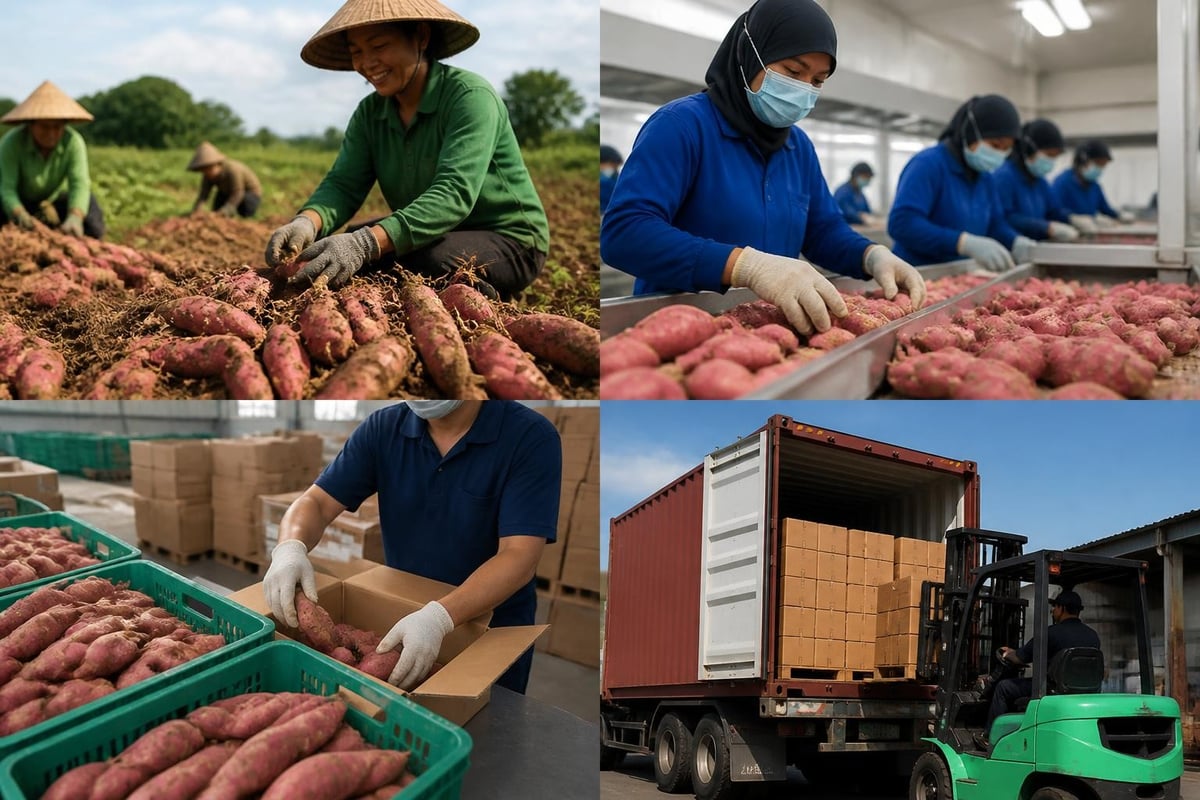
Manual harvesting remains standard practice, with workers using hand tools to carefully extract tubers without surface damage. Mechanical harvesting equipment exists but sees limited adoption due to farm size constraints and terrain challenges. Each tuber undergoes immediate field sorting to remove damaged, diseased, or undersized specimens that fail to meet export specifications.
Curing and Storage Protocols
Proper curing transforms freshly harvested sweet potatoes into export-ready products with extended shelf life. The process involves holding tubers at 28-30°C with 85-90% relative humidity for 7-10 days. This treatment heals minor skin injuries, converts starches to sugars, and develops the protective cork layer essential for international shipping.
Temperature-controlled storage facilities maintain tubers at 13-15°C with 85% humidity, preventing sprouting while minimizing moisture loss. These conditions support 4-6 month storage periods when properly managed, enabling suppliers to maintain consistent export volumes throughout the year. The sweet potatoes harvest cycle coordination with post-harvest infrastructure determines export reliability and quality consistency.
Quality Standards and Export Grading
International buyers require standardized grading systems that ensure consistent product specifications across shipments. Indonesian sweet potato exporters typically employ grading criteria based on size, shape, skin quality, and flesh characteristics. Premium export grades feature uniform sizing between 150-400 grams, smooth unblemished skin, and regular elongated shapes preferred by retail markets.
Export grading parameters:
- Size classification by weight ranges (S, M, L, XL)
- Shape uniformity with length-to-diameter ratios
- Skin condition free from cuts, cracks, or discoloration
- Flesh quality without internal defects or fiber damage
- Variety purity maintaining consistent type throughout lots
Defect tolerance varies by market destination and buyer specifications, but export standards generally limit blemished tubers to less than 5% by weight per shipment. Understanding these requirements helps farmers implement quality control measures during cultivation and harvest operations, reducing rejection rates and maximizing export value.
Food Safety and Certification Requirements
Sweet potatoes farming in Indonesia increasingly adopts Good Agricultural Practices (GAP) certification to meet international food safety standards. These protocols address pesticide residue limits, heavy metal contamination, and microbial safety throughout the production chain. Export-oriented farms maintain detailed record-keeping systems documenting input applications, harvest dates, and handling procedures.
Third-party certification programs such as GlobalGAP provide market access advantages, particularly for European Union destinations with stringent import regulations. While certification costs present barriers for smallholder farmers, cooperative models distribute expenses across membership while enabling collective market access. Traceability systems linking individual farm lots to export shipments support rapid response capabilities if quality issues arise.
Economic Analysis and Profitability
The financial viability of sweet potato farming in regions like West Sumatra demonstrates positive returns under proper management. Production costs average $1,200-1,800 per hectare, including land preparation, planting materials, fertilizers, labor, and harvest expenses. Yields typically range from 15-25 tons per hectare, with premium varieties achieving higher prices offsetting lower volume production.
Contract farming arrangements with established exporters like those specializing in premium Indonesian sweet potatoes provide price stability and technical support. These partnerships guarantee market access while transferring quality requirements directly to production planning. Farmers benefit from advance payments, agronomic assistance, and reduced marketing risks compared to spot market sales.
| Cost Category | Amount per Hectare | Percentage of Total |
|---|---|---|
| Land preparation | $180-250 | 15% |
| Planting materials | $120-180 | 10% |
| Fertilizers & amendments | $240-360 | 20% |
| Pest & disease management | $120-180 | 10% |
| Irrigation & water | $60-120 | 7% |
| Labor (planting to harvest) | $360-540 | 30% |
| Harvest & post-harvest | $120-180 | 10% |
Market Channels and Export Logistics
Indonesian sweet potato exports reach international markets through multiple channels, with direct exporter relationships offering the most favorable terms for farmers. Middlemen and local collectors traditionally dominated rural procurement, but modern supply chains increasingly bypass intermediaries through farmer cooperatives and contract production systems.
Export packaging requirements demand investment in proper materials and handling equipment. Ventilated cartons ranging from 10-15kg net weight suit most international shipping protocols, with inner packaging protecting individual tubers during transport. Temperature-controlled container shipping maintains cold chain integrity, essential for sweet potatoes export packaging that arrives in saleable condition after 15-30 day ocean voyages.
Challenges and Risk Management
Sweet potatoes farming in Indonesia faces several production challenges that impact export reliability and quality consistency. Weather variability associated with El Niño and La Niña cycles creates unpredictable growing conditions, affecting both planting schedules and yield outcomes. Drought stress during tuber formation reduces size and quality, while excessive rainfall promotes disease pressure and harvest delays.
Pest and disease management requires integrated approaches combining cultural practices, biological controls, and judicious chemical applications. Sweet potato weevil remains the most economically significant pest, capable of rendering entire crops unmarketable if infestations go uncontrolled. Viral diseases transmitted through infected planting materials necessitate clean seed systems and regular field monitoring.
Primary risk factors include:
- Weather pattern unpredictability affecting yields
- Pest and disease pressure reducing marketable production
- Price volatility in domestic and export markets
- Limited access to quality planting materials
- Post-harvest losses from inadequate infrastructure
Climate adaptation strategies incorporate variety selection for stress tolerance, adjusted planting calendars based on seasonal forecasting, and diversified production across multiple locations. These approaches help exporters maintain supply commitments despite localized production disruptions.
Technology Adoption and Innovation
Modern sweet potatoes farming in Indonesia gradually incorporates precision agriculture technologies that enhance productivity and quality. Soil testing services guide fertilizer application rates based on nutrient deficiency diagnosis rather than blanket recommendations. This targeted approach reduces input costs while optimizing tuber development for desired market specifications.
Drone technology supports field monitoring at commercial farms, identifying stressed areas requiring intervention before yield losses occur. Mobile applications connecting farmers with extension services provide real-time agronomic advice and market information. These digital tools remain concentrated among larger operations and progressive farmer groups, though government initiatives aim to expand access across smallholder communities.
Sustainability and Environmental Considerations
Environmental stewardship increasingly influences sweet potatoes farming in Indonesia as export markets demand documented sustainability practices. Organic production methods serve niche market segments willing to pay premium prices for certified products. Reduced tillage systems protect soil structure and minimize erosion on sloped terrain common in highland production areas.
Integrated pest management reduces chemical inputs through biological control agents and trap cropping systems. Cover cropping between production cycles builds soil organic matter while suppressing weeds and breaking pest cycles. These practices align with buyer expectations for responsible sourcing while improving long-term farm productivity and resilience.
Water Conservation Strategies
Water scarcity concerns drive adoption of moisture conservation techniques, particularly in regions experiencing extended dry seasons. Mulching with rice straw or plastic films reduces evaporation while moderating soil temperature fluctuations. Rainwater harvesting systems capture monsoon precipitation for supplemental irrigation during critical growth stages.
Efficient irrigation scheduling based on soil moisture monitoring prevents water waste while maintaining optimal growing conditions. These conservation measures become increasingly important as climate change alters traditional rainfall patterns and agricultural water availability faces competition from urban and industrial demands.
Cooperative Models and Farmer Organizations
Farmer cooperatives play crucial roles in sweet potatoes farming in Indonesia by aggregating production volumes sufficient for export contracts. These organizations provide members access to quality planting materials, technical training, and collective bargaining power with buyers. Cooperative packing facilities enable consistent grading and packaging that individual farmers cannot achieve independently.
Financial services including crop insurance and working capital loans help farmers manage seasonal cash flow requirements. Extension programs operated through cooperative structures disseminate best practices more effectively than government services alone. Successful cooperatives maintain transparent governance and equitable benefit distribution, building trust essential for long-term member commitment.
Future Outlook and Market Opportunities
Export demand for Indonesian sweet potatoes continues expanding as international consumers recognize nutritional benefits and culinary versatility. Health-conscious markets particularly value orange and purple varieties for their functional food properties. The growing interest in bulk sweet potatoes supplier relationships reflects buyer preferences for reliable single-source partnerships rather than fragmented procurement.
Value-added processing opportunities including frozen products, dried chips, and flour production offer margin enhancement potential beyond fresh exports. These products extend shelf life, reduce shipping costs per nutritional unit, and access different market channels. Investment in processing infrastructure remains limited but represents significant growth potential for forward-thinking exporters.
Government support programs targeting agricultural export competitiveness provide infrastructure development funding, market access facilitation, and capacity building initiatives. These investments strengthen Indonesia's position as a preferred sweet potato supplier to markets throughout Asia, the Middle East, and beyond. Understanding how to import sweet potatoes from Indonesia helps international buyers navigate regulatory requirements and establish efficient supply chains.
Sweet potatoes farming in Indonesia offers international buyers access to high-quality production from diverse growing regions supported by improving infrastructure and professional export capabilities. Understanding cultivation practices, quality standards, and supply chain logistics enables informed sourcing decisions that balance cost, quality, and reliability. PT Cakra Baja Niaga works directly with partner farms in West Java to provide consistent premium sweet potatoes backed by transparent quality control and dependable export logistics. Contact us today for detailed product specifications, competitive quotations, and sample shipments tailored to your market requirements.
Looking to source premium Indonesian sweet potatoes?
PT Cakra Baja Niaga supplies export-grade Cilembu, Purple, and Murasaki varieties to buyers worldwide.
Continue reading
Wholesale Sweet Potatoes Indonesia: B2B Export Guide 2026
Source premium wholesale sweet potatoes Indonesia for import. Quality standards, export logistics, varieties, pricing & supplier partnerships.
Read article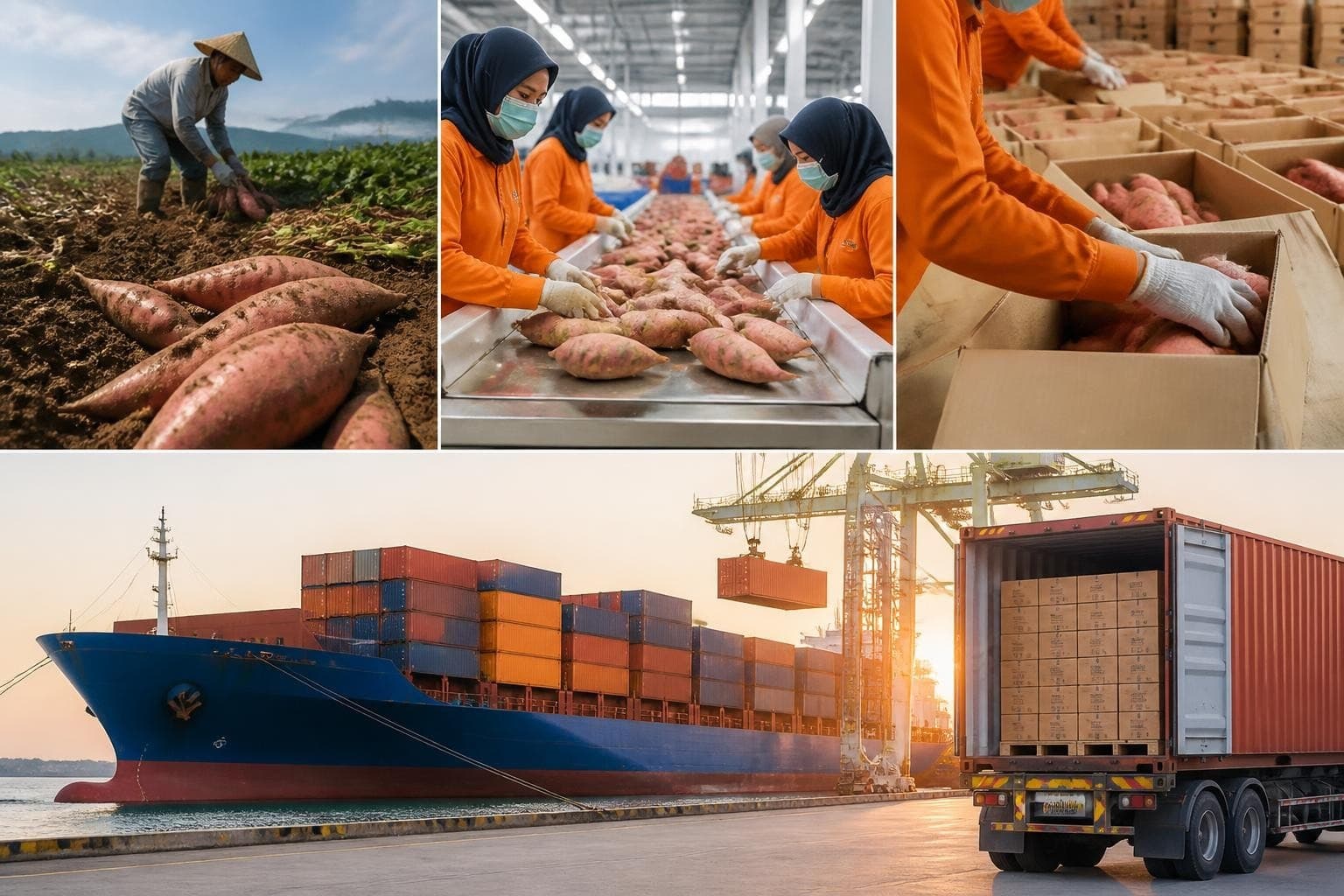
Sweet Potatoes Supplier Indonesia: Quality & Export Guide
Find reliable sweet potatoes supplier Indonesia offering premium export quality. Learn about sourcing, grading, logistics, and partnerships.
Read article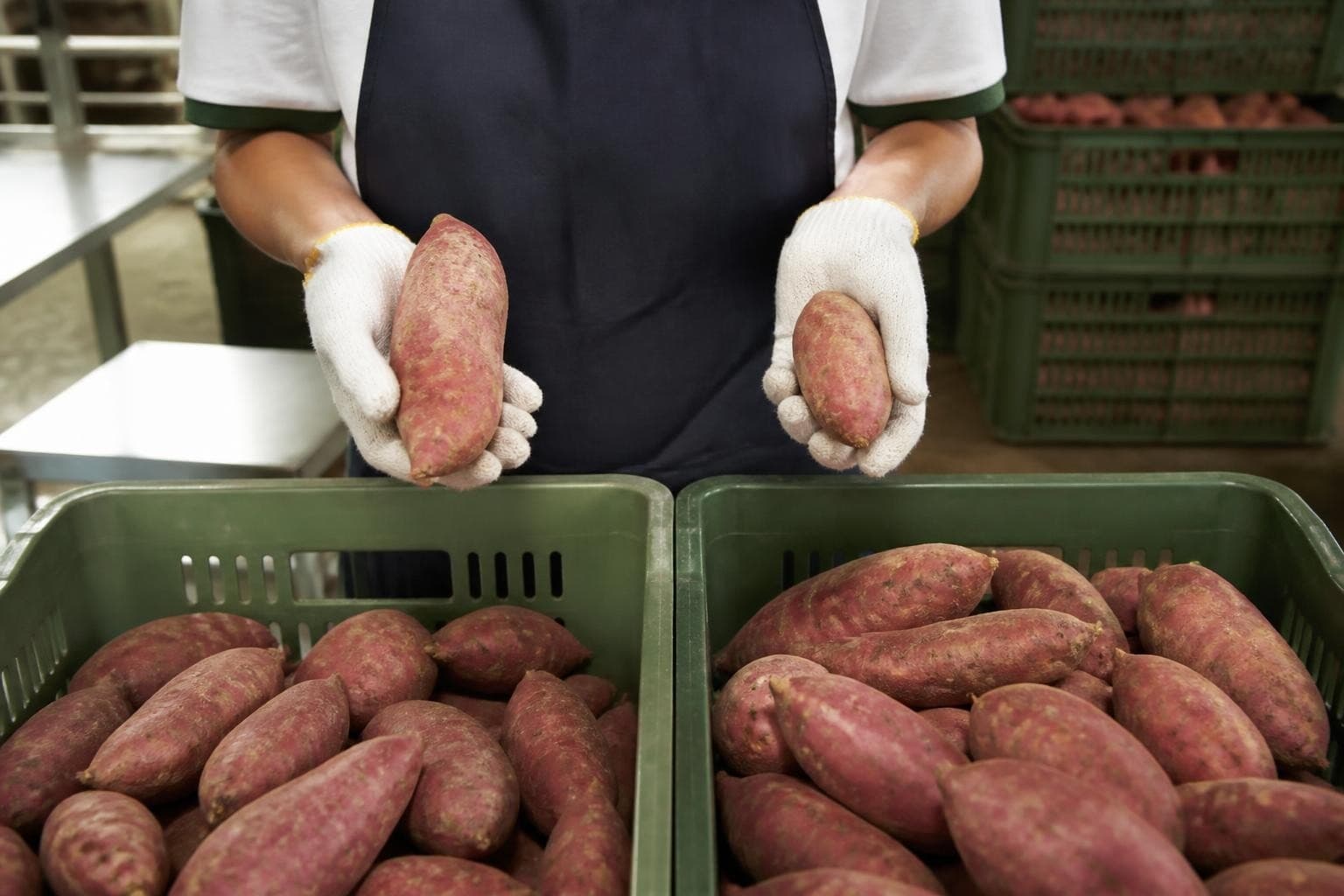
Sweet Potatoes Grading Guide for International Buyers
Comprehensive sweet potatoes grading guide for exporters and importers. Learn USDA standards, size classification, defect tolerance, and quality control.
Read article