
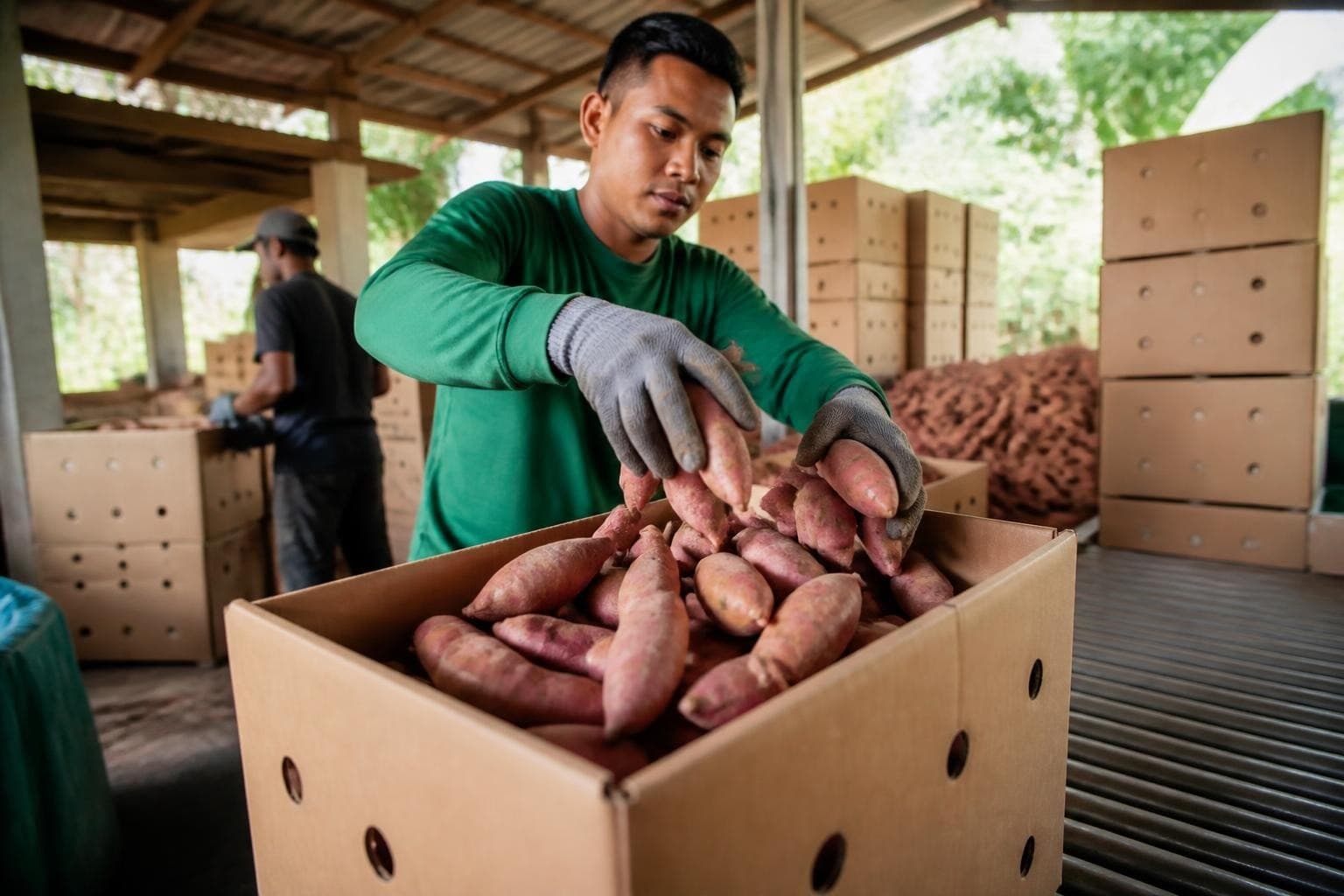
Sweet Potatoes Export Packaging: A Complete Guide for International Buyers
Comprehensive guide to sweet potatoes export packaging standards, materials, compliance requirements, and quality protection for international shipments.
International buyers of sweet potatoes face one major challenge during long-distance transportation: maintaining product quality from the farm to the final destination. The difference between receiving premium-grade produce and receiving damaged or spoiled goods often comes down to proper packaging.
For Indonesian sweet potato exporters, sweet potatoes export packaging is more than a logistics requirement. It directly affects shelf life, product appearance, shipping efficiency, regulatory compliance, and buyer satisfaction.
Choosing the right packaging materials, ventilation, palletization, labeling, and handling procedures helps exporters deliver sweet potatoes in excellent condition while reducing losses and building long-term relationships with international buyers.
Understanding International Packaging Standards
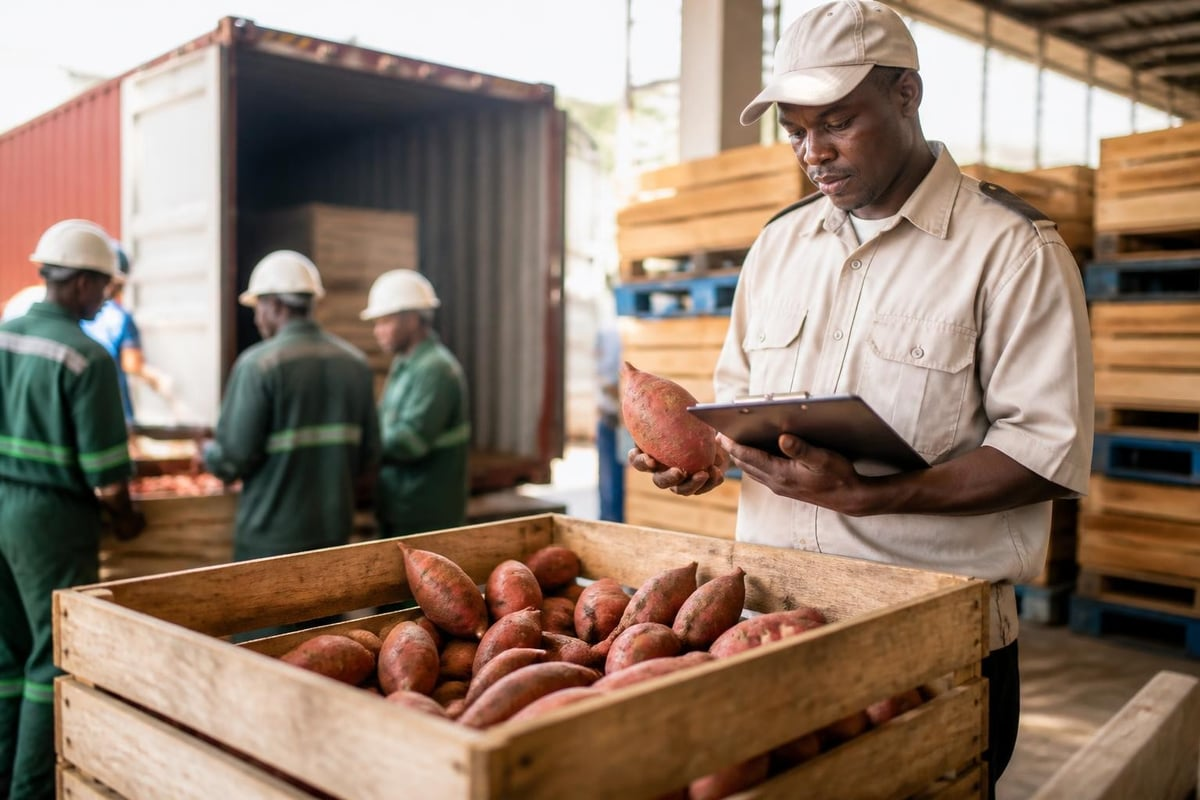
Sweet potatoes export packaging must comply with the regulations of the destination market. Requirements can vary between the United States, European Union, Japan, Australia, and Middle Eastern countries.
Wooden pallets and crates used in international shipments generally need to comply with ISPM 15, which requires approved treatment to reduce the risk of pest transmission. Proper certification marks should be visible on treated wooden packaging.
Non-compliance can lead to customs delays, additional inspections, repackaging costs, or shipment rejection.
Packaging must also protect sweet potatoes against:
-
Mechanical damage and bruising
-
Excessive moisture loss
-
Condensation
-
Temperature fluctuations
-
Compression during stacking
-
Contamination during handling
The Food and Agriculture Organization packaging guidelines emphasize three important packaging functions: product protection, efficient handling, and clear information through labeling.
Choosing the Right Packaging Materials
Sweet potatoes require packaging that provides protection while allowing sufficient airflow. Excessive moisture trapped inside cartons can encourage fungal growth, while insufficient protection can result in bruising and skin damage.
Common packaging options include:
-
Corrugated fiberboard cartons with ventilation holes
-
ISPM 15-treated wooden crates
-
Reusable plastic containers
-
Mesh bags for bulk shipments
-
Moisture-resistant cartons
Corrugated cartons are particularly popular for international exports because they are relatively lightweight, customizable, stackable, and suitable for retail-ready presentation.
For premium varieties such as Murasaki and purple-flesh sweet potatoes, stronger cartons and additional internal protection can help preserve the appearance of the product throughout transportation.
Technical Specifications for Sweet Potato Cartons
Carton specifications should be adapted to the variety, shipment duration, destination climate, and buyer requirements.
Typical export carton considerations include:
-
Capacity: 5 kg, 10 kg, or 15 kg
-
Construction: Single-wall or double-wall corrugated fiberboard
-
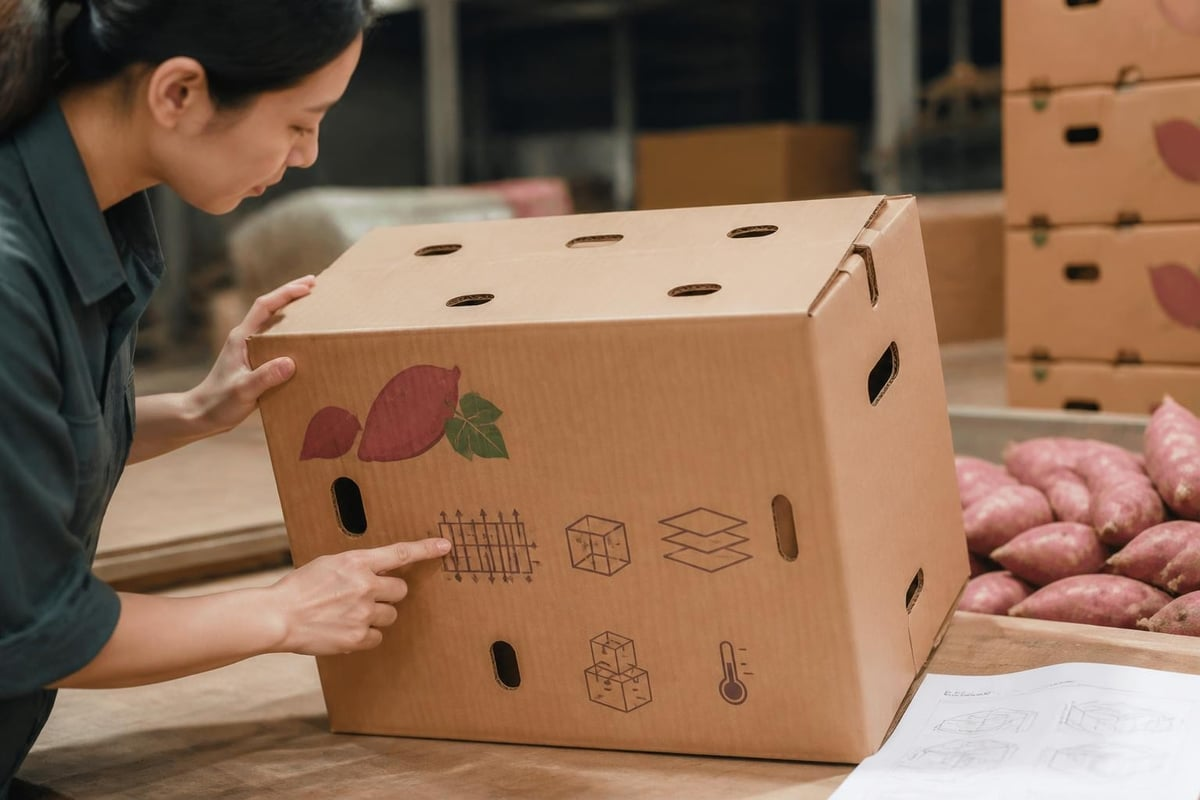
Ventilation: Strategically positioned ventilation holes
-
Stacking strength: Sufficient compression resistance for container transportation
-
Moisture resistance: Suitable coating or treatment when required
-
Labeling: Clear product, origin, weight, and handling information
Ventilation is particularly important because sweet potatoes continue to respire after harvest. Proper airflow helps remove heat and reduce condensation inside the package.
At the same time, ventilation holes should not be so large or numerous that they weaken the carton or cause excessive moisture loss.
Packaging and Temperature Management
Packaging works together with temperature management to preserve sweet potato quality.
For many fresh sweet potato varieties, storage and transportation conditions around 13-16°C can help maintain quality, although the exact temperature should be adjusted according to the variety, curing condition, and destination requirements.
Proper handling generally follows this sequence:
-
Harvest mature sweet potatoes carefully.
-
Sort and remove damaged or diseased tubers.
-
Grade the produce according to size and quality.
-
Cure the sweet potatoes when appropriate.
-
Bring the product to the required storage temperature.
-
Pack using suitable cartons, mesh bags, or crates.
-
Verify weight and labeling.
-
Palletize correctly.
-
Load the container while maintaining airflow.
Premium products such as Murasaki sweet potatoes and purple flesh sweet potatoes require particularly careful handling because appearance and skin quality strongly influence their premium market value.
Step-by-Step Export Packing Procedure
A standardized packing procedure reduces damage and improves shipment consistency.
1. Sorting and Grading
Remove tubers showing rot, cuts, severe bruising, pest damage, or other defects. Separate the remaining products according to the buyer's agreed specifications.
2. Weight Verification
Each package should meet the declared net weight within the tolerance agreed with the buyer.
3. Internal Protection
Use appropriate liners, paper, molded pulp, or other approved materials when additional protection is required.
4. Filling
Arrange sweet potatoes to minimize movement inside the carton. Avoid excessive empty space, but do not overfill the carton because compression can cause bruising.
5. Sealing
Seal cartons securely using suitable tape or other approved closure systems.
6. Labeling
Labels should provide accurate information such as:
-
Product name
-
Variety
-
Country of origin
-
Net weight
-
Grade
-
Lot or batch number
-
Packing date, when required
-
Handling instructions
-
Required certification marks
7. Palletization
Stack cartons securely on suitable pallets while maintaining sufficient air channels for refrigerated shipments.
Destination-Specific Packaging Requirements
Packaging requirements differ between international markets. Exporters should always confirm current requirements before shipping because regulations can change.
United States
Packaging may need to meet USDA and plant-health requirements, including appropriate phytosanitary documentation and ISPM 15 compliance for wooden packaging.
European Union
Buyers commonly place greater emphasis on traceability, recyclable packaging, food safety, and sustainability. Organic products require appropriate certification.
Japan
Japanese buyers typically place strong emphasis on product presentation, consistency, labeling, traceability, and food safety documentation.
Middle East
Buyers often prioritize product durability, temperature management, reliable shelf life, and clear origin documentation.
Australia
Import conditions can be particularly strict for fresh agricultural products. Exporters must verify current biosecurity, treatment, packaging, and documentation requirements before shipment.
The USDA packaging guidelines provide useful background on packaging and packing practices for agricultural products.
Quality Control Before Shipment
A professional export operation should conduct a final inspection before container loading.
A basic pre-shipment checklist includes:
-
Cartons are clean and undamaged
-
Correct product and variety are packed
-
Weight meets the agreed specification
-
Ventilation holes are unobstructed
-
Labels are complete and readable
-
Pallets meet destination requirements
-
Product temperature is within specification
-
No visible rot, sprouting, or serious damage is present
-
Required certificates and documents are complete
Quality control should continue during container loading. Cartons should not be stacked in a way that blocks refrigerated air circulation.
Proper container loading is particularly important for long-distance shipments because poor airflow can create temperature differences within the container and accelerate quality deterioration.
Sustainable Sweet Potato Export Packaging
Sustainability is becoming increasingly important to international buyers, particularly supermarket chains and food companies.
Exporters can reduce packaging impact through:
-
Recycled-content corrugated cartons
-
Recyclable packaging materials
-
Water-based inks and adhesives
-
Reduced packaging thickness where technically possible
-
Reusable plastic containers for suitable regional routes
-
Packaging designs that maximize container utilization
However, sustainability should never compromise product protection. A cheaper or lighter package is not beneficial if it causes higher product losses during transportation.
For premium markets, the best solution is packaging that combines product protection, attractive presentation, recyclability, and efficient shipping.
Reducing Packaging Costs Without Reducing Quality
Packaging can represent a meaningful portion of total export costs. Smart packaging design can reduce expenses while improving container utilization.
Useful cost-saving strategies include:
-
Purchase cartons under annual or volume agreements
-
Standardize carton sizes where possible
-
Optimize carton dimensions for pallet and container loading
-
Source packaging materials locally
-
Reduce unnecessary internal packaging
-
Improve quality control to reduce rejected shipments
Packaging decisions should also reflect the value of the product.
Premium Murasaki, purple-flesh, or specialty sweet potatoes may justify stronger and more attractive retail packaging. Processing-grade products, on the other hand, may benefit from simpler and more economical packaging.
Traceability and Export Documentation
Modern international buyers increasingly expect complete traceability.
Each shipment should ideally be linked to information such as:
-
Farm or production area
-
Harvest date
-
Packing date
-
Product variety
-
Grade
-
Lot number
-
Inspection results
-
Temperature records
-
Phytosanitary documentation
-
Certificate of origin
-
Packing list and commercial invoice
A clear lot identification system allows exporters and buyers to trace products back through the supply chain if a quality issue occurs.
For buyers sourcing sweet potatoes from Indonesia, transparent documentation provides greater confidence in product origin, quality, and supply chain management.
Packaging as a Competitive Advantage
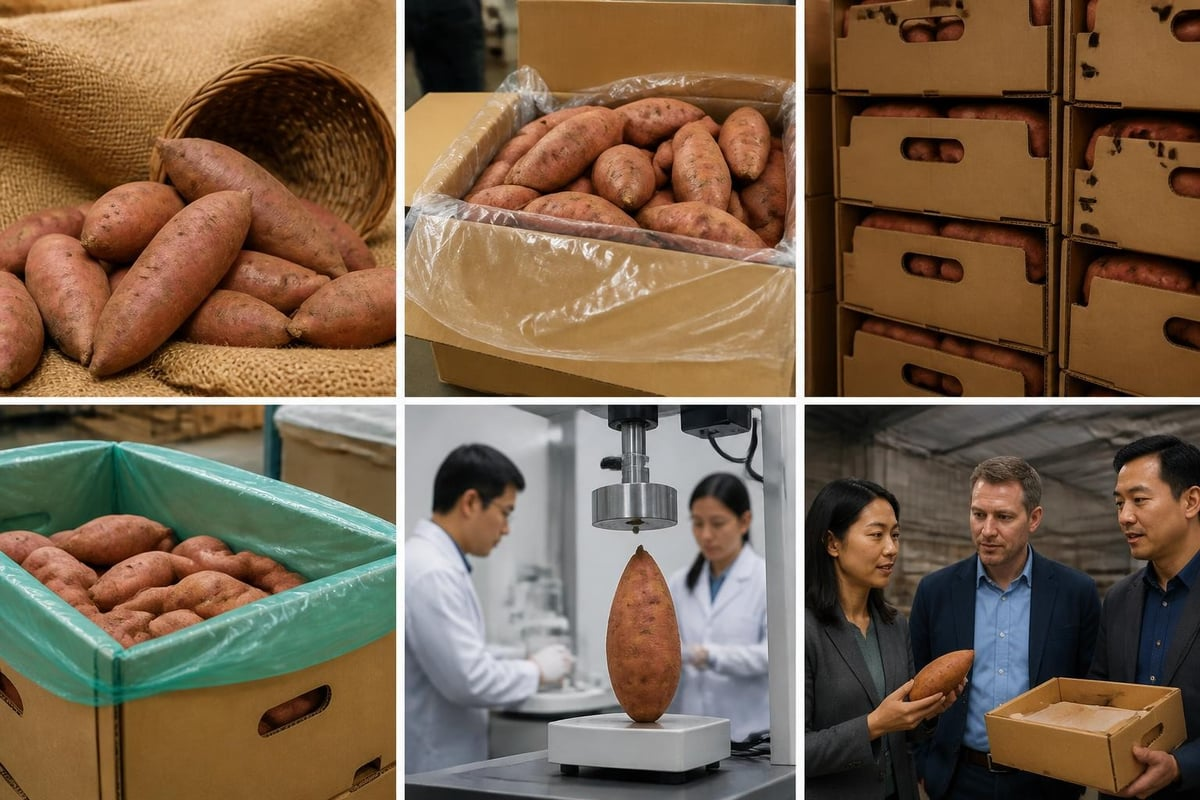
For Indonesian sweet potato exporters, packaging can become an important competitive advantage rather than simply an operational expense.
Professional packaging demonstrates that an exporter understands the requirements of international buyers. Consistent carton specifications, accurate labeling, proper palletization, temperature monitoring, and reliable documentation all contribute to a stronger supplier reputation.
PT Cakra Baja Niaga works with partner farms in West Java to supply Indonesian sweet potatoes for international markets, with attention to product quality, packaging, documentation, and export logistics.
Conclusion
Sweet potatoes export packaging plays a critical role in protecting product quality, reducing transportation losses, meeting international regulations, and maintaining customer satisfaction.
The most effective packaging strategy combines the right materials with proper ventilation, temperature management, palletization, labeling, quality inspection, and traceability. Exporters must also adapt packaging to the requirements of each destination market and the characteristics of each sweet potato variety.
For international buyers, choosing an exporter with strong packaging and quality-control systems can significantly reduce the risks associated with long-distance fresh produce transportation.
With the right packaging system and reliable supply chain, Indonesian sweet potatoes can reach international markets in excellent condition and compete effectively in premium retail, foodservice, and processing segments.
Looking to source premium Indonesian sweet potatoes?
PT Cakra Baja Niaga supplies export-grade Cilembu, Purple, and Murasaki varieties to buyers worldwide.
Continue reading
Wholesale Sweet Potatoes Indonesia: B2B Export Guide 2026
Source premium wholesale sweet potatoes Indonesia for import. Quality standards, export logistics, varieties, pricing & supplier partnerships.
Read article
Sweet Potatoes Supplier Indonesia: Quality & Export Guide
Find reliable sweet potatoes supplier Indonesia offering premium export quality. Learn about sourcing, grading, logistics, and partnerships.
Read article
Sweet Potatoes Grading Guide for International Buyers
Comprehensive sweet potatoes grading guide for exporters and importers. Learn USDA standards, size classification, defect tolerance, and quality control.
Read article