

Sweet Potatoes Indonesia
Export-grade Cilembu, Purple, and Murasaki sweet potatoes, sourced directly from partner farms in West Java and supplied to international buyers by PT Cakra Baja Niaga.
Indonesian Sweet Potatoes for International Buyers
Indonesia is home to a wide range of sweet potato varieties, grown across diverse tropical and highland growing conditions. For importers, distributors, wholesalers, retailers, and food manufacturers, sourcing sweet potatoes Indonesia has to offer means access to distinctive varieties, competitive origin pricing, and a supply base that continues to expand its export capability.
PT Cakra Baja Niaga works with partner farms in West Java to bring three specific varieties — Cilembu, Purple, and Murasaki — to market for international buyers, with each lot graded, cleaned, cured, and packed to export specification before shipment.
Sweet Potato Varieties from Indonesia
Each Indonesian sweet potato variety supplied by PT Cakra Baja Niaga has a distinct origin story, flavor profile, and best-fit application.
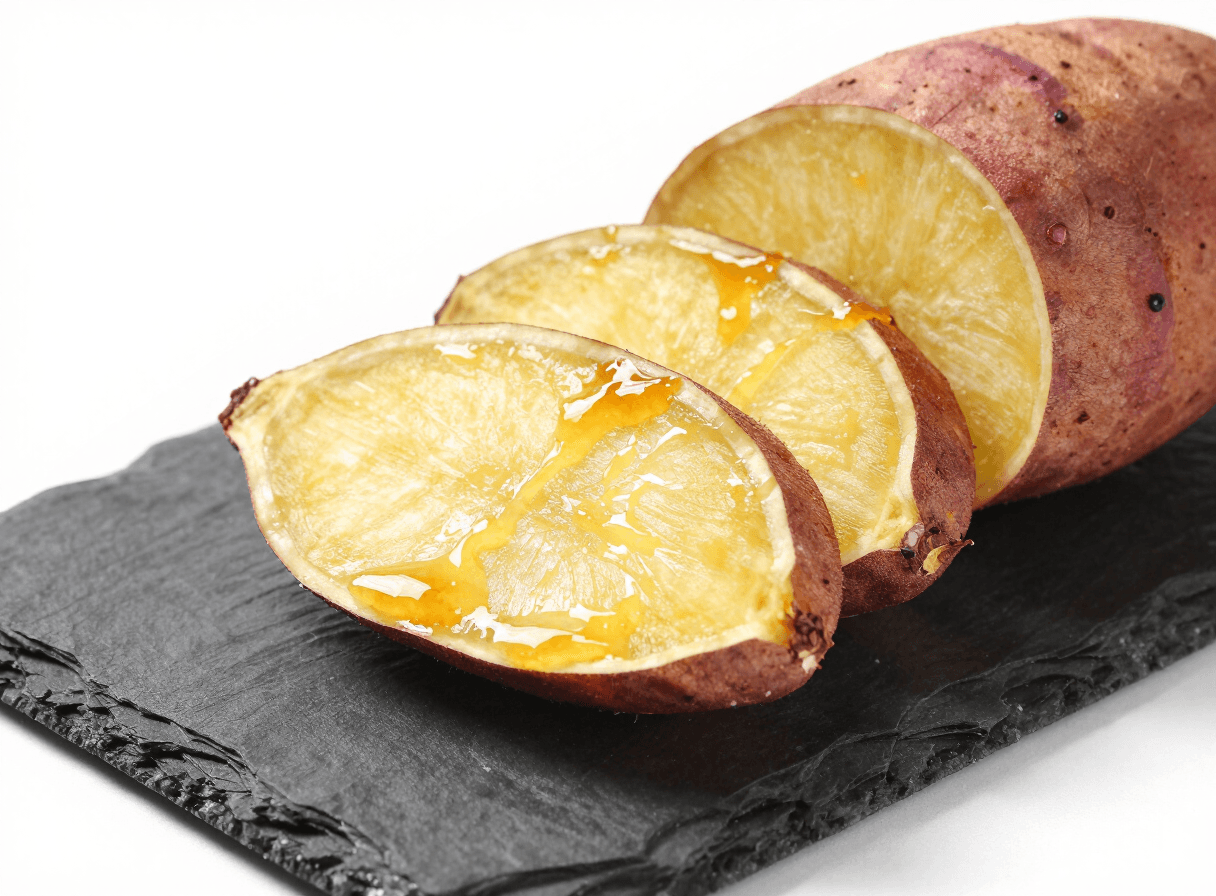
Cilembu Sweet Potato
Grown in the volcanic highlands of Cilembu, West Java, where mineral-rich soil and a unique microclimate produce its legendary honeyed flesh.
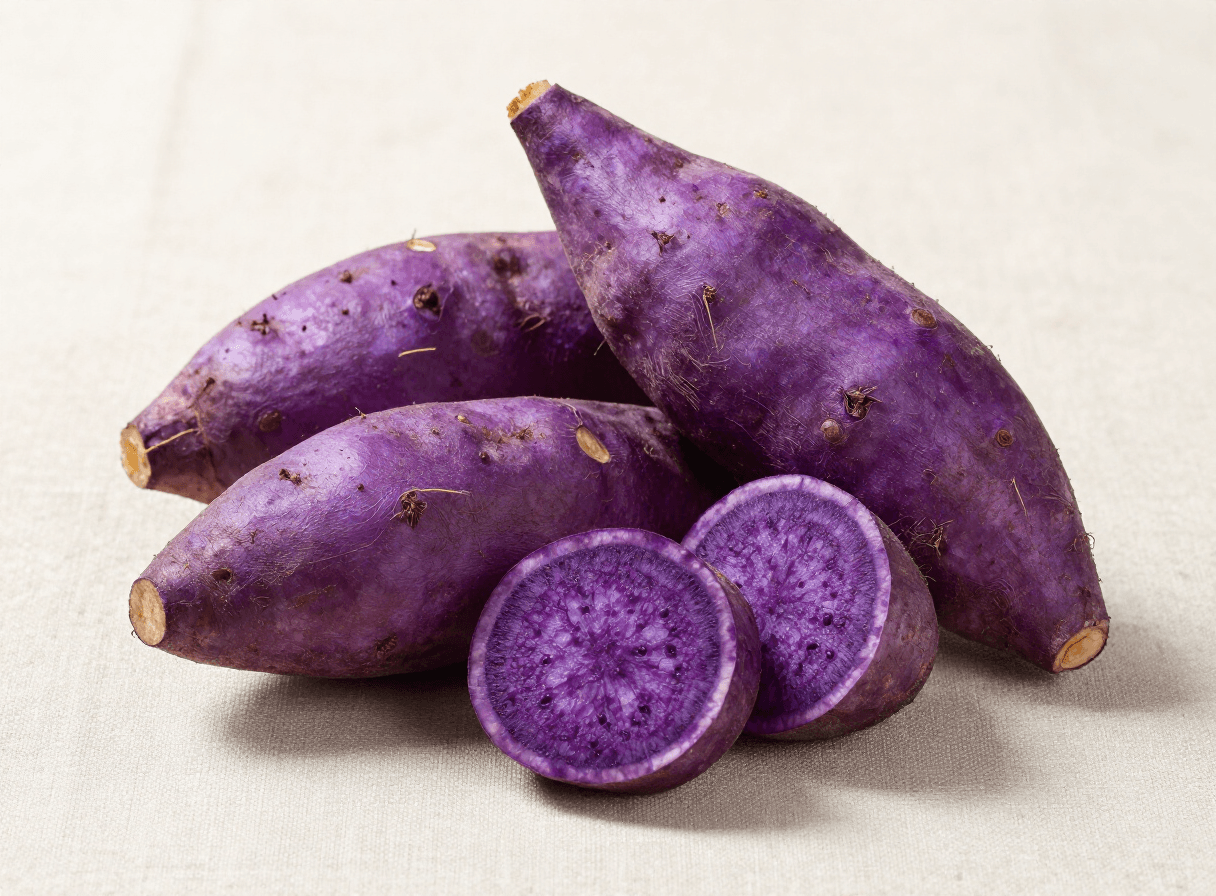
Purple Sweet Potato
Cultivated across the fertile tropical lowlands of Indonesia, prized for its deep violet, anthocyanin-rich flesh.
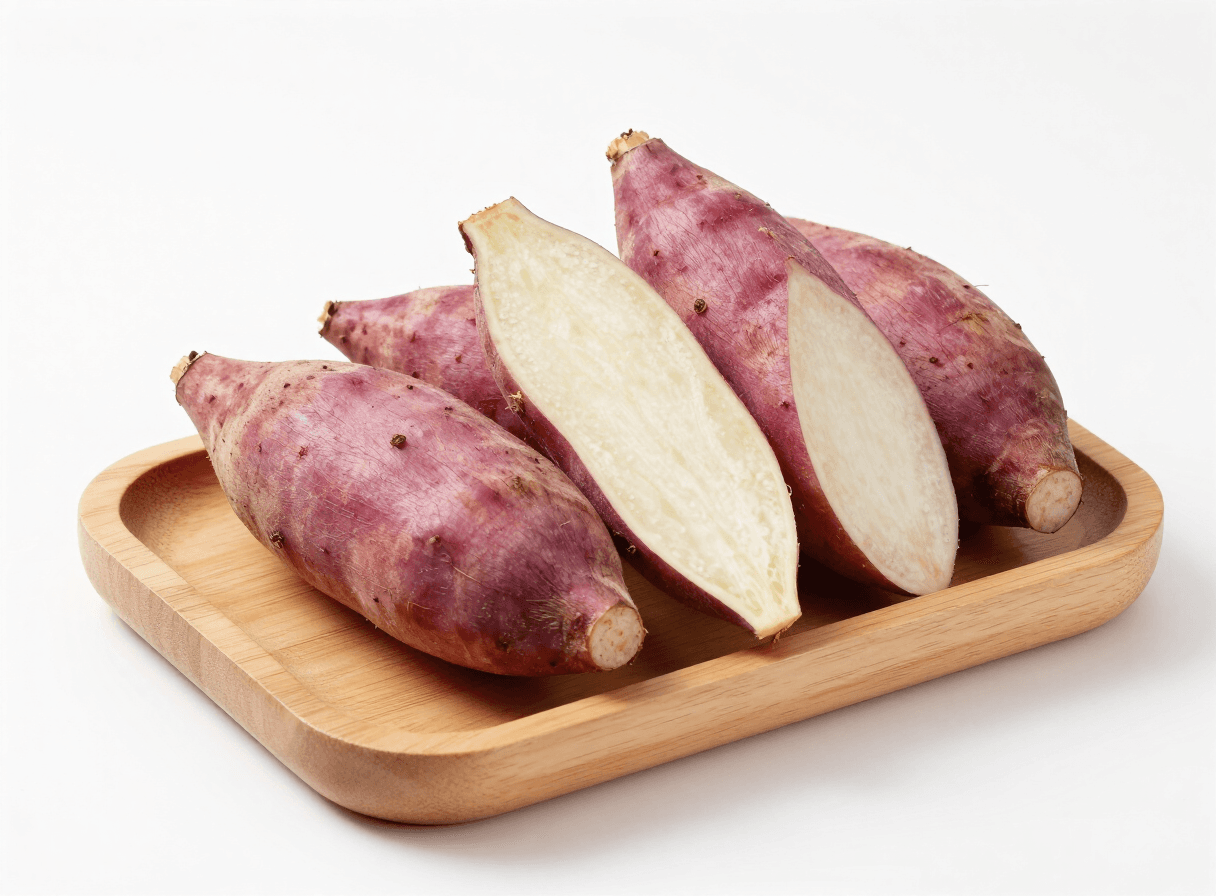
Murasaki Sweet Potato
A Japanese cultivar now thriving in Indonesian climates, combining heritage genetics with year-round tropical growing conditions.
Why Buy Sweet Potatoes from Indonesia?
Indonesia’s tropical climate and volcanic soil regions, particularly in West Java, support the cultivation of sweet potato varieties with distinctive flavor and texture characteristics that are difficult to replicate elsewhere. For buyers evaluating sweet potatoes Indonesia suppliers can offer, sourcing directly from origin can mean more direct visibility into growing conditions, grading practices, and export documentation compared to buying through secondary intermediaries.
Working with an established exporter also means a single point of contact for sourcing, quality control, packaging, and shipping coordination, rather than managing multiple relationships across the supply chain.
Indonesian Sweet Potato Growing Regions
West Java is one of Indonesia’s key sweet potato growing regions. The Cilembu area in particular is known for volcanic highland soil and a microclimate that produces the naturally sweet, honeyed flesh the Cilembu variety is recognized for.PT Cakra Baja Niaga’s partner farms are located across this region, combining traditional farming knowledge with more structured cultivation and post-harvest handling for export.
Indonesian Sweet Potato Export Specifications
- HS Code
- 0714.20
- Curing
- 6–10 days
- Commercial lead time
- Approximately 2 weeks
- Shelf life
- Up to 2 weeks at room temperature; up to 10 months in dark, cool storage at approximately 12.5–15°C and 85–90% relative humidity, subject to appropriate storage conditions.
Sweet Potato Grades
Export lots are graded to meet Class I under UNECE Standard FFV-66, with a target weight range of 100 to 300 grams per piece. Shape selection favors elongated, smooth tubers, and lots are checked for shape irregularity before packing.
Sweet Potato Packaging for Export
Standard export packaging is corrugated cartons at 10kg per carton, with customization available on request for buyers with specific retail or foodservice packaging requirements.
Sweet Potato Quality Control
Each lot is thoroughly washed, cured, and packed dry, free from soil cake and excessive root hairs. Sweet potatoes are checked to be free from rot and decay such as black rot, Rhizopus soft rot, and soil rot, as well as internal pest damage such as wireworm tunnels and active weevil infestation. A pre-shipment quality inspection is carried out before cartons are sealed for export.
Sweet Potato Storage and Shelf Life
Sweet potatoes stored at room temperature typically remain in good condition for up to 2 weeks. Under dark, cool storage — approximately 12.5–15°C with 85–90% relative humidity — shelf life can extend up to 10 months, subject to appropriate handling and storage conditions throughout transit and at destination.
Indonesian Sweet Potato Export Process
The general export process runs from farm sourcing and curing, through grading and packing to export specification, to documentation and shipment coordination. With a typical commercial lead time of around 2 weeks, buyers should plan orders with this timeline in mind, particularly for larger or recurring volumes.
Export Documentation
Depending on the destination country, documentation for a sweet potato shipment commonly includes a phytosanitary certificate, certificate of origin, commercial invoice, packing list, and bill of lading. Import requirements vary by country and can change over time, so buyers should confirm current requirements with their local customs or agricultural authorities before finalizing an order.
Sweet Potato Export Markets
Indonesian sweet potatoes have opportunities across international markets where demand for specialty fresh produce is growing, spanning retail, wholesale, and foodservice channels. Buyer requirements and available volumes can vary by season, so importers planning regular purchases are encouraged to discuss forecasts and order schedules directly with PT Cakra Baja Niaga.
Why Choose PT Cakra Baja Niaga?
PT Cakra Baja Niaga works directly with partner farms in West Java to supply Cilembu, Purple, and Murasaki sweet potatoes to international buyers, with quality control, packaging, and export documentation handled as part of the process.
Frequently Asked Questions
Where are these sweet potatoes grown?
CBN sources sweet potatoes from partner farms in West Java, Indonesia, including the Cilembu region known for its volcanic highland soil.
What sweet potato varieties does CBN export from Indonesia?
CBN currently supplies three varieties: Cilembu (a signature honey-sweet variety), Purple sweet potato, and Murasaki, a Japanese heritage cultivar grown in Indonesian conditions.
What is the HS code for Indonesian sweet potatoes?
The HS code used for sweet potato exports is 0714.20.
How long is the curing process before export?
Sweet potatoes are cured for 6–10 days after harvest to improve skin set, sweetness, and storage life before grading and packing.
What is the typical commercial lead time?
Commercial lead time is typically around 2 weeks from order confirmation, depending on volume and current harvest availability.
How long do the sweet potatoes stay fresh?
Shelf life is up to 2 weeks at room temperature. Under dark, cool storage at approximately 12.5–15°C and 85–90% relative humidity, shelf life can extend up to 10 months, subject to appropriate storage conditions.
What is the minimum order quantity (MOQ)?
MOQ depends on the variety, grade, and shipping method. Contact CBN directly with your target volume and destination for an accurate quotation.
Can CBN provide a product sample before a full order?
Yes, sample requests can be arranged. Use the Request a Sample option below to get in touch with our team.
Related Reading
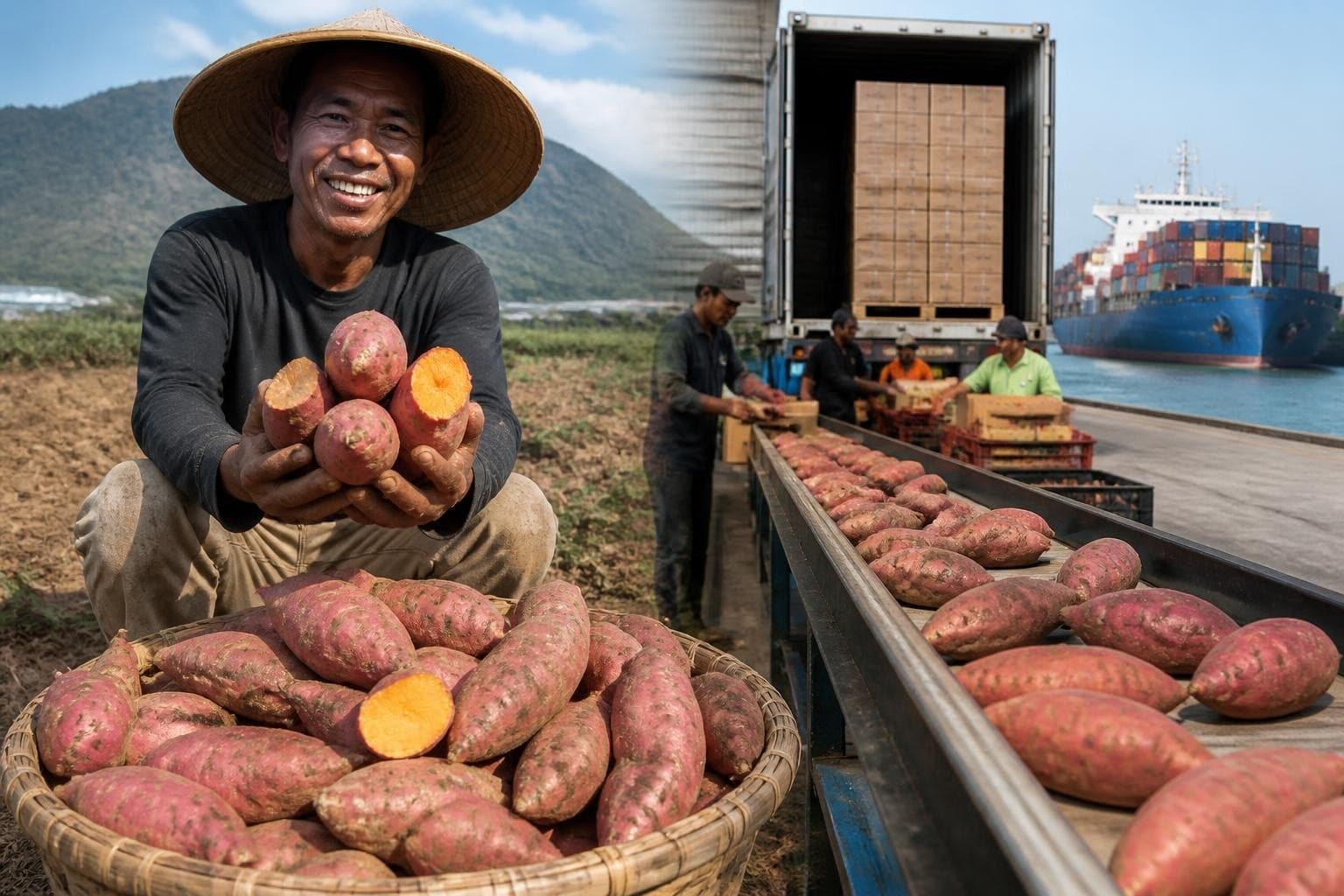
Cilembu Sweet Potato: Premium Export Quality Guide 2026
Discover why Cilembu sweet potatoes from West Java are prized globally. Learn about cultivation, quality standards, and export opportunities.
Read article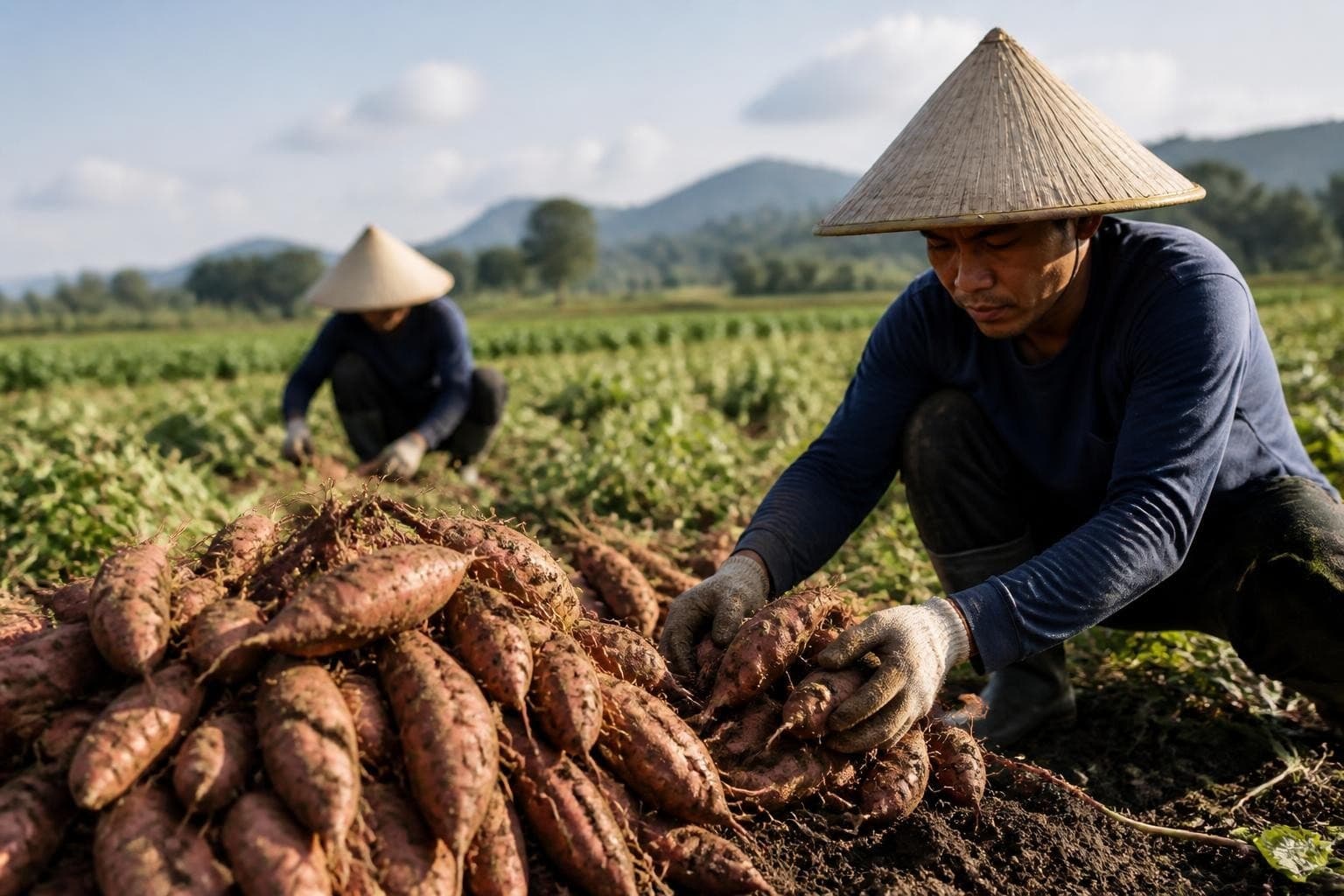
Ubi Jalar: The Nutrient-Dense Export Powerhouse
Discover why ubi jalar is becoming a premium export commodity. Learn about nutritional benefits, market demand, and quality standards for trade.
Read article
Sweet Potato Farms: A Complete Guide for 2026
Explore how sweet potato farms operate, from cultivation to export. Learn best practices, production methods, and quality standards.
Read article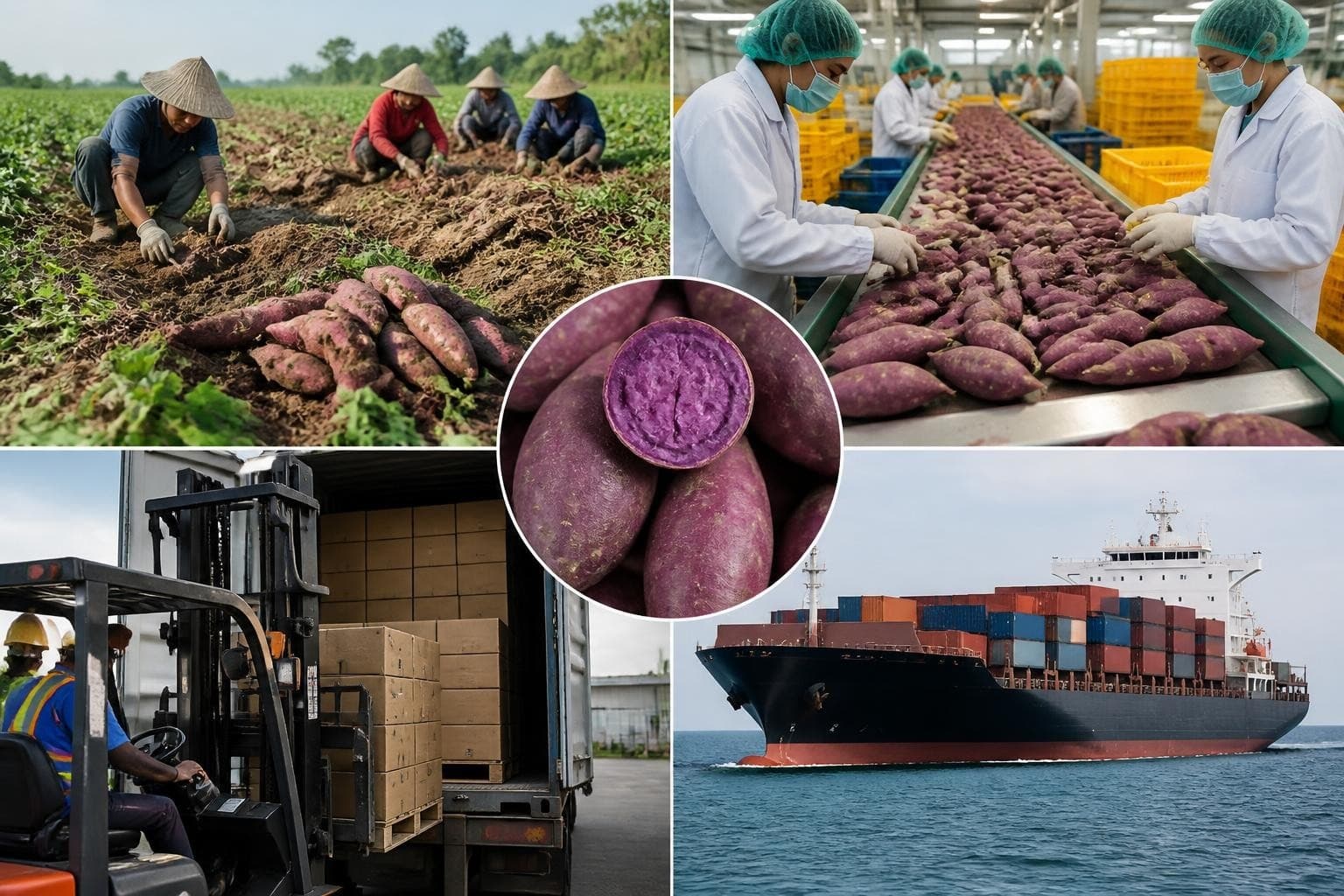
Purple Flesh Sweet Potato: Export Quality Standards
Discover the nutritional benefits, market demand, and quality standards for purple flesh sweet potato exports. Essential guide for importers.
Read article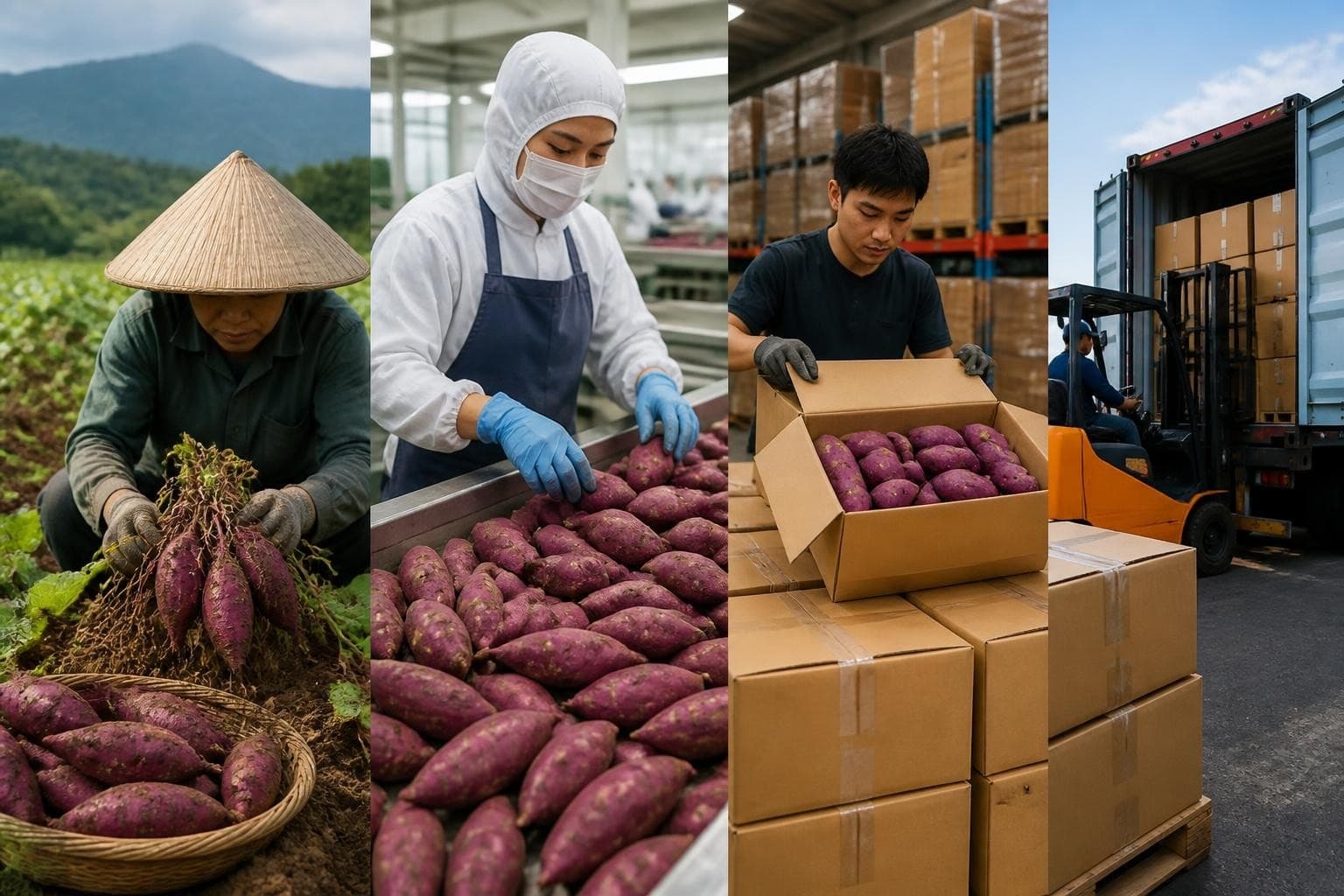
Japanese Murasaki Sweet Potato: Complete Export Guide 2026
Discover the Japanese murasaki sweet potato's unique qualities, market demand, and export potential. Essential insights for international buyers.
Read article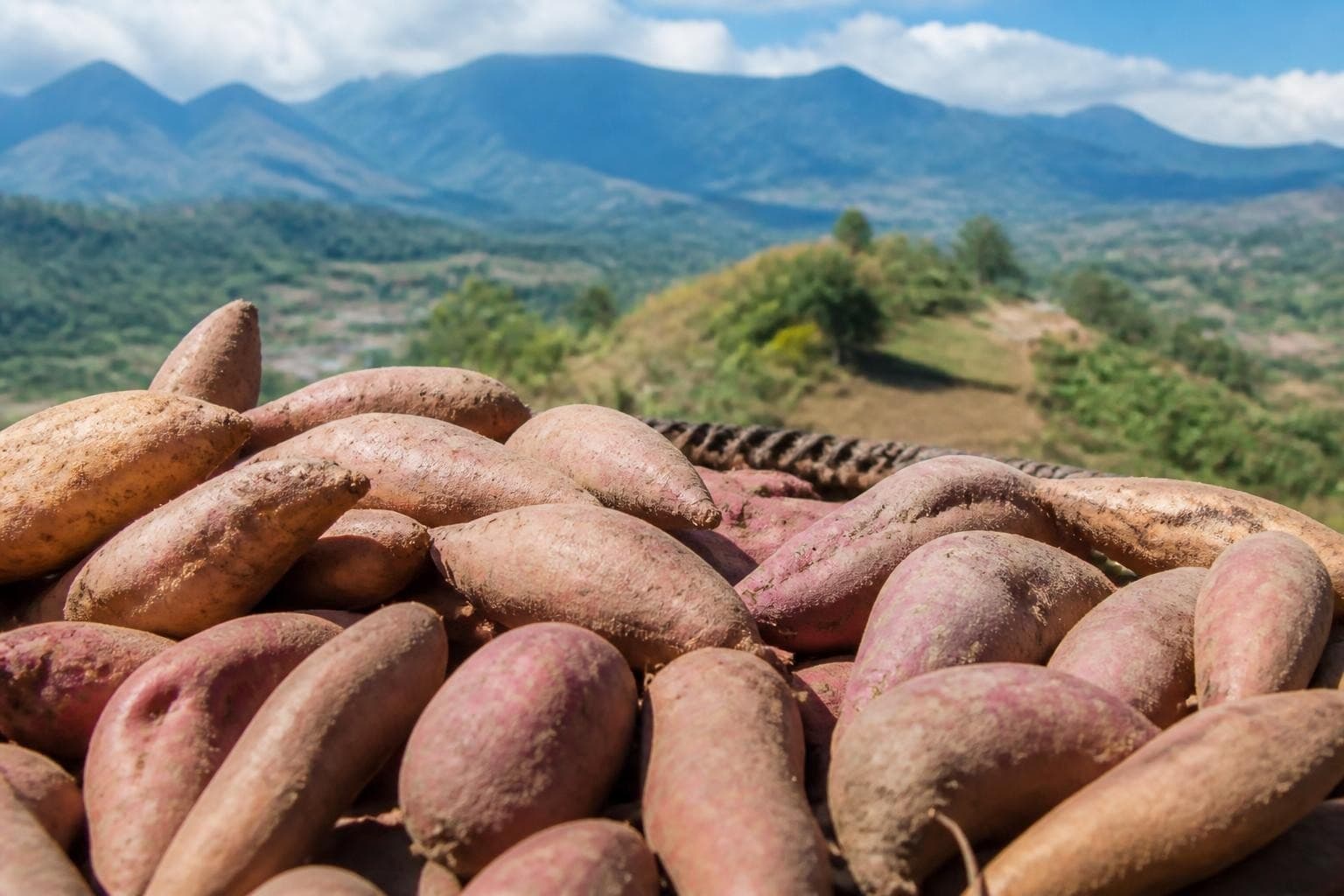
Origin of Sweet Potato: History and Global Journey
Discover the fascinating origin of sweet potato, from ancient Central America to global cultivation. Essential insights for importers and exporters.
Read articleReady to source sweet potatoes from Indonesia?
Request a formal quote, or ask about a sample shipment before placing a full order.