
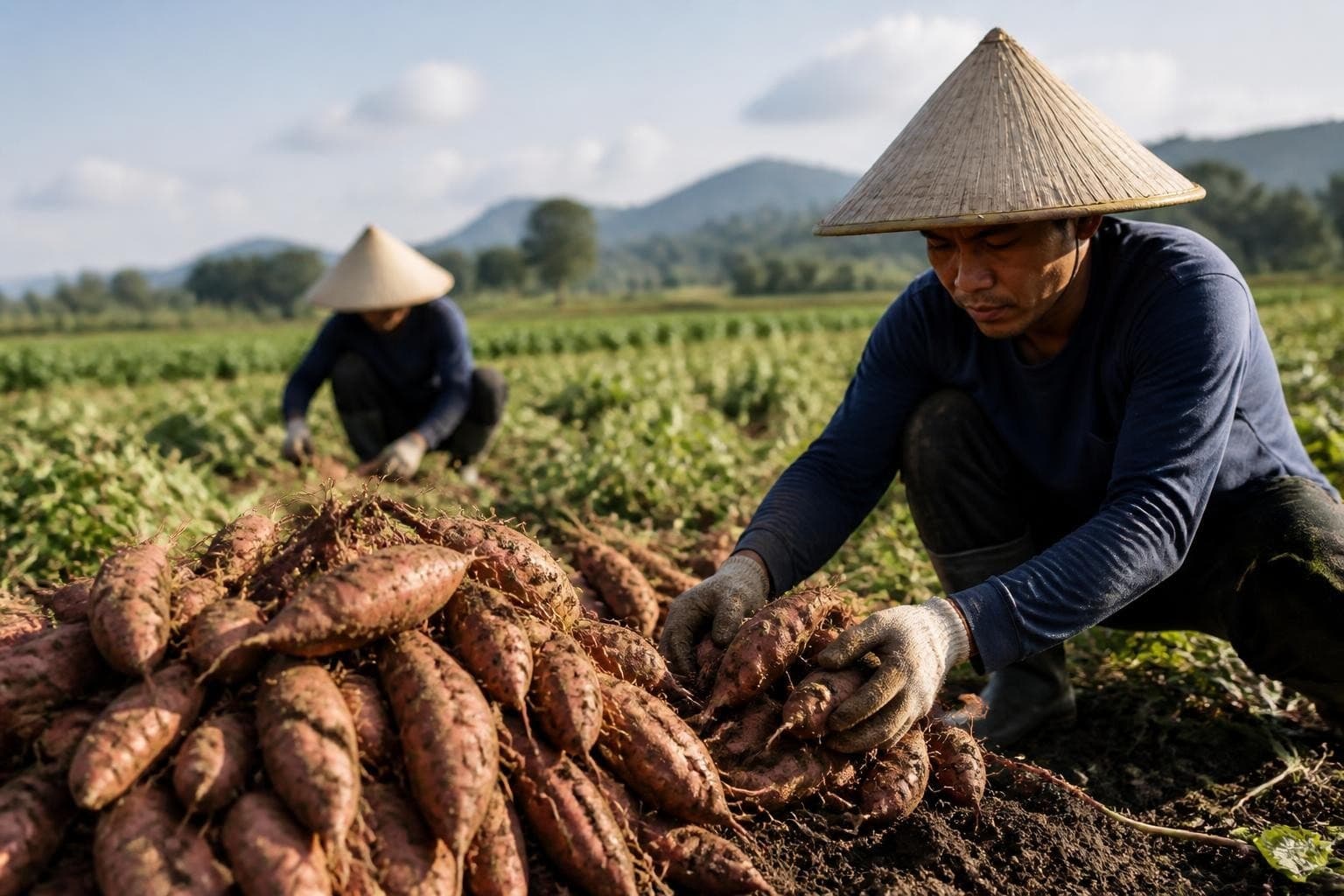
Discover why ubi jalar is becoming a premium export commodity. Learn about nutritional benefits, market demand, and quality standards for trade.
Ubi jalar, known internationally as sweet potato, has emerged as one of Indonesia's most promising agricultural export commodities. This versatile root vegetable combines exceptional nutritional value with strong global demand, creating significant opportunities for international trade partnerships. As consumers worldwide increasingly seek healthier food options and sustainable agricultural products, ubi jalar has positioned itself at the intersection of nutrition, commerce, and food security. Understanding the export potential, quality requirements, and market dynamics of this crop is essential for importers, distributors, and retailers looking to source premium products from Indonesia.
The Global Market for Ubi Jalar
The international sweet potato market has experienced consistent growth over the past decade, driven by health-conscious consumers and the functional food movement. According to Bappenas, ubi jalar deserves promotion as a leading commodity to support national food security and transformation. This endorsement reflects the crop's economic and nutritional significance.
Key Market Drivers
Several factors contribute to rising global demand:
- Health and wellness trends focusing on natural, nutrient-dense foods
- Plant-based diet adoption across developed markets
- Functional food interest among millennials and Gen Z consumers
- Clean label preferences favoring minimally processed ingredients
- Sustainable agriculture concerns driving crop diversification
The Asian-Pacific region represents the largest production area, but North American and European markets show the strongest import growth rates. These markets particularly value orange-fleshed varieties for their beta-carotene content and culinary versatility.
Price Dynamics and Trade Considerations
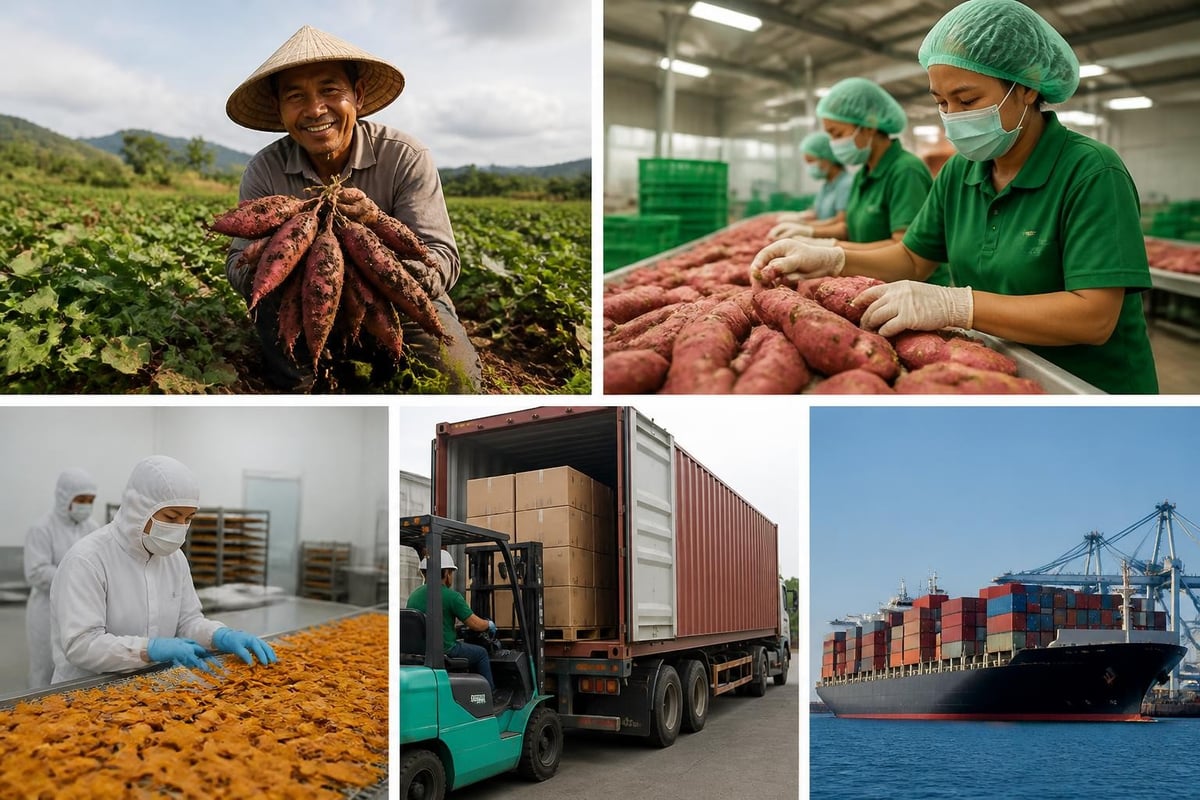
Export pricing for ubi jalar depends on multiple variables including variety, size grading, quality certification, and destination market. Premium varieties with consistent sizing command higher prices in international markets, particularly when accompanied by proper documentation and traceability.
| Market Segment | Price Factor | Quality Requirement |
|---|---|---|
| Fresh retail | Size uniformity | Grade A, minimal blemishes |
| Food service | Volume consistency | Grade A-B, reliable supply |
| Processing | Starch content | Grade B-C, batch consistency |
| Organic premium | Certification | Organic certification, documentation |
Importers increasingly prioritize suppliers who can demonstrate sustainable farming practices, food safety compliance, and consistent delivery schedules. These factors often outweigh minor price differences when establishing long-term partnerships.
Nutritional Profile and Consumer Appeal
The commercial success of ubi jalar in international markets stems largely from its impressive nutritional composition. Research highlighting the numerous health benefits of ubi jalar has significantly influenced consumer purchasing decisions, particularly in health-focused retail environments.
Macronutrient and Micronutrient Content
A 200-gram serving of cooked ubi jalar provides substantial nutritional value while remaining relatively low in calories. The complex carbohydrate profile offers sustained energy release, making it attractive to athletes and fitness enthusiasts.
Key nutritional components per 200g serving:
- Calories: 180-200 kcal
- Dietary fiber: 6-7 grams
- Protein: 4 grams
- Vitamin A: 400% daily value (orange varieties)
- Vitamin C: 65% daily value
- Potassium: 950mg
- Manganese: 50% daily value
The high fiber content supports digestive health and helps maintain stable blood sugar levels, addressing two significant consumer health concerns in developed markets. This positions ubi jalar as an ideal ingredient for products targeting diabetic consumers or those managing weight.
Variety-Specific Characteristics
Different ubi jalar varieties offer distinct advantages for various market segments:
- Orange-fleshed varieties: Highest beta-carotene content, popular in North America and Europe
- Purple-fleshed varieties: Rich in anthocyanins, premium positioning in Asian markets
- White-fleshed varieties: Lower sweetness, preferred for savory applications
- Cream-fleshed varieties: Balanced profile, versatile for multiple uses
Understanding these distinctions enables importers to match specific varieties with target consumer preferences and intended applications.
Quality Standards for Export Markets
Successful ubi jalar exporters maintain rigorous quality control systems throughout the supply chain. International buyers expect compliance with destination market regulations and industry-specific standards that ensure food safety and product consistency.
Pre-Harvest Quality Management
Quality begins in the field, where farming practices directly impact final product characteristics. Partner farms implement integrated pest management, optimal harvest timing, and careful handling protocols to minimize damage and maximize shelf life.
Critical pre-harvest factors include:
- Soil composition and nutrient management
- Irrigation scheduling for optimal starch development
- Pest and disease monitoring programs
- Harvest maturity indicators
- Worker training on gentle handling techniques
West Java's volcanic soil composition and tropical climate create ideal growing conditions, producing ubi jalar with superior texture, flavor, and nutritional density compared to many competing origins.
Post-Harvest Handling and Processing
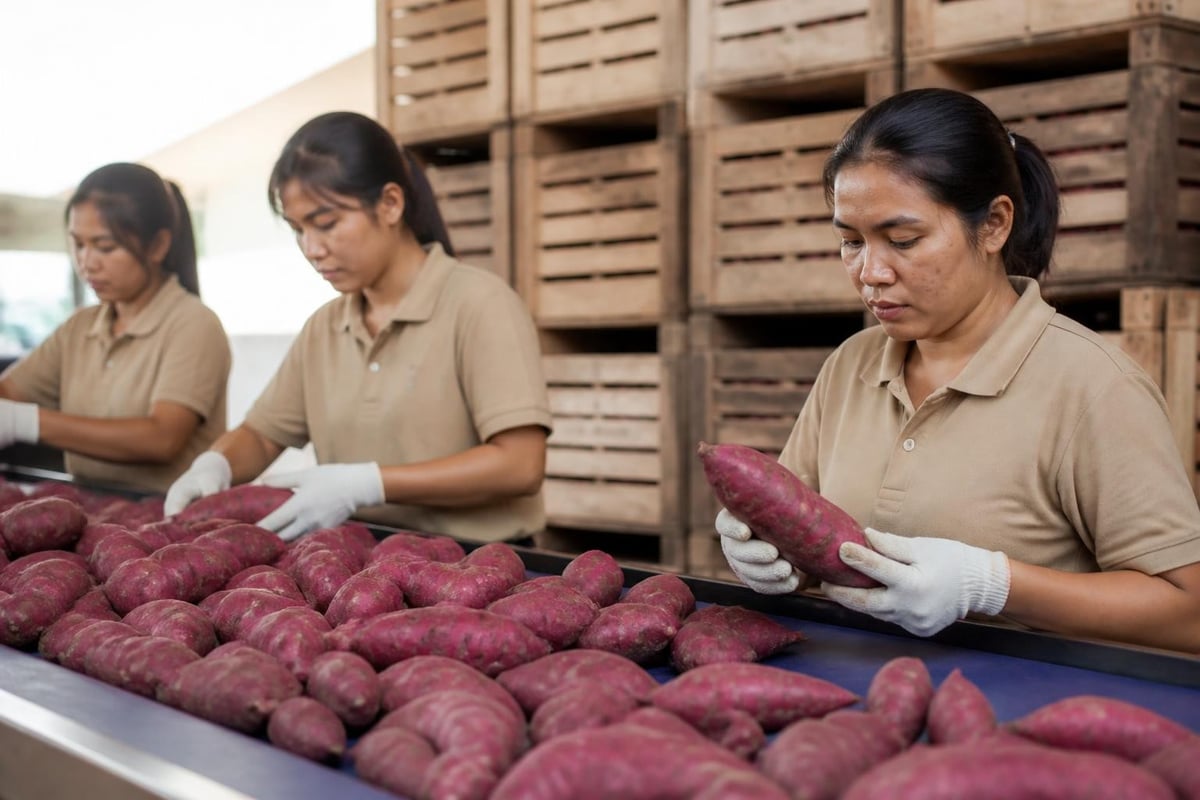
The period immediately following harvest critically determines export quality and marketability. Professional exporters implement temperature-controlled curing processes that heal minor skin damage and extend storage life.
| Processing Stage | Temperature | Duration | Purpose |
|---|---|---|---|
| Curing | 29-32°C | 5-7 days | Skin healing, disease resistance |
| Storage | 13-15°C | Variable | Maintaining quality, preventing sprouting |
| Pre-cooling | 10-13°C | 12-24 hours | Temperature reduction before shipping |
| Transport | 13-15°C | Variable | Maintaining optimal condition |
Proper curing transforms freshly harvested ubi jalar into a product capable of withstanding international shipping while maintaining quality attributes buyers expect. This process is non-negotiable for serious export operations.
Regional Production Excellence in West Java
West Java has established itself as Indonesia's premier ubi jalar production region, combining favorable agricultural conditions with experienced farming communities. Kuningan Regency has designated ubi jalar as a regional flagship commodity, reflecting the crop's economic importance and the region's commitment to quality production.
Farming Partnerships and Supply Chain Reliability
Direct partnerships with established farm operations ensure consistent supply and quality control throughout the growing season. These relationships benefit all stakeholders through improved planning, quality feedback loops, and fair pricing structures.
Effective farming partnerships include:
- Multi-season contracts providing farmers with income stability
- Technical support for optimal cultivation practices
- Quality premium payments incentivizing superior production
- Advance planning coordinating planting schedules with market demand
- Transparent communication building trust and long-term relationships
This collaborative approach addresses one of international buyers' primary concerns: supply reliability. Importers need assurance that orders will be fulfilled consistently, not just during peak seasons.
Traceability and Documentation
Modern export markets increasingly demand complete traceability from farm to destination. Comprehensive documentation systems track each batch through the supply chain, providing buyers with confidence in product origin and handling history.
Essential documentation includes:
- Farm identification and location data
- Planting and harvest date records
- Input usage logs (fertilizers, treatments)
- Quality inspection reports
- Processing and packing records
- Shipping and logistics documentation
- Certificates of origin and phytosanitary certificates
This transparency supports food safety compliance, organic certification when applicable, and increasingly important sustainability reporting requirements that major retailers now mandate.
Commercial Applications and Market Segments
Understanding how different market segments utilize ubi jalar helps exporters target appropriate buyers and optimize product specifications. The versatility of this crop supports multiple commercial applications beyond simple fresh consumption.
Fresh Retail Distribution
Supermarket chains and specialty grocers represent the highest-value market segment, demanding premium quality and consistent availability. These buyers typically require specific size ranges, minimal blemishes, and attractive appearance for consumer appeal.
Fresh retail preferences:
- Medium to large sizes (200-400g per piece)
- Uniform shape without excessive tapering
- Smooth, unblemished skin
- Consistent variety characteristics
- Extended shelf life capability
- Consumer-friendly packaging options
Success in this segment requires understanding merchandising requirements, seasonal demand patterns, and competitive positioning against domestic and alternative suppliers.
Food Service and Processing Markets
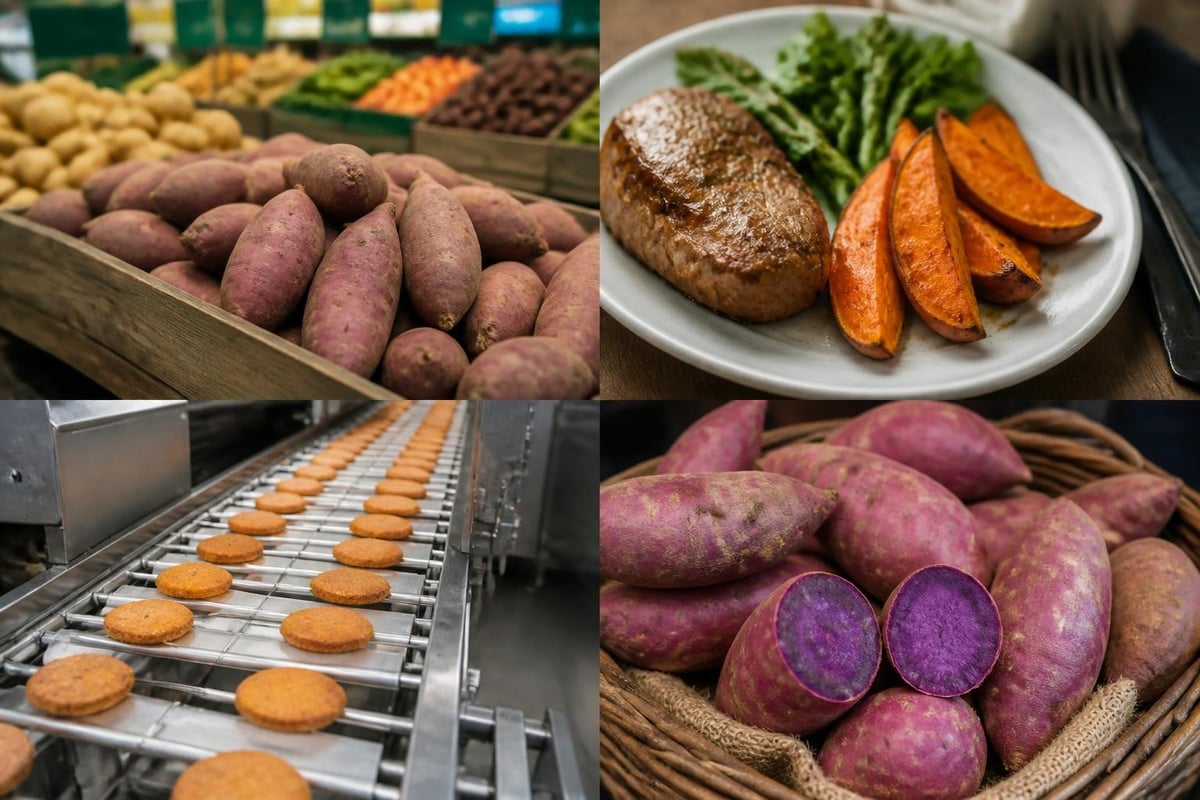
Restaurants, institutional kitchens, and food manufacturers prioritize consistency, competitive pricing, and reliable supply over aesthetic perfection. These buyers often accept wider size ranges and minor cosmetic imperfections that don't affect culinary performance.
| Application | Primary Requirement | Volume Pattern |
|---|---|---|
| Restaurant chains | Consistent sizing, year-round availability | Steady, predictable |
| Quick-service | Pre-processing options, bulk pricing | High volume, seasonal peaks |
| Food manufacturing | Specific starch content, processing grades | Contract-based, scheduled |
| Snack production | Uniform composition, bulk quantities | Large orders, regular delivery |
The processing segment particularly values the health benefits of ubi jalar, incorporating these nutritional advantages into marketing for finished products.
Logistics and Supply Chain Management
International ubi jalar trade requires sophisticated logistics coordination to maintain product quality during transit. Temperature control, transit time minimization, and proper packaging all influence delivered quality and commercial success.
Packaging Solutions for Export
Appropriate packaging protects product integrity while meeting destination market requirements for labeling, material composition, and sustainability. Export-grade packaging balances protection with cost efficiency and environmental considerations.
Common packaging configurations include:
- Carton boxes: 10kg or 20kg capacity, ventilated design
- Mesh bags: Budget option for processing grades
- Consumer-ready packs: Pre-portioned for retail distribution
- Bulk bins: Large volumes for processing customers
- Custom configurations: Meeting specific buyer requirements
Packaging materials must comply with destination country regulations regarding food contact materials, fumigation requirements, and recyclability standards increasingly important to major buyers.
Transportation and Cold Chain
Maintaining optimal temperature throughout the shipping journey preserves quality and extends marketable shelf life. Professional exporters utilize temperature-monitored containers and established logistics partners experienced in perishable agricultural products.
Critical logistics considerations:
- Container selection: Refrigerated units with precise temperature control
- Loading procedures: Proper air circulation and temperature pre-conditioning
- Documentation accuracy: Avoiding customs delays that extend transit time
- Destination coordination: Ensuring rapid customs clearance and delivery
- Quality verification: Arrival inspections confirming condition maintenance
Transit times to major markets typically range from 14 to 35 days depending on destination and shipping route, requiring careful harvest timing and post-harvest handling to ensure arrival quality meets buyer specifications.
Building Successful Import Partnerships
Long-term commercial relationships between exporters and international buyers develop through consistent performance, transparent communication, and mutual value creation. Understanding buyer perspectives and priorities facilitates productive partnerships.
Buyer Selection and Qualification
Not all potential buyers represent ideal partnership opportunities. Successful exporters carefully evaluate prospects based on business stability, payment reliability, and alignment with supply capabilities.
Key qualification criteria:
- Financial stability and payment history
- Volume requirements matching supply capacity
- Quality expectations aligned with production capabilities
- Communication responsiveness and clarity
- Long-term relationship orientation
- Reasonable commercial terms
This selective approach ensures resources focus on relationships with genuine potential rather than dispersing effort across incompatible prospects.
Communication and Relationship Management
Regular, proactive communication builds trust and prevents misunderstandings that can damage commercial relationships. Buyers appreciate suppliers who anticipate needs, provide advance notice of challenges, and demonstrate commitment to customer success.
Effective communication practices include:
- Regular updates on crop conditions and harvest projections
- Immediate notification of any quality or supply issues
- Responsive inquiry handling within 24 hours
- Proactive problem-solving rather than reactive crisis management
- Cultural sensitivity respecting different business practices and communication styles
These practices distinguish professional operations from opportunistic traders, creating competitive advantages that transcend price competition alone.
Market Trends Shaping Future Demand
Several emerging trends influence ubi jalar demand patterns and create opportunities for exporters who adapt their offerings accordingly. Staying informed about these developments enables strategic positioning for long-term success.
Health and Functional Food Movement
Consumer awareness of the benefits of ubi jalar for diet and cognitive function continues driving demand growth, particularly among health-conscious demographics. This trend supports premium pricing for superior quality products positioned as nutritious, natural foods.
Functional food applications leverage specific ubi jalar characteristics:
- Weight management: High fiber, low glycemic index properties
- Athletic nutrition: Complex carbohydrates for sustained energy
- Immune support: Vitamin A and antioxidant content
- Digestive health: Prebiotic fiber supporting gut microbiome
- Age-related health: Anthocyanins in purple varieties supporting cognitive function
Exporters who understand these applications can better serve buyers developing specialized products targeting these consumer segments.
Sustainability and Ethical Sourcing
Major retailers increasingly require suppliers to demonstrate environmental stewardship and fair labor practices. These requirements extend throughout supply chains, affecting farming practices, processing operations, and business relationships.
Sustainability considerations include:
- Water usage efficiency and conservation
- Soil health maintenance and organic matter management
- Reduced chemical input dependency
- Fair compensation for farm workers
- Community development contributions
- Carbon footprint reduction initiatives
While these requirements add complexity, they also create differentiation opportunities for exporters committed to responsible business practices. More information about sustainable agricultural approaches can be found through industry resources at PT Cakra Baja Niaga's blog.
Value-Added Processing Opportunities
Beyond fresh product exports, ubi jalar supports various value-added processing opportunities that capture additional margins and serve different market needs. These processed forms often command premium pricing and reduced logistics complexity.
Processing options include:
- Frozen products (fries, chunks, puree)
- Dehydrated products (flakes, flour, chips)
- Ready-to-eat items (pre-cooked, portioned)
- Ingredient preparations (concentrated purees, powders)
- Specialty products (organic, heirloom varieties)
Developing processing capabilities requires capital investment and technical expertise but can significantly enhance business resilience and profitability by diversifying revenue streams and extending shelf life.
Quality Assurance and Certification
International markets increasingly require third-party certification demonstrating compliance with food safety, quality management, and sustainability standards. These certifications provide buyers with confidence and often serve as prerequisites for engaging with major retailers and distributors.
Essential Certifications for Export
Different markets prioritize different certification schemes, requiring exporters to understand destination requirements and invest in appropriate compliance programs.
| Certification | Primary Market | Focus Area |
|---|---|---|
| GlobalG.A.P. | European Union | Good agricultural practices |
| HACCP | United States | Food safety management |
| Organic (various) | Premium segments | Chemical-free production |
| Fair Trade | Ethical consumers | Social responsibility |
| ISO 22000 | Global | Food safety management systems |
Obtaining and maintaining these certifications requires ongoing investment in training, documentation systems, and compliance audits. However, they significantly expand market access and support premium pricing strategies.
Internal Quality Control Systems
Beyond external certifications, robust internal quality systems ensure consistent performance and continuous improvement. These systems identify issues before they reach customers and provide data for process optimization.
Effective internal systems include:
- Regular product sampling and testing
- Visual inspection at critical control points
- Size grading and sorting procedures
- Documentation reviews ensuring accuracy
- Corrective action protocols for non-conformances
- Continuous training programs for staff
These practices demonstrate professionalism and commitment to excellence that sophisticated buyers value highly when selecting long-term partners.
Ubi jalar represents a remarkable opportunity at the intersection of global nutrition trends, sustainable agriculture, and international trade. Success in this market requires understanding quality requirements, maintaining supply reliability, and building genuine partnerships with international buyers. For importers, distributors, and retailers seeking a dependable source of premium sweet potatoes backed by transparent farming partnerships and professional export operations, PT Cakra Baja Niaga delivers consistent quality from West Java's premier growing region to your market, supporting your business growth with reliable supply and responsive service.
Looking to source premium Indonesian sweet potatoes?
PT Cakra Baja Niaga supplies export-grade Cilembu, Purple, and Murasaki varieties to buyers worldwide.
Continue reading
Sweet Potatoes Import Singapore Market Report
Explore Singapore’s sweet potato imports, leading suppliers, SFA requirements, pricing factors, and sourcing opportunities for Indonesian exporters.
Read article
Wholesale Sweet Potatoes Indonesia: B2B Export Guide 2026
Source premium wholesale sweet potatoes Indonesia for import. Quality standards, export logistics, varieties, pricing & supplier partnerships.
Read article
Sweet Potatoes Supplier Indonesia: Quality & Export Guide
Find reliable sweet potatoes supplier Indonesia offering premium export quality. Learn about sourcing, grading, logistics, and partnerships.
Read article