
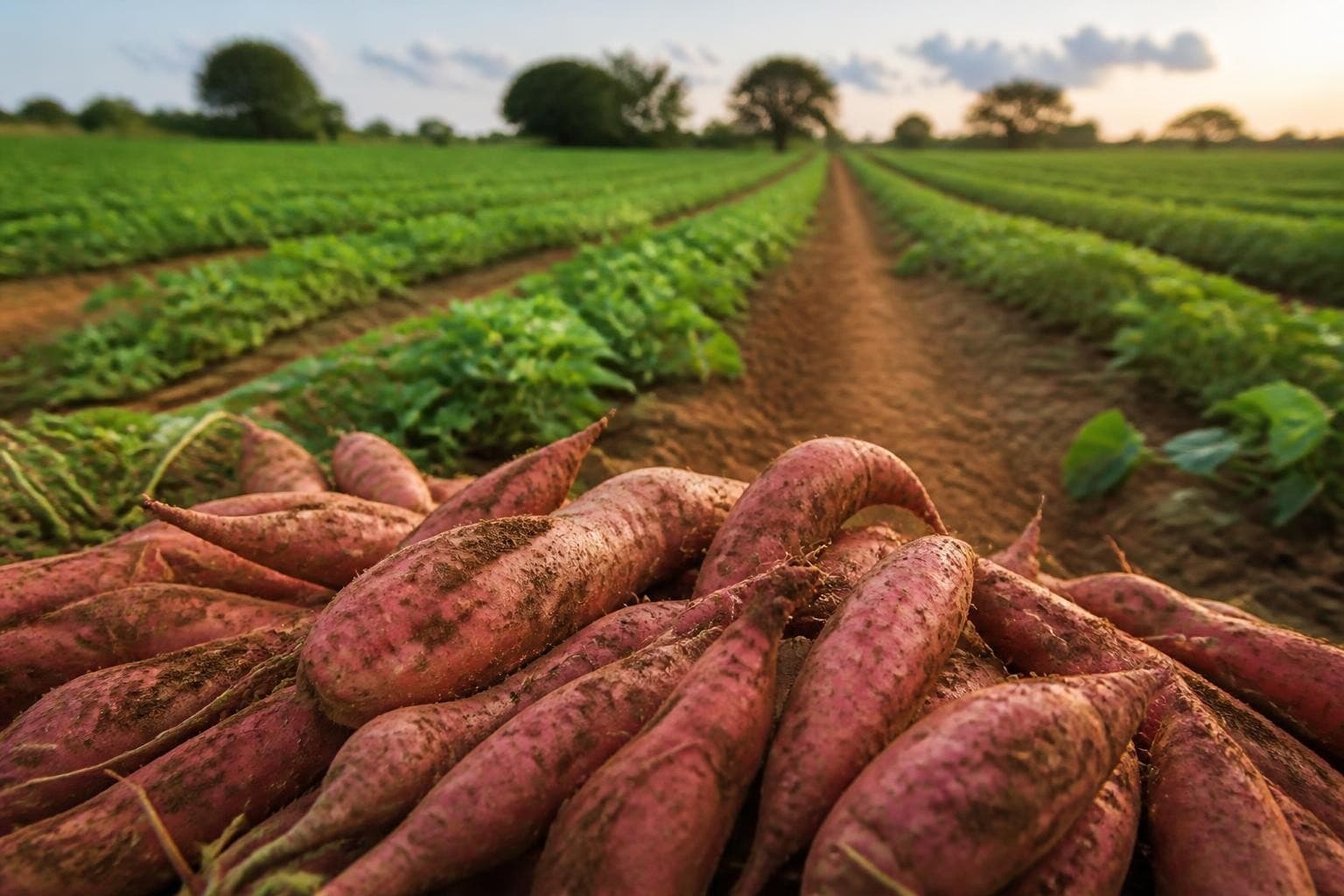
Sweet Potatoes Harvest: Best Practices for Export Quality and Global Markets
Master sweet potatoes harvest timing, techniques, and post-harvest handling. Expert guide for exporters ensuring premium quality and maximum yield.
For international buyers, the quality of sweet potatoes is determined long before they reach supermarket shelves, food processors, or distribution centers. It begins in the field, where proper harvest timing, careful handling, and post-harvest management directly influence freshness, shelf life, appearance, and overall market value. A well-executed harvest not only protects the crop but also ensures that sweet potatoes can withstand international transportation while meeting the quality expectations of buyers worldwide.
Harvesting sweet potatoes is far more than simply digging tubers from the soil. Professional exporters understand that every stage—from identifying the ideal maturity, minimizing mechanical damage during harvesting, and applying proper curing techniques to grading and storage—plays a critical role in delivering export-ready produce. Even small mistakes during harvest can reduce product quality, shorten storage life, and increase losses throughout the supply chain.
Indonesia has become an increasingly reliable source of premium sweet potatoes thanks to its favorable tropical climate, fertile agricultural regions, and year-round production capabilities. These advantages allow exporters to maintain a consistent supply while meeting the requirements of international importers, wholesalers, supermarkets, food manufacturers, and foodservice distributors.
At PT Cakra Baja Niaga , we work closely with carefully selected farming partners in West Java to ensure every shipment begins with professionally managed harvesting practices. By following strict quality standards throughout harvesting, grading, packaging, and logistics, we help overseas buyers receive fresh, export-grade sweet potatoes that are ready for retail, processing, or wholesale distribution.
In this guide, we'll explore the complete sweet potato harvest process—from determining the optimal harvest window and selecting the right harvesting methods to post-harvest handling, curing, quality grading, storage, and export preparation. Whether you're a grower looking to improve harvest efficiency or an international buyer seeking a dependable Indonesian supplier, understanding these best practices will help you make informed sourcing decisions and maintain consistent product quality throughout the supply chain.For international buyers, the quality of sweet potatoes is determined long before they reach supermarket shelves, food processors, or distribution centers. It begins in the field, where proper harvest timing, careful handling, and post-harvest management directly influence freshness, shelf life, appearance, and overall market value. A well-executed harvest not only protects the crop but also ensures that sweet potatoes can withstand international transportation while meeting the quality expectations of buyers worldwide.
Harvesting sweet potatoes is far more than simply digging tubers from the soil. Professional exporters understand that every stage—from identifying the ideal maturity, minimizing mechanical damage during harvesting, and applying proper curing techniques to grading and storage—plays a critical role in delivering export-ready produce. Even small mistakes during harvest can reduce product quality, shorten storage life, and increase losses throughout the supply chain.
Indonesia has become an increasingly reliable source of premium sweet potatoes thanks to its favorable tropical climate, fertile agricultural regions, and year-round production capabilities. These advantages allow exporters to maintain a consistent supply while meeting the requirements of international importers, wholesalers, supermarkets, food manufacturers, and foodservice distributors.
At PT Cakra Baja Niaga, we work closely with carefully selected farming partners in West Java to ensure every shipment begins with professionally managed harvesting practices. By following strict quality standards throughout harvesting, grading, packaging, and logistics, we help overseas buyers receive fresh, export-grade sweet potatoes that are ready for retail, processing, or wholesale distribution.
In this guide, we'll explore the complete sweet potato harvest process—from determining the optimal harvest window and selecting the right harvesting methods to post-harvest handling, curing, quality grading, storage, and export preparation. Whether you're a grower looking to improve harvest efficiency or an international buyer seeking a dependable Indonesian supplier, understanding these best practices will help you make informed sourcing decisions and maintain consistent product quality throughout the supply chain.
Signs That Sweet Potatoes Are Ready for Harvest
Professional growers assess several visual and physical characteristics to determine whether sweet potatoes have reached export maturity.
Common indicators include:
-
Leaves gradually turning yellow as the plant reaches natural maturity.
-
Vines beginning to dry or die back.
-
Slight cracking of the soil surface caused by fully developed tubers.
-
Test-dug sweet potatoes showing uniform size and fully developed skin.
-
Skins that remain intact when gently rubbed, indicating proper skin set.
While these signs provide useful guidance, no single indicator should determine the harvest date. Export-quality production requires combining field observations with sample digging and quality inspections to ensure the crop meets commercial standards.
Why Harvest Timing Matters for Export
International shipments often spend several weeks in transit before reaching wholesalers, retailers, or food manufacturers. Sweet potatoes harvested at the proper stage are better able to withstand washing, grading, packing, container loading, ocean freight, and storage without excessive bruising or spoilage.
Harvesting at the correct time offers several important benefits:
-
Improved shelf life during international shipping.
-
Better skin strength, reducing scratches and bruising.
-
More consistent size and appearance.
-
Lower post-harvest losses.
-
Higher percentage of export-grade produce.
-
Greater customer satisfaction upon arrival.
For exporters, these advantages translate into fewer quality claims, reduced waste, and stronger long-term relationships with overseas buyers.
Indonesia's Year-Round Harvest Advantage
One of Indonesia's greatest strengths as a sweet potato supplier is its tropical climate. Unlike many producing countries that have limited harvest seasons, Indonesia can produce sweet potatoes throughout much of the year, allowing exporters to maintain a more reliable supply.
Working with farming partners across West Java, PT Cakra Baja Niaga coordinates planting and harvesting schedules to help ensure fresh sweet potatoes are available for export on a continuous basis. This flexibility enables us to respond more effectively to customer demand while maintaining consistent product quality throughout the year.
For international buyers, year-round availability reduces sourcing risks and supports stable supply chains, particularly for supermarkets, wholesalers, and food manufacturers that require dependable deliveries.
Climate and Temperature Considerations
Although Indonesia's climate provides favorable growing conditions, harvest timing must still account for weather patterns.
Heavy rainfall can make harvesting more difficult by increasing soil moisture and the likelihood of mechanical damage during digging. Excessively wet conditions also increase the cleaning requirements after harvest and may affect storage performance.
In cooler production regions around the world, growers generally avoid harvesting when soil temperatures fall below 13°C (55°F) because cold stress can reduce storage life and increase the risk of chilling injury. While this is rarely a concern in Indonesia, understanding these international standards helps exporters align production practices with the expectations of global markets.
Successful exporters combine careful field monitoring, weather awareness, and harvest planning to ensure every shipment begins with healthy, mature sweet potatoes capable of maintaining their quality from farm to destination.account for seasonal variations when planning shipments.
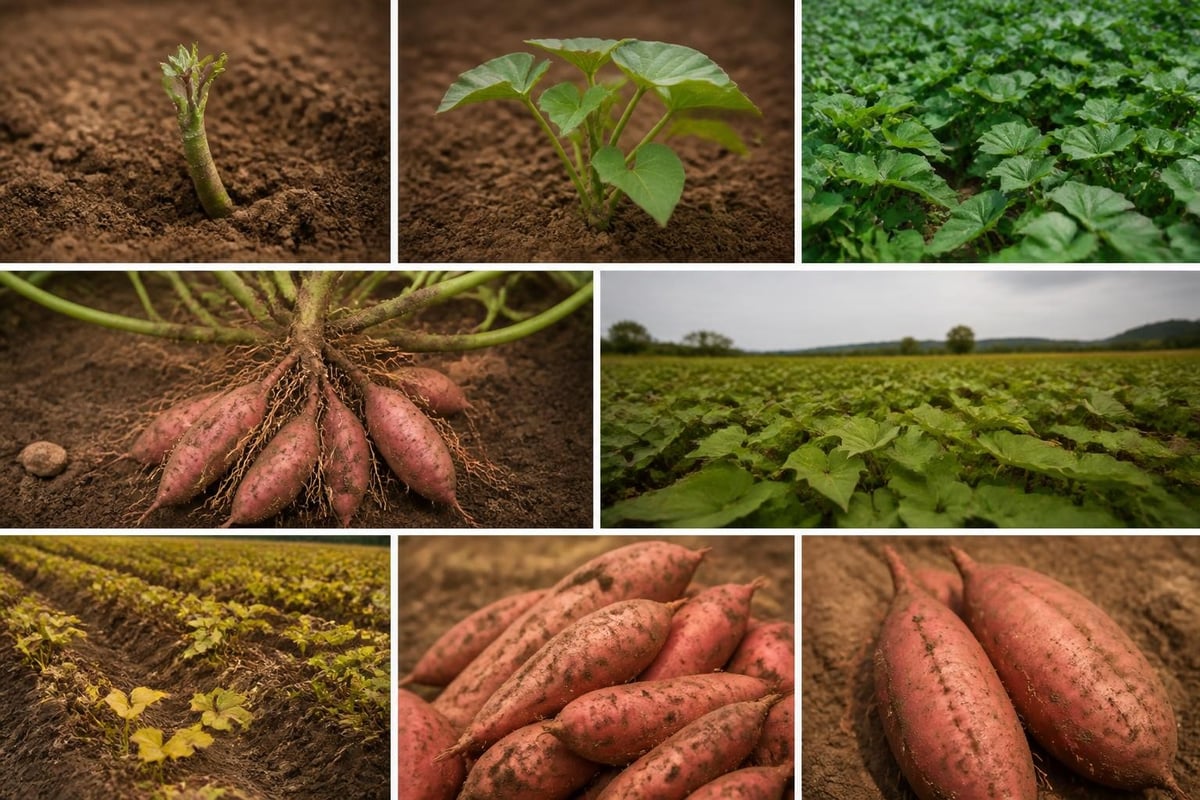
Understanding Sweet Potato Maturity and Harvest Timing
Harvesting sweet potatoes at the right stage of maturity is one of the most important factors affecting export quality. While harvesting too early can result in undersized tubers with fragile skins, delaying harvest for too long may increase the risk of pest damage, cracking, and reduced storage performance. For exporters, finding the optimal harvest window is essential to delivering sweet potatoes that arrive at their destination in excellent condition.
In general, most sweet potato varieties reach commercial maturity between 90 and 120 days after planting. However, the ideal harvest date depends on several factors, including the variety being grown, local weather conditions, soil fertility, irrigation practices, and the intended export market.
Rather than relying solely on the number of growing days, experienced growers evaluate the crop using multiple maturity indicators before harvesting begins.
Signs That Sweet Potatoes Are Ready for Harvest
Professional growers assess several visual and physical characteristics to determine whether sweet potatoes have reached export maturity.
Common indicators include:
-
Leaves gradually turning yellow as the plant reaches natural maturity.
-
Vines beginning to dry or die back.
-
Slight cracking of the soil surface caused by fully developed tubers.
-
Test-dug sweet potatoes showing uniform size and fully developed skin.
-
Skins that remain intact when gently rubbed, indicating proper skin set.
While these signs provide useful guidance, no single indicator should determine the harvest date. Export-quality production requires combining field observations with sample digging and quality inspections to ensure the crop meets commercial standards.
Why Harvest Timing Matters for Export
International shipments often spend several weeks in transit before reaching wholesalers, retailers, or food manufacturers. Sweet potatoes harvested at the proper stage are better able to withstand washing, grading, packing, container loading, ocean freight, and storage without excessive bruising or spoilage.
Harvesting at the correct time offers several important benefits:
-
Improved shelf life during international shipping.
-
Better skin strength, reducing scratches and bruising.
-
More consistent size and appearance.
-
Lower post-harvest losses.
-
Higher percentage of export-grade produce.
-
Greater customer satisfaction upon arrival.
For exporters, these advantages translate into fewer quality claims, reduced waste, and stronger long-term relationships with overseas buyers.
Indonesia's Year-Round Harvest Advantage
One of Indonesia's greatest strengths as a sweet potato supplier is its tropical climate. Unlike many producing countries that have limited harvest seasons, Indonesia can produce sweet potatoes throughout much of the year, allowing exporters to maintain a more reliable supply.
Working with farming partners across West Java, PT Cakra Baja Niaga coordinates planting and harvesting schedules to help ensure fresh sweet potatoes are available for export on a continuous basis. This flexibility enables us to respond more effectively to customer demand while maintaining consistent product quality throughout the year.
For international buyers, year-round availability reduces sourcing risks and supports stable supply chains, particularly for supermarkets, wholesalers, and food manufacturers that require dependable deliveries.
Climate and Temperature Considerations
Although Indonesia's climate provides favorable growing conditions, harvest timing must still account for weather patterns.
Heavy rainfall can make harvesting more difficult by increasing soil moisture and the likelihood of mechanical damage during digging. Excessively wet conditions also increase the cleaning requirements after harvest and may affect storage performance.
In cooler production regions around the world, growers generally avoid harvesting when soil temperatures fall below 13°C (55°F) because cold stress can reduce storage life and increase the risk of chilling injury. While this is rarely a concern in Indonesia, understanding these international standards helps exporters align production practices with the expectations of global markets.
Successful exporters combine careful field monitoring, weather awareness, and harvest planning to ensure every shipment begins with healthy, mature sweet potatoes capable of maintaining their quality from farm to destination.
This version is already significantly stronger than the RankPill original because it:
-
speaks directly to importers rather than only growers,
-
explains why harvest timing matters from a commercial perspective,
-
naturally incorporates PT Cakra Baja Niaga's role,
-
improves readability while preserving SEO,
-
and avoids repetitive AI phrasing.
continue
Great. The next section should flow naturally from the harvest timing discussion while adding practical value for importers. This is based on the original "Pre-Harvest Preparation and Field Assessment" section, but rewritten with stronger EEAT and readability.
Pre-Harvest Preparation and Field Assessment
A successful harvest begins long before the first sweet potato is lifted from the ground. Professional exporters know that careful preparation during the days and weeks leading up to harvest plays a major role in protecting product quality, maximizing export yields, and reducing post-harvest losses.
Before harvesting begins, experienced growers carry out detailed field assessments to confirm that the crop has reached the desired maturity and that weather and soil conditions are suitable for harvesting. This proactive approach helps prevent unnecessary damage and ensures the harvested sweet potatoes are ready for grading, packing, and international shipment.
At PT Cakra Baja Niaga, our partner farms follow structured harvest planning procedures to ensure that only sweet potatoes meeting export specifications are selected for shipment.
Key Field Assessments Before Harvest
Professional growers evaluate several factors before scheduling harvest operations.
1. Vine Condition
The condition of the vines provides useful information about crop maturity. As sweet potato plants approach full maturity, the vines naturally begin to yellow and dry. While this is an important indicator, it should always be confirmed through field inspections and sample digging.
2. Soil Moisture
Soil moisture significantly influences harvesting efficiency.
Excessively wet soil causes sweet potatoes to emerge covered with heavy soil, increasing cleaning requirements and the risk of skin damage. On the other hand, extremely dry soil becomes compacted and makes digging more difficult, increasing the chance of bruising or cutting the tubers.
Ideally, harvesting takes place when the soil is moderately dry and easy to work.
3. Tuber Size and Uniformity
International buyers generally expect sweet potatoes that meet consistent size specifications.
Before harvest begins, growers perform sample digs across different sections of the field to evaluate:
-
Average tuber size
-
Weight consistency
-
Shape uniformity
-
Overall yield potential
These assessments help determine whether the crop is ready for export or requires additional time in the field.
4. Pest and Disease Monitoring
Every export shipment should begin with healthy produce.
Fields are carefully inspected for signs of:
-
Insect damage
-
Root rot
-
Surface defects
-
Disease symptoms
-
Mechanical injuries
Identifying problems before harvest allows affected sweet potatoes to be separated early, preventing lower-quality produce from entering the export supply chain.
5. Weather Forecast
Harvest planning should always include weather monitoring.
Heavy rain shortly before harvest can create muddy field conditions that slow operations and increase handling damage. Whenever possible, professional growers schedule harvesting during periods of stable, dry weather to protect both product quality and harvesting efficiency.
Why Test Digging Is Essential
One of the most valuable quality control practices before commercial harvesting is test digging.
Instead of harvesting an entire field immediately, growers remove representative plants from several locations to evaluate crop readiness.
Test digging helps verify:
-
Skin development
-
Tuber maturity
-
Average size
-
Shape consistency
-
Internal quality
-
Expected yield
For export operations, this information is extremely valuable because it allows harvest schedules to be adjusted before large-scale harvesting begins.
The Importance of Proper Skin Set
One of the most overlooked factors affecting export quality is skin set.
Freshly developed sweet potatoes have delicate skins that can easily peel away during washing, grading, or transport. If harvested too early, even careful handling cannot prevent surface damage.
Well-developed skin acts as the crop's natural protective layer. Proper skin set helps sweet potatoes resist:
-
Scratches
-
Abrasions
-
Bruising
-
Moisture loss
-
Disease entry during storage
A simple field test involves gently rubbing the surface of a sample tuber with a thumb. If the skin remains firmly attached without peeling, the crop is generally ready for harvest.
For exporters shipping products over long distances, strong skin development is essential for maintaining appearance and reducing claims from overseas buyers.
Harvest Readiness Checklist
Before beginning commercial harvest, professional export operations typically confirm that:
-
✅ The majority of tubers meet export size requirements.
-
✅ Sweet potatoes have developed firm, well-set skins.
-
✅ Soil conditions are suitable for careful harvesting.
-
✅ Weather forecasts indicate stable harvesting conditions.
-
✅ Fields are free from significant pest or disease outbreaks.
-
✅ Harvest crews, equipment, packaging materials, and transportation are fully prepared.
Completing these checks before harvest reduces unnecessary losses, improves operational efficiency, and helps ensure that every shipment leaving the farm is ready to meet international quality expectations.
Harvest Methods and Equipment Selection
Choosing the right harvesting method is one of the most important decisions in sweet potato production. While speed and labor efficiency are important considerations, exporters must also prioritize product quality. Every cut, bruise, or scratch that occurs during harvesting can reduce shelf life and lower the commercial value of the crop.
For international buyers, harvest quality directly affects how well sweet potatoes withstand washing, packing, container shipping, and long-distance transportation. This is why professional exporters place as much emphasis on harvesting techniques as they do on cultivation.
Mechanical vs. Manual Harvesting
Commercial sweet potato farms typically use one of three harvesting methods:
-
Manual harvesting
-
Semi-mechanical harvesting
-
Fully mechanical harvesting
Each method has advantages depending on farm size, labor availability, and the intended market.
Mechanical Harvesting
Large commercial farms often use specialized harvesting machines to improve efficiency and reduce labor requirements.
Mechanical harvesters loosen the soil, lift the sweet potatoes, and transport them into collection bins in a single operation. This approach allows large areas to be harvested quickly, particularly during peak production periods.
However, speed often comes with trade-offs.
Mechanical harvesting may increase the risk of:
-
Surface scratches
-
Skin abrasions
-
Bruising
-
Broken tubers
-
Internal damage that is not immediately visible
Although these defects may be acceptable for processing applications such as starch production or frozen products, they can significantly reduce the value of fresh export shipments.
For this reason, many exporters reserve mechanical harvesting for industrial-grade products while using more careful harvesting methods for premium fresh markets.
Why Manual Harvesting Remains the Preferred Choice
For fresh export markets, manual harvesting continues to be the preferred method because it provides greater control and significantly reduces handling damage.
At PT Cakra Baja Niaga, our partner farms prioritize careful harvesting practices that protect the appearance and quality of every sweet potato destined for international buyers.
Instead of maximizing harvesting speed alone, trained workers focus on preserving the natural skin, minimizing bruising, and maintaining the uniform appearance required by wholesale and retail customers.
Although manual harvesting requires more labor, it consistently delivers higher percentages of export-grade produce and fewer post-harvest quality issues.
Best Practices for Manual Harvesting
Professional harvest crews follow a structured process to ensure every sweet potato is handled with care.
1. Vine Removal
Several days before harvesting begins, the vines are trimmed approximately 10–15 cm above the soil surface.
This allows the skins to strengthen naturally while making field operations safer and more efficient.
2. Loosening the Soil
Workers carefully loosen the soil using digging forks or other suitable tools before lifting the crop.
Rather than digging directly beneath the plant, they work around the root zone to reduce the risk of puncturing or cutting the tubers.
3. Gentle Extraction
Each plant is lifted carefully, and every sweet potato is removed by hand.
Workers avoid pulling or twisting the tubers, which can cause invisible internal bruising that only becomes apparent after storage or transport.
4. Field Sorting
Initial quality inspection begins immediately after harvesting.
Sweet potatoes showing obvious defects—such as severe cuts, pest damage, disease symptoms, or undersized tubers—are separated before reaching the packing facility.
This early sorting improves packing efficiency and helps maintain consistent export quality.
5. Careful Handling
Freshly harvested sweet potatoes should never be thrown, dropped, or overloaded into collection containers.
Instead, they are placed gently into clean harvesting bins to protect their skins and reduce impact damage.
Even minor bruises can shorten shelf life and increase the likelihood of quality claims after international shipment.
Essential Harvest Equipment
Successful export operations rely on well-maintained equipment designed to protect product quality throughout the harvesting process.
Common tools include:
-
Digging forks with rounded tines to minimize puncture damage.
-
Clean harvesting crates or padded collection bins.
-
Mobile field grading tables for preliminary inspection.
-
Transport vehicles that reduce excessive vibration during movement.
-
Washing, curing, and packing facilities designed for export operations.
Investing in appropriate equipment helps reduce product losses, improve labor efficiency, and increase the percentage of premium-grade sweet potatoes available for export.
Harvest Quality Begins in the Field
Many quality problems identified at the destination are actually caused during harvesting.
Skin damage, bruising, and improper handling may not be immediately visible, but they often become apparent after several weeks of storage or sea freight.
This is why experienced exporters view harvesting as the first stage of quality assurance rather than simply the final stage of production.
By combining skilled workers, proper equipment, and standardized harvesting procedures, PT Cakra Baja Niaga and its farming partners help ensure that every shipment begins with sweet potatoes capable of meeting the expectations of international wholesalers, retailers, and food manufacturers.
Equipment and Tool Requirements
Professional harvest operations maintain specific equipment inventories:
-
Digging forks with rounded tines: Minimize puncture risk during excavation
-
Padded harvest containers: Protect tubers from impact damage during field collection
-
Field grading tables: Enable preliminary sorting in optimal lighting conditions
-
Transport vehicles with suspension systems: Reduce vibration damage during movement to packing facilities
-
Washing and curing infrastructure: Process harvested tubers according to export specifications
The investment in proper equipment pays dividends through reduced loss rates and higher percentages of export-grade product. Partner farms in West Java working with international exporters typically achieve 15-25% higher marketable yields through improved harvest practices.
Post-Harvest Handling and Curing
Harvesting does not end when sweet potatoes are removed from the soil. In fact, the hours immediately after harvest are often the most critical for preserving quality. Without proper handling and curing, even perfectly grown sweet potatoes can suffer from moisture loss, decay, bruising, and reduced shelf life before reaching their destination.
For exporters, post-harvest management is an essential step in delivering products that can withstand international transportation while maintaining their appearance, texture, and flavor.
At PT Cakra Baja Niaga, we recognize that maintaining export quality requires careful handling from the moment sweet potatoes leave the field until they are packed for shipment.
Why Curing Is Essential
Freshly harvested sweet potatoes naturally develop small wounds during digging and handling. Although many of these injuries are invisible, they create entry points for bacteria and fungi that can shorten storage life and reduce market value.
Curing is a controlled process that allows these wounds to heal naturally while strengthening the skin and improving the internal quality of the tubers.
When performed correctly, curing provides several important benefits:
-
Heals minor harvest wounds.
-
Strengthens the outer skin to reduce abrasion during transport.
-
Reduces moisture loss during storage.
-
Lowers the risk of fungal and bacterial infections.
-
Enhances sweetness by converting some starch into natural sugars.
-
Extends shelf life for export markets.
For shipments that may spend several weeks in refrigerated containers or warehouses before reaching customers, proper curing is one of the most effective ways to preserve quality.
Recommended Curing Conditions
To achieve the best results, curing should take place under carefully controlled environmental conditions.
| Parameter | Recommended Range |
|---|---|
| Temperature | 27–29°C (80–85°F) |
| Relative Humidity | 85–90% |
| Duration | 4–7 days |
| Airflow | Gentle ventilation to maintain stable humidity |
Maintaining these conditions allows the skin to harden naturally while reducing the risk of excessive dehydration or disease development.
Professional curing facilities continuously monitor temperature and humidity to ensure consistent results throughout the curing period.
Immediate Care After Harvest
The first few hours after harvesting have a significant impact on final product quality.
To minimize damage, freshly harvested sweet potatoes should be handled according to the following best practices.
Protect from Direct Sunlight
Leaving harvested sweet potatoes exposed to strong sunlight causes rapid heating and moisture loss.
Whenever possible, harvested tubers should be placed under shade immediately after digging until they are transported to the packing facility.
Avoid Washing Before Curing
Although washing improves appearance, it should not be performed immediately after harvest.
Freshly harvested sweet potatoes have delicate skins that are more susceptible to damage. Washing before curing also introduces excess moisture, increasing the risk of decay.
Instead, cleaning should take place only after the curing process has been completed.
Remove Damaged Tubers Early
Every harvested batch should be inspected before entering storage.
Sweet potatoes showing severe cuts, bruising, disease symptoms, or insect damage should be separated immediately.
Early removal helps prevent healthy produce from being affected during storage and simplifies the grading process later.
Minimize Time Between Harvest and Curing
The sooner sweet potatoes enter the curing facility, the better.
Ideally, harvested tubers should be transferred within 2–4 hours after digging. Prompt curing reduces stress on the crop and helps preserve freshness throughout the export supply chain.
Gentle Handling Reduces Losses
One of the most common causes of quality claims in international trade is rough handling after harvest.
Dropping containers, overfilling harvest bins, or transporting sweet potatoes over rough roads without adequate protection can create internal bruises that are not immediately visible. These hidden injuries often become apparent only after several weeks in storage or during overseas shipment.
To reduce these risks, export operations should:
-
Use clean, sturdy harvesting containers.
-
Avoid overloading crates or bins.
-
Stack containers carefully to prevent crushing.
-
Transport harvested sweet potatoes smoothly from the field to the packing facility.
-
Minimize unnecessary handling before grading.
These practices help preserve both appearance and internal quality while reducing product losses.
From Harvest to Export Quality
Successful exporters understand that post-harvest handling is more than a routine operation—it is a critical quality assurance process.
Every step, from shading freshly harvested tubers to curing, grading, and storage, contributes to delivering sweet potatoes that arrive in excellent condition after international transport.
By combining disciplined post-harvest procedures with experienced farming partners, PT Cakra Baja Niaga helps ensure that export shipments consistently meet the quality expectations of importers, wholesalers, supermarkets, and food manufacturers around the world.
Quality Grading and Export Specifications
Consistent quality is one of the most important factors international buyers consider when selecting a sweet potato supplier. Regardless of how well a crop is grown, its commercial value depends on careful grading, sorting, and quality control before shipment.
Professional grading ensures that every shipment meets the agreed product specifications, helping importers receive sweet potatoes with uniform size, appearance, and quality. This consistency reduces waste, improves retail presentation, and simplifies inventory management for distributors and food manufacturers.
At PT Cakra Baja Niaga , quality assessment is integrated throughout the post-harvest process to help ensure that every export shipment meets customer expectations and international market requirements.
Why Quality Grading Matters
International buyers rely on standardized grading to ensure predictable product quality across every shipment.
A consistent grading system provides several advantages:
-
Uniform product appearance for retail displays.
-
Consistent sizing for food processing operations.
-
Reduced sorting time for distributors.
-
Lower rejection rates at destination.
-
Greater buyer confidence and long-term supply reliability.
Without proper grading, shipments may contain inconsistent sizes, damaged tubers, or products that do not meet customer specifications, leading to unnecessary claims and commercial disputes.
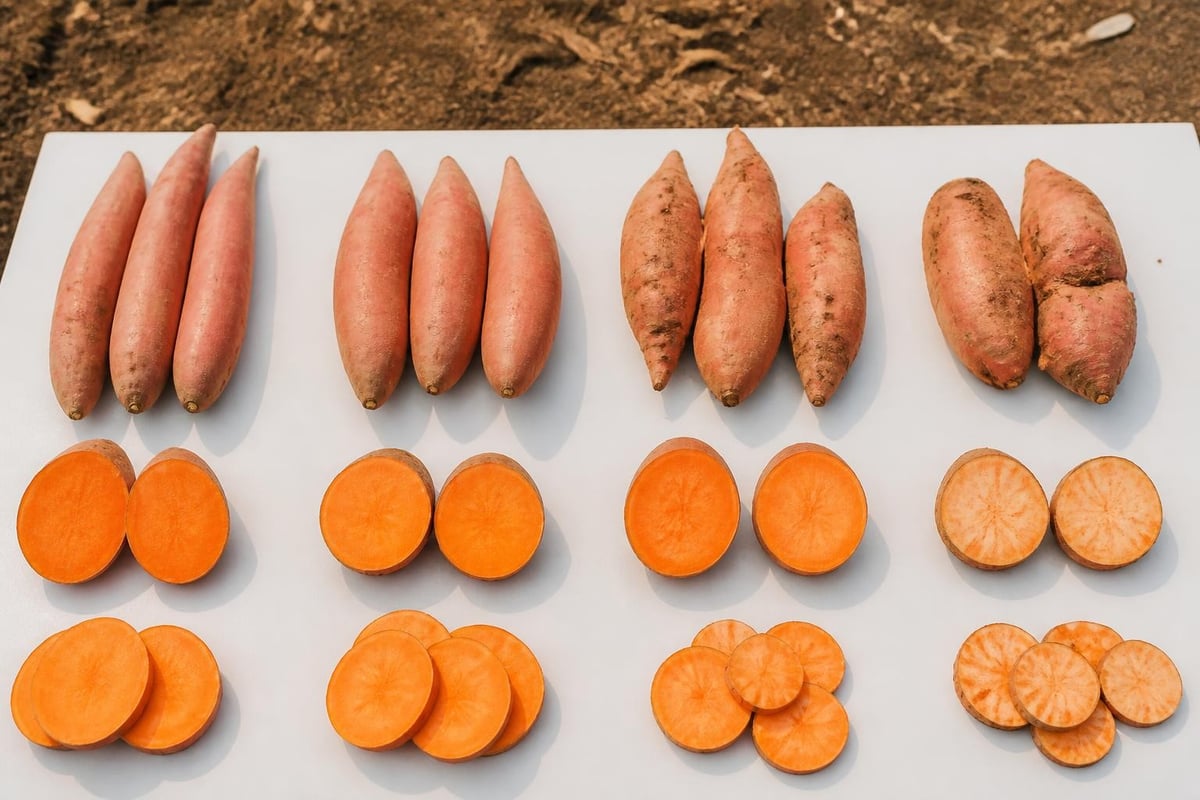
Export Grade Classifications
Although grading standards vary by market and customer requirements, export-quality sweet potatoes are generally classified into three categories.
Grade A – Premium Export Quality
This grade is intended for supermarkets, premium wholesalers, and fresh retail markets where appearance is especially important.
Typical characteristics include:
-
Uniform size within customer specifications.
-
Smooth, clean skin with minimal blemishes.
-
Well-shaped tubers with consistent appearance.
-
Free from insect damage, disease, or mechanical injury.
-
Firm texture and healthy internal quality.
Grade A sweet potatoes represent the highest commercial value and are selected for buyers seeking premium-quality fresh produce.
Grade B – Standard Export Quality
Grade B products remain suitable for export but may display minor cosmetic imperfections that do not affect eating quality.
These sweet potatoes typically have:
-
Moderate variation in size.
-
Minor surface marks or natural skin imperfections.
-
Slight shape irregularities.
-
Small handling marks that remain within customer tolerance.
Many wholesale markets and foodservice businesses accept Grade B products because they offer an excellent balance between quality and value.
Grade C – Processing Grade
Sweet potatoes that fall outside fresh-market specifications are commonly supplied to food processors.
These may include:
-
Oversized or undersized tubers.
-
Irregular shapes.
-
Surface defects affecting appearance.
-
Minor harvest damage requiring trimming.
Although they may not meet retail presentation standards, these sweet potatoes remain valuable for products such as frozen foods, fries, puree, flour, starch, and other processed applications.
Key Quality Inspection Criteria
Professional grading involves much more than visual sorting.
Each batch is evaluated using several quality indicators to ensure compliance with export specifications.
Appearance
Inspectors examine every sweet potato for:
-
Skin cleanliness
-
Color consistency
-
Surface defects
-
Mechanical damage
-
Signs of disease or pest activity
Products with significant defects are removed before packing.
Size and Weight
Most export customers require uniform sizing to improve packing efficiency and retail presentation.
Each shipment is graded according to the buyer's agreed size and weight specifications, helping ensure consistency across cartons and containers.
Firmness
Firm, healthy tubers generally have better storage performance and are less susceptible to transport damage.
Soft spots or signs of internal deterioration indicate quality issues and are excluded from export shipments.
Internal Quality
Routine sample cutting is carried out during grading to evaluate:
-
Flesh color
-
Texture
-
Moisture condition
-
Internal defects
-
Signs of discoloration or disease
This additional inspection provides assurance that external appearance accurately reflects internal quality.
Traceability and Documentation
Modern agricultural exports require more than high-quality produce. Buyers increasingly expect transparency throughout the supply chain.
Professional exporters maintain records covering:
-
Farm identification
-
Harvest date
-
Variety
-
Packing date
-
Batch number
-
Quality inspection results
A comprehensive traceability system enables exporters to respond quickly to customer inquiries, support food safety requirements, and demonstrate accountability throughout the supply chain.
Meeting International Buyer Expectations
Different countries and customers often have unique quality requirements. Some buyers prioritize larger tubers for retail shelves, while food manufacturers may require specific sizes for automated processing lines.
By understanding these individual specifications before harvest and grading, PT Cakra Baja Niaga works with partner farms to prepare shipments that align with each customer's commercial requirements.
This customer-focused approach helps minimize quality claims, improve supply consistency, and build long-term partnerships with importers around the world.
Storage and Transportation for Export
Harvesting and grading are only part of the journey. To arrive in excellent condition, sweet potatoes must also be stored and transported under carefully controlled conditions. Even high-quality produce can lose value if exposed to unsuitable temperatures, excessive humidity, or improper handling during storage and shipping.
For exporters serving international markets, maintaining product quality throughout the supply chain is just as important as producing an excellent crop. Every stage—from warehouse storage to container loading and ocean freight—must be managed carefully to preserve freshness, appearance, and shelf life.
Why Proper Storage Matters
Sweet potatoes are living agricultural products that continue to respire after harvest. If storage conditions are not properly controlled, they can lose moisture, become susceptible to disease, or suffer chilling injury that affects both appearance and eating quality.
Well-managed storage provides several important benefits:
-
Extends product shelf life.
-
Preserves firmness and texture.
-
Reduces moisture loss.
-
Minimizes fungal and bacterial decay.
-
Maintains consistent product quality throughout export.
For buyers importing large volumes, these benefits translate into lower waste, better retail presentation, and higher customer satisfaction.
Recommended Storage Conditions
Following the curing process, sweet potatoes should be stored in an environment that supports long-term quality preservation.
| Storage Factor | Recommended Condition |
|---|---|
| Temperature | 13–16°C (55–60°F) |
| Relative Humidity | 85–90% |
| Ventilation | Continuous gentle airflow |
| Direct Sunlight | Avoid completely |
Maintaining these conditions helps reduce dehydration while preventing condensation that may encourage fungal growth.
Unlike some root vegetables, sweet potatoes should not be stored at excessively low temperatures. Chilling injury can occur below approximately 10°C (50°F), resulting in internal discoloration, poor texture, and reduced shelf life.
Packaging for International Shipping
Packaging plays a critical role in protecting sweet potatoes throughout transportation.
Strong, well-designed cartons help prevent crushing while allowing adequate airflow around the produce. Export packaging should also be selected according to customer requirements and the intended mode of transport.
Depending on the destination market, common packaging options include:
-
Corrugated export cartons.
-
Ventilated cardboard boxes.
-
Plastic harvest crates for local handling.
-
Palletized carton systems for containerized shipments.
Proper palletization improves handling efficiency and reduces the risk of damage during loading and unloading.
Maintaining Quality During Transportation
International shipments often travel for several weeks before reaching their destination. During this time, maintaining stable environmental conditions is essential.
Best practices include:
-
Loading only fully cured and graded sweet potatoes.
-
Keeping products protected from direct sunlight before container loading.
-
Ensuring adequate ventilation throughout transportation.
-
Avoiding excessive stacking pressure that may bruise the produce.
-
Monitoring temperatures throughout the logistics chain where appropriate.
Careful planning at this stage helps ensure that sweet potatoes arrive with the same quality they had when they left the packing facility.
Cold Chain Considerations
Although sweet potatoes do not require the same refrigeration conditions as many fresh fruits, temperature management remains important.
Exporters should avoid rapid temperature fluctuations that can cause condensation inside packaging. Excess moisture increases the risk of mold development and surface deterioration during long-distance transport.
For destinations requiring extended transit times, refrigerated containers should be operated according to the agreed shipping specifications while maintaining conditions suitable for sweet potatoes.
Consistent temperature control throughout the journey helps preserve product quality and reduces the likelihood of claims upon arrival.
Final Quality Inspection Before Shipment
Before a container is sealed, every shipment should undergo a final inspection.
Quality control teams typically verify:
-
Product grade and appearance.
-
Carton labeling.
-
Packaging integrity.
-
Quantity and pallet configuration.
-
Traceability documentation.
-
Compliance with customer specifications.
Conducting this final review minimizes shipping errors and provides buyers with greater confidence that the products they receive match their purchase requirements.
Reliable Logistics Build Long-Term Partnerships
For international buyers, a reliable supplier is defined not only by the quality of the crop but also by the consistency of its delivery.
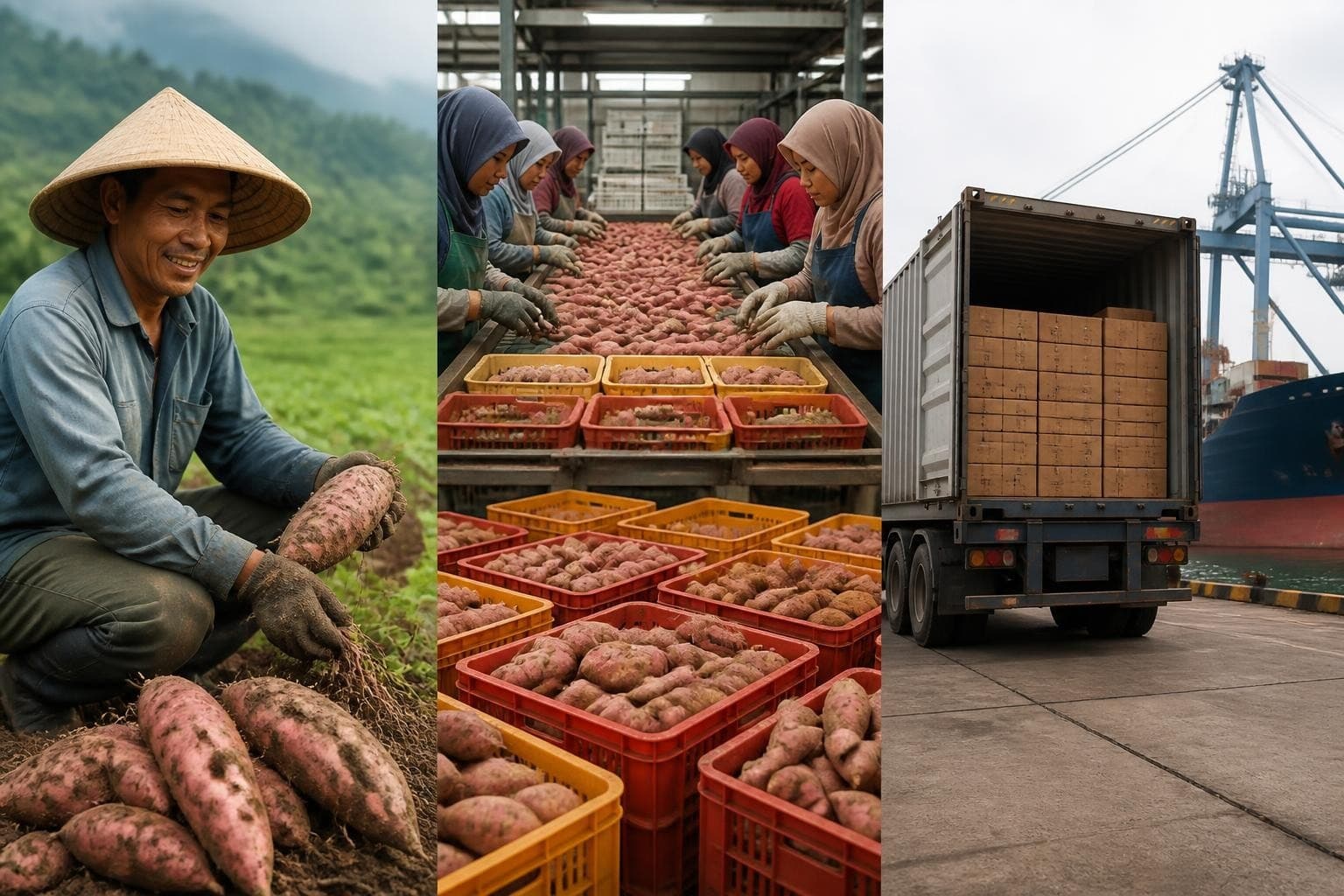
At PT Cakra Baja Niaga , we work closely with trusted logistics partners to coordinate harvesting, packing, storage, and shipping schedules that help preserve product quality throughout the export process. By maintaining careful control over every stage of the supply chain, we strive to deliver fresh Indonesian sweet potatoes that arrive in excellent condition and are ready for wholesale, retail, or food processing applications.
Common Challenges in Sweet Potato Exports and How to Overcome Them
Exporting fresh agricultural products requires careful coordination across farming, quality control, packaging, logistics, and documentation. Even with high-quality produce, small issues during handling or transportation can affect product condition upon arrival.
Understanding these challenges allows both exporters and buyers to reduce risks and build more reliable supply chains.
Mechanical Damage During Harvest
One of the most common causes of quality loss occurs during harvesting.
Cuts, bruises, and skin abrasions may appear minor when the crop leaves the farm, but these injuries often become more serious during storage or ocean transportation.
To minimize this risk, professional exporters focus on:
-
Careful harvesting techniques
-
Proper curing procedures
-
Gentle handling throughout packing
-
Appropriate packaging materials
-
Thorough quality inspections before shipment
Protecting the crop from unnecessary damage helps maintain appearance, shelf life, and customer satisfaction.
Moisture Loss During Storage
Sweet potatoes naturally lose moisture after harvest.
If storage humidity is too low, the tubers may shrink, become soft, or lose weight before reaching the destination market.
Maintaining proper storage conditions and using suitable packaging helps preserve freshness throughout the export journey.
Temperature Fluctuations
Temperature management is essential during international transportation.
Excessive heat can accelerate respiration and shorten shelf life, while temperatures that are too low may cause chilling injury, affecting texture and internal quality.
Careful logistics planning and appropriate container management help maintain stable product conditions from origin to destination.
Inconsistent Product Quality
International buyers expect every shipment to match agreed specifications.
Differences in size, shape, or appearance between shipments can reduce buyer confidence and create unnecessary claims.
Professional quality control systems—including grading, sampling, and final inspections—help ensure greater consistency throughout the supply chain.
Documentation and Export Compliance
Successful exports require more than excellent products.
Shipments must also include the necessary export documentation required by destination countries.
Depending on the market, these documents may include:
-
Commercial Invoice
-
Packing List
-
Bill of Lading
-
Phytosanitary Certificate
-
Certificate of Origin
-
Other documents requested by the importing country
Accurate documentation helps avoid customs delays and supports smooth international trade.
Why Choose Indonesian Sweet Potatoes?
Indonesia has become an increasingly attractive sourcing destination for international buyers thanks to its favorable climate, experienced farming communities, and growing export infrastructure.
Key advantages include:
-
Year-round production in many growing regions.
-
Fertile volcanic soils that support healthy crop development.
-
Competitive pricing compared with many producing countries.
-
Reliable export logistics through major Indonesian ports.
-
Access to experienced growers with commercial production capabilities.
These strengths make Indonesia a dependable source for wholesalers, distributors, retailers, food manufacturers, and importers seeking a consistent supply of premium sweet potatoes.
Partner with PT Cakra Baja Niaga
Finding the right supplier is about more than purchasing agricultural products—it's about building a dependable long-term partnership.
At PT Cakra Baja Niaga, we work closely with trusted farming partners in West Java to supply export-quality Indonesian sweet potatoes that meet the requirements of international markets. Every shipment is carefully managed from harvest and grading to packaging and export logistics, helping ensure consistency, freshness, and reliable delivery.
Whether you are importing for retail distribution, food manufacturing, wholesale supply, or foodservice operations, our team is committed to understanding your product specifications and providing export solutions tailored to your business.
We believe that long-term relationships are built through consistent quality, transparent communication, and dependable service.
Conclusion
Producing export-quality sweet potatoes requires expertise at every stage of the supply chain. From selecting the right harvest time and using careful harvesting techniques to curing, grading, storage, packaging, and international logistics, each step plays an important role in preserving product quality and ensuring customer satisfaction.
For international buyers, choosing a supplier with well-managed production and quality control processes can significantly reduce risk while improving consistency across every shipment.
Indonesia's favorable growing conditions and expanding agricultural export sector continue to make it an excellent source of premium sweet potatoes for global markets.
If you're looking for a trusted Indonesian sweet potato exporter, PT Cakra Baja Niaga is ready to support your sourcing needs with high-quality products, dependable supply, and professional export services.
Contact us today to discuss your product requirements, request a quotation, or learn how we can help your business source premium Indonesian sweet potatoes with confidence.
Looking to source premium Indonesian sweet potatoes?
PT Cakra Baja Niaga supplies export-grade Cilembu, Purple, and Murasaki varieties to buyers worldwide.
Continue reading
Wholesale Sweet Potatoes Indonesia: B2B Export Guide 2026
Source premium wholesale sweet potatoes Indonesia for import. Quality standards, export logistics, varieties, pricing & supplier partnerships.
Read article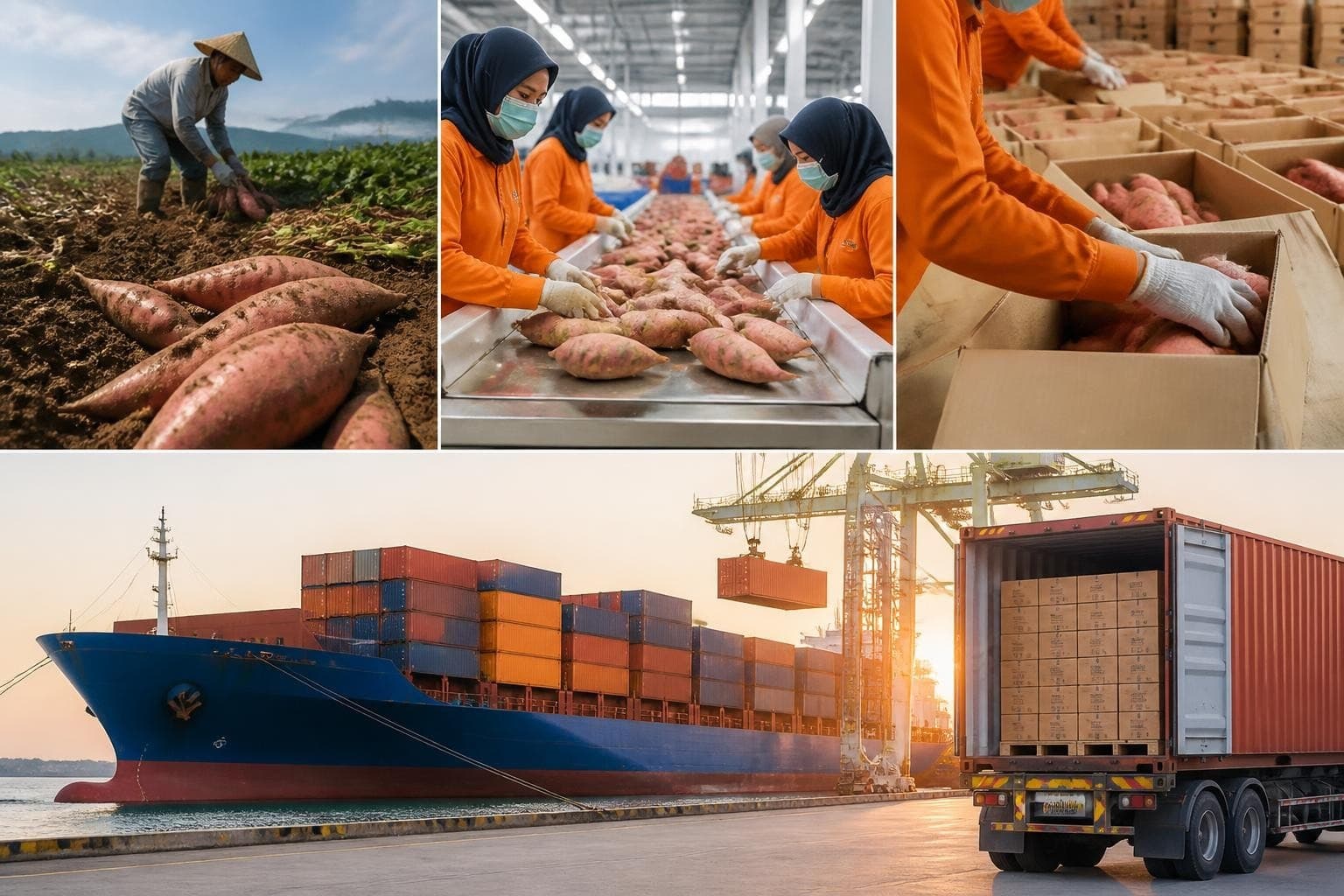
Sweet Potatoes Supplier Indonesia: Quality & Export Guide
Find reliable sweet potatoes supplier Indonesia offering premium export quality. Learn about sourcing, grading, logistics, and partnerships.
Read article
Sweet Potatoes Grading Guide for International Buyers
Comprehensive sweet potatoes grading guide for exporters and importers. Learn USDA standards, size classification, defect tolerance, and quality control.
Read article