
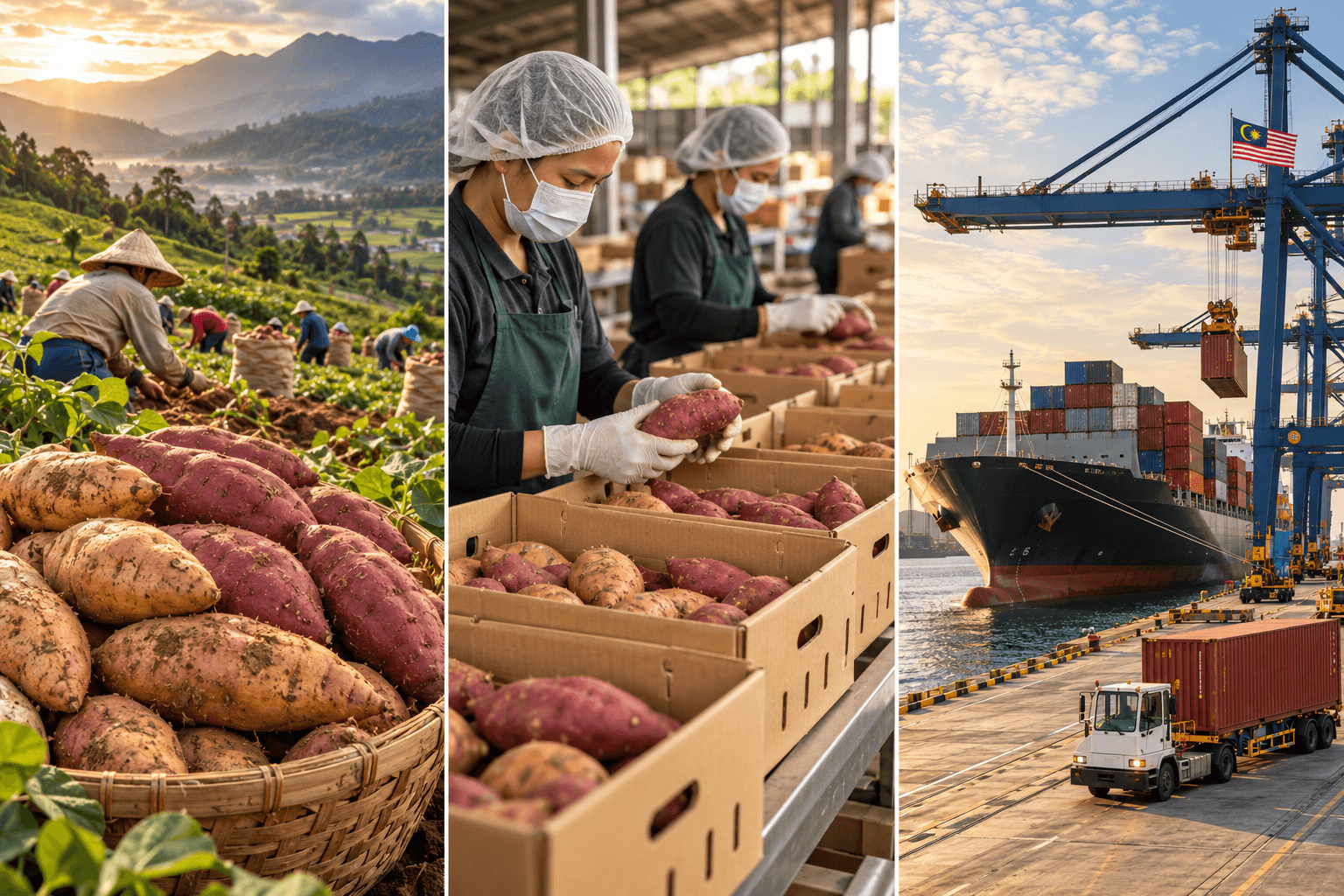
Explore Malaysia’s sweet potato import market, leading overseas suppliers, local production trends, and practical requirements for sourcing Indonesian sweet potatoes.
Malaysia offers an established market for sweet potato exporters, with imported produce competing alongside domestic harvests. For wholesalers, retailers, and foodservice buyers, the purchasing decision involves more than price: the right variety must arrive in saleable condition, meet the agreed specification, and fit the customer’s cooking or retail requirements.
This Sweet Potatoes Import Malaysia Market Report examines recent official supply figures, Indonesia’s position among overseas suppliers, and the commercial steps needed to develop a repeat purchasing programme. The focus is fresh sweet potatoes for consumption, with broader trade statistics used as market context.
Research updated October 2026. The national supply overview uses 2025 DOSM figures; the supplier comparison uses verified 2024 WITS data. These periods and statistical series are kept separate. Buyer recommendations are editorial analysis.
Malaysia Sweet Potato Market: The Latest Supply Picture
Malaysia imported 24,993.3 tonnes of sweet potatoes in 2025, up 1.1% from 24,720.9 tonnes in 2024. Domestic production fell 24.3%, from 50,583.3 to 38,285.4 tonnes. Exports increased from 1,290.3 to 1,539.8 tonnes. Source: Department of Statistics Malaysia, Supply and Utilization Accounts, 2021–2025, Exhibit 3.
| Indicator | 2024 | 2025 |
|---|---|---|
| Domestic production, tonnes | 50,583.3 | 38,285.4 |
| Imports, tonnes | 24,720.9 | 24,993.3 |
| Exports, tonnes | 1,290.3 | 1,539.8 |
Source: Department of Statistics Malaysia. Percentage changes calculated from the published values.
What This Means for Buyers and Exporters
The figures indicate a broadly steady import flow during a year of lower local output. They do not establish a shortage in every region or a guaranteed price increase. Importers should compare overseas offers with current local availability, customer demand, and the cost of distributing each shipment.
For Indonesian exporters, the practical opportunity is to serve a defined purchasing need: a dependable roasting variety, consistent colour for a dessert producer, or uniform roots for retail packs. A national market total helps establish scale, but individual orders should follow confirmed customer requirements.
Leading Overseas Suppliers and Indonesia’s Position
WITS records Malaysia’s 2024 sweet potato imports at US$13.84 million and 24,721.6 tonnes. Indonesia was the largest supplier by weight, accounting for 30.8% of volume and 20.5% of value. Vietnam led by value. Source: WITS / UN Comtrade.
| Origin | Volume, tonnes | Value, US$m | Average US$/kg |
|---|---|---|---|
| Indonesia | 7,622.71 | 2.83 | 0.37 |
| Thailand | 5,260.58 | 1.19 | 0.23 |
| China | 4,284.26 | 2.51 | 0.59 |
| Vietnam | 4,264.36 | 4.51 | 1.06 |
| Japan | 639.61 | 1.20 | 1.87 |
Selected suppliers, ordered by volume. Source: WITS / UN Comtrade, HS 071420, HS 1988/92. Average values use unrounded trade data.

Indonesia led the selected suppliers by import weight. Source: WITS / UN Comtrade.
Reading the Trade Figures Correctly
WITS labels this historical series “sweet potatoes, fresh or dried.” It reports gross imports rather than fresh-only consumption. Its 2024 total differs slightly from DOSM’s; each source is used within its own series. Average import values are statistical ratios, not current quotations.
Country averages cannot isolate variety, grade, packaging, or shipment mix. A higher recorded value does not demonstrate a like-for-like quality premium. Request comparable specifications and representative samples before deciding whether two offers serve the same customer need.
Matching Indonesian Varieties to Malaysian Sales Channels
Malaysia’s local crop is part of the competitive landscape. Imported sweet potatoes need a clear reason to be selected, whether that is eating quality, consistent sizing, a particular flesh colour, or availability during a buyer’s purchasing window. The following applications are opportunities to test with customers, not measured channel shares.
| Variety | Potential application | Sample assessment |
|---|---|---|
| Cilembu | Whole roasted sweet potatoes and specialty retail | Sweetness, texture, origin evidence, and performance under the agreed baking method |
| Purple sweet potato | Desserts, bakery products, and prepared dishes | Cooked colour, consistency, preparation loss, and recipe suitability |
| Murasaki | Retail produce and portioned foodservice dishes | Flesh characteristics, size uniformity, and eating quality |
Wholesale and Fresh Retail
A wholesaler needs cartons that can be checked, divided, and sold efficiently. Agree the weight range per root, carton net weight, and acceptable variation before the order. Retail buyers should also specify whether the product will be sold loose, by count, or in fixed-weight packs.
Use clear variety and origin descriptions. If a product is marketed as Cilembu, the supporting records should substantiate that claim. Keep the approved sample specification available to both the packing team and receiving staff so repeat shipments are assessed consistently.
Foodservice, Bakery, and Dessert Applications
For kitchens, cost per usable portion is often more informative than cost per kilogram. Trial the roots using the actual recipe and record preparation time, peeling loss, cooking yield, texture, and appearance after holding. Purple sweet potatoes intended for desserts should be tested in the finished recipe rather than approved only from their raw colour.
Separate fresh-root procurement from prepared ingredients. Frozen cubes, puree, flour, and finished snacks may require different processing specifications, classifications, and food documentation. Confirm the intended product form at the quotation stage.
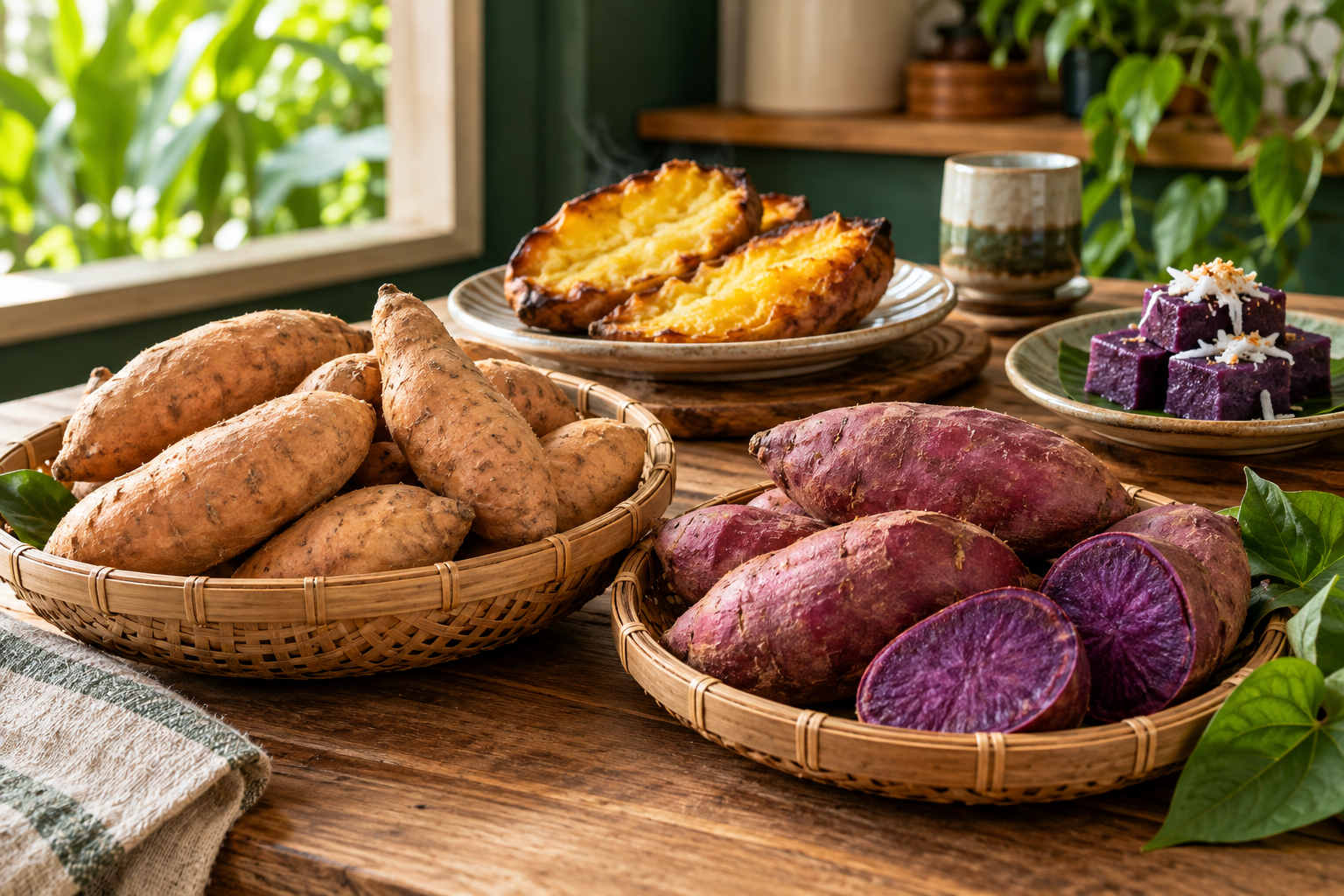
Evaluate sweet potatoes in the buyer’s intended recipe and sales format. AI-generated editorial illustration.
Import Compliance: Start with Product and Destination
The importer should identify the product as edible sweet potato roots, state the origin and processing condition, and confirm the destination state and entry point. Those details matter when establishing the applicable controls. A broad heading such as “plant products” is not a complete shipment specification.
Customs Classification and Agency Requirements
MAQIS directs importers to the applicable Customs import prohibition order and tariff classification to determine requirements. Where an import permit is required through MAQIS, new importers register through SPEED and apply through New ePermit. Confirm the commodity-specific requirements before booking cargo. Source: MAQIS import FAQ.
Ask the Malaysian importer or appointed broker to confirm the full tariff code, any permit, phytosanitary certificate, additional declaration, treatment, inspection, and conformity documentation required for the actual shipment. Share those confirmed conditions with the Indonesian exporter before harvesting and packing are scheduled.
Peninsular Malaysia, Sabah, and Sarawak
Do not assume that a shipment cleared for one Malaysian destination automatically satisfies another destination’s plant-health controls. Sarawak’s Department of Agriculture maintains a separate import-requirements page, including a sweet-potato entry. Check the relevant state authority when supplying Sabah or Sarawak. Source: Department of Agriculture Sarawak.
Also distinguish roots for consumption from propagation material. MAQIS’s plant page includes a planting-material section covering sweet potato; that section should not be copied wholesale into instructions for edible roots. Source: MAQIS plant import guidance.
Food Safety and FoSIM
Malaysia’s Ministry of Health states that imported food must comply with the Food Act 1983 and its regulations, including safety, standards, and labelling. Importers and forwarding agents must register with FoSIM. Entry checks follow a risk-based system and may involve documents, inspection, sampling, or holding a consignment pending results. Source: Ministry of Health commercial food import procedures.
Build compliance into supplier selection. Request traceable farm and batch records and agree how pesticide-residue compliance will be demonstrated. Resolve documentation gaps before dispatch; an arrival inspection should not be the first time the parties compare their understanding of the requirements.
Grading, Packaging, and Labelling for Malaysia
Sweet potato appears in the agricultural produce schedule in FAMA’s published grading, packaging, and labelling regulations. Its guidance provides for conformity inspection and certification of imported produce. Confirm the applicable arrangements with the receiving importer. Source: FAMA regulations and explanatory notes.
FAMA’s published guidance specifies packages no heavier than 30 kg, containing the same produce type and grade. Import labels use the national language and identify the relevant business, product, grade, size, origin, and package weight. It specifies a minimum label size of 11 × 7 cm and lettering of at least 20 points. Source: FAMA 3P guidance.
Turn the Specification into a Receiving Checklist
- Product identity: agreed variety, origin, skin characteristics, and flesh characteristics.
- Size: weight range per root and tolerance for roots outside that range.
- Condition: firmness, acceptable cosmetic defects, and criteria for rejecting decay or pest damage.
- Packaging: carton strength, ventilation, net weight, and approved label artwork.
- Traceability: batch identification connecting the carton to packing and supplier records.
Describe acceptance criteria in writing instead of relying only on “premium” or “Grade A.” Define how many cartons will be sampled, when the inspection will take place, and what evidence supports a claim. The CBN sweet potato grading guide can help structure the commercial discussion.
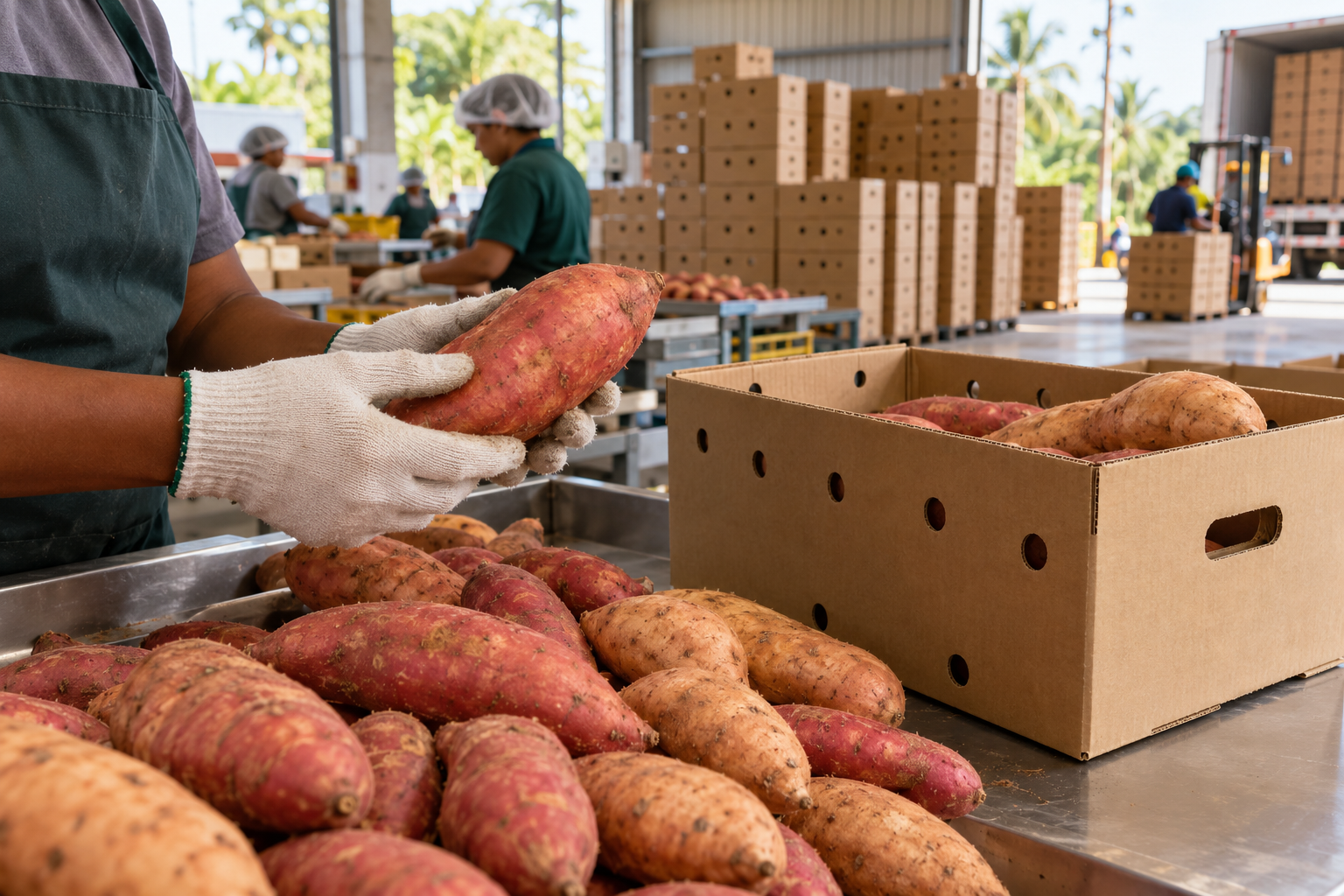
Approve grading, ventilation, and carton labels before dispatch. AI-generated editorial illustration; not a photograph of CBN facilities.
Shipping and Storage from Indonesia to Malaysia
Choose the route around the delivery destination and product-handling needs. Ask for a complete schedule covering collection, packing, export clearance, departure, arrival inspection, and warehouse delivery. An attractive port-to-port sailing time may hide waiting time before loading or after discharge.
Manage Temperature Without Chilling the Roots
Sweet potatoes are chilling-sensitive. UC Davis recommends commercial storage at 12.5–15°C and explains that curing helps damaged skin heal. Humidity needs differ between long-term storage and short-term marketing. Use this guidance as a starting point and validate handling settings for the actual variety, packaging, and shipment duration. Source: UC Davis Postharvest Research and Extension Center.
Agree who records temperature, how ventilation is maintained, and how the load will be handled during inspection. Avoid treating a refrigeration setting as a guarantee of shelf life. Receiving condition and subsequent warehouse practices are part of the same quality plan.
Match Shipment Size to Customer Turnover
A full container may reduce some transport costs per kilogram, but the commercial benefit depends on how much can be sold in good condition. For early orders, compare shipment options against confirmed sales, available storage, and expected losses. Consolidated loads need compatible cargo and handling conditions.
Reserve space for receiving checks and establish stock rotation before the shipment arrives. Record rejected roots, shrinkage, and customer feedback by batch. These records show whether the next order needs a different size range, packing method, or delivery frequency. See the CBN export packaging guide for further packing considerations.
Pricing and Landed-Cost Planning
Request current quotations for a defined variety, grade, quantity, packing format, delivery term, named place, and shipment window. Include quotation validity and payment milestones. Historical import averages should not be presented as current FOB prices, retail prices, or guaranteed buying targets.
Malaysia’s 2025 Sales Tax (Goods Exempted from Sales Tax) Order lists sweet-potato subheadings 0714.20.10 00 and 0714.20.90 00. Have the broker verify the applicable classification and any amendments at shipment time; sales-tax treatment and import duty are separate questions. Source: Royal Malaysian Customs, P.U. (A) 171/2025.
| Cost element | Buyer’s confirmation |
|---|---|
| Produce and packing | Grade, net weight, carton format, and services included |
| Transport and insurance | Responsibility under the agreed delivery term and route |
| Clearance and inspection | Broker charges, agency fees, terminal costs, and possible waiting charges |
| Duties and taxes | Current classification, applicable treatment, and supporting origin documents |
| Distribution and losses | Local delivery, storage, sorting, shrinkage, and rejected quantities |
Working formula: cost per saleable kilogram = total relevant landed cost ÷ kilograms available for sale. Compare offers on this basis, then test the result against the customer’s achievable selling price and payment terms.
Market Outlook: Building a Repeat Supply Programme
The purchasing case for Indonesian sweet potatoes should be specific and measurable. Reliable specifications, responsive communication, and consistent arrival quality give buyers a basis for repeat orders. Avoid assuming that a national change in production guarantees demand for a particular imported variety.
A Practical First-Order Sequence
- Choose the customer and use case. Confirm the intended channel, recipe or retail format, and delivery location.
- Test representative samples. Record cooked quality, preparation yield, size consistency, and customer feedback.
- Confirm import conditions. Resolve classification, destination-specific requirements, labels, and documents before dispatch.
- Agree the commercial specification. Set acceptance criteria, delivery responsibilities, payment milestones, and claims handling.
- Review the first shipment. Measure arrival condition, saleable yield, stock turnover, and the economics of a repeat order.
For an ongoing programme, share forecasts early and distinguish firm orders from indicative demand. Review each delivery against the same checklist and adjust volumes using actual sales. This helps the exporter plan packing capacity while giving the buyer better control over inventory and quality.
PT Cakra Baja Niaga supplies Cilembu, Purple, and Murasaki sweet potatoes for international buyers. To discuss supply for Malaysia, share your preferred variety, target quantity, carton requirements, delivery destination, and shipment window so the export team can prepare a relevant proposal.
Looking to source premium Indonesian sweet potatoes?
PT Cakra Baja Niaga supplies export-grade Cilembu, Purple, and Murasaki varieties to buyers worldwide.
Continue reading
Sweet Potatoes Import Singapore Market Report
Explore Singapore’s sweet potato imports, leading suppliers, SFA requirements, pricing factors, and sourcing opportunities for Indonesian exporters.
Read article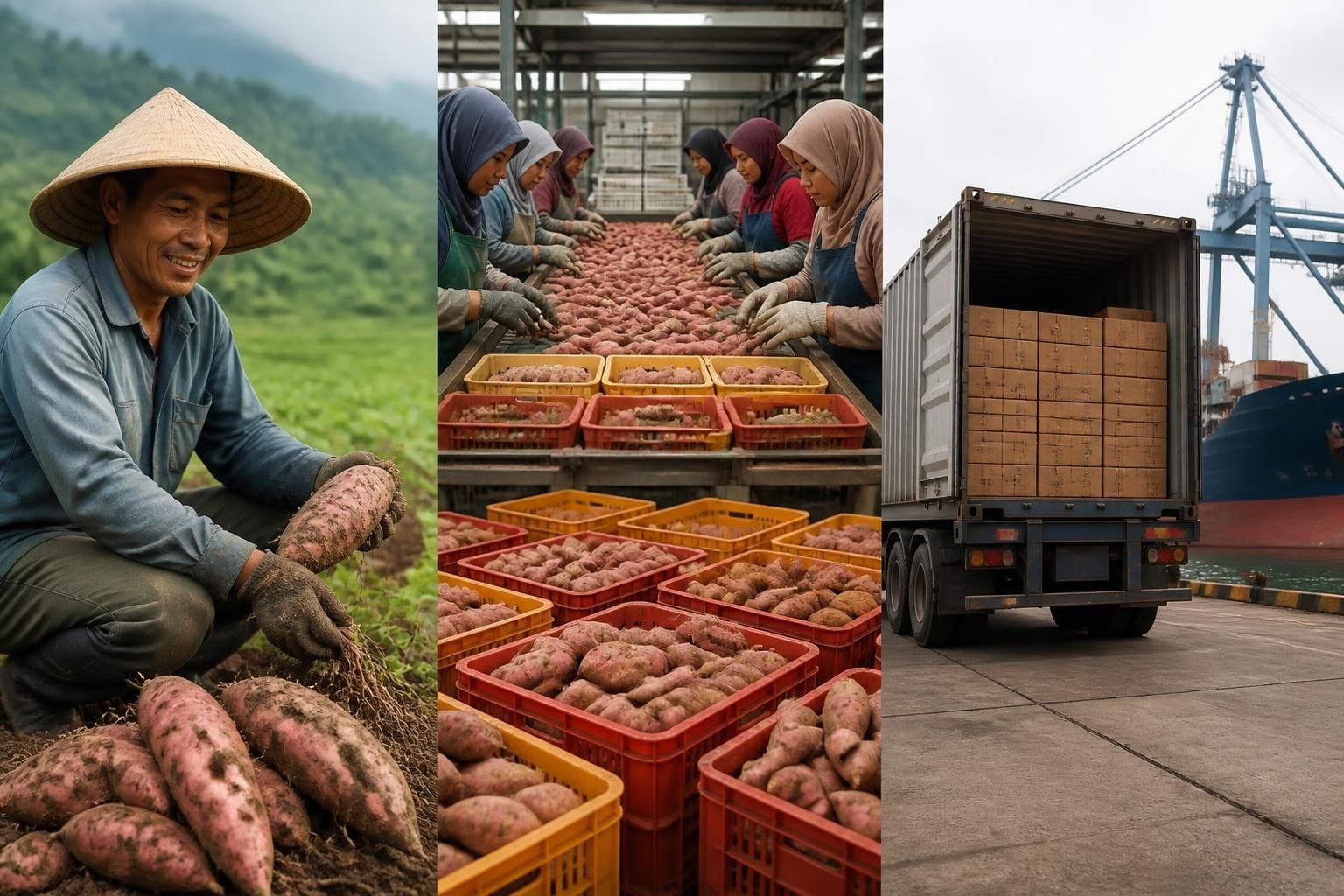
Wholesale Sweet Potatoes Indonesia: B2B Export Guide 2026
Source premium wholesale sweet potatoes Indonesia for import. Quality standards, export logistics, varieties, pricing & supplier partnerships.
Read article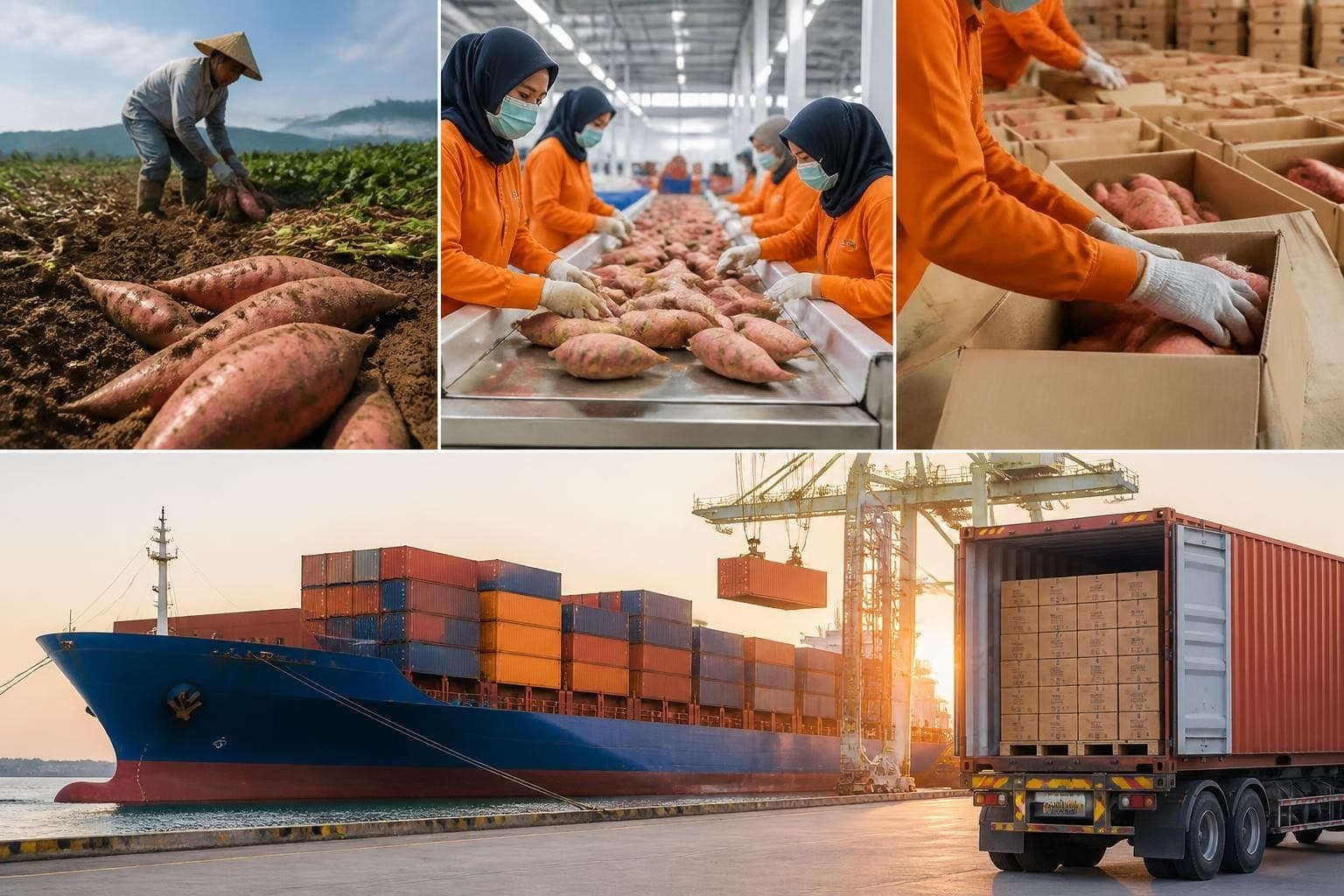
Sweet Potatoes Supplier Indonesia: Quality & Export Guide
Find reliable sweet potatoes supplier Indonesia offering premium export quality. Learn about sourcing, grading, logistics, and partnerships.
Read article