
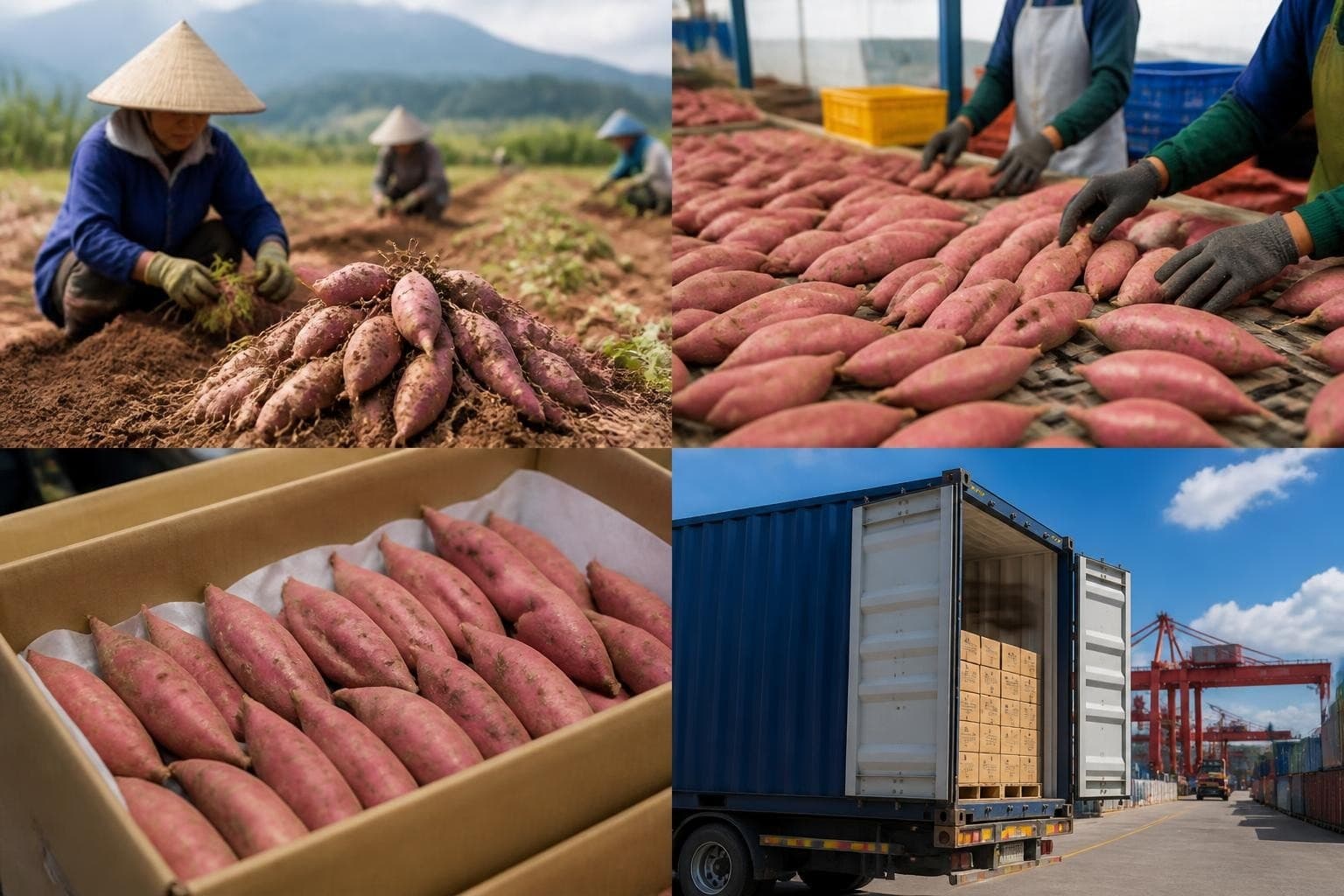
Premium Indonesian Sweet Potatoes: Quality, Varieties, and Export Guide
Discover what makes premium Indonesian sweet potatoes exceptional for international buyers. Expert insights on varieties, sourcing, and export quality.
Indonesia's tropical climate, volcanic soils, and experienced farming communities have positioned the country as an important supplier of sweet potatoes to international markets. Premium Indonesian sweet potatoes offer buyers a combination of quality, variety, competitive pricing, and year-round production potential.
For supermarkets, food manufacturers, distributors, and specialty retailers, understanding Indonesian sweet potato varieties, quality standards, logistics, and supplier requirements is essential for building a reliable import program.
What Defines Premium Indonesian Sweet Potatoes?
Premium classification goes beyond basic edible quality. International buyers typically evaluate sweet potatoes based on size, appearance, varietal authenticity, post-harvest handling, and consistency.
Physical Quality Standards
Premium Indonesian sweet potatoes are generally graded according to measurable specifications. A common premium size range is approximately 200 to 400 grams per tuber, providing consistent packaging and portion control.
Key quality indicators include:
-
Smooth skin with minimal blemishes
-
Uniform shape appropriate to the variety
-
No sprouting, soft spots, or visible disease
-
Consistent skin and flesh coloration
-
Proper curing for improved storage stability
-
Minimal mechanical or insect damage
-
Good firmness and moisture condition
Consistent grading helps exporters reduce shipment rejection rates while giving buyers predictable quality from one shipment to the next.
Varietal Authenticity
Different sweet potato varieties offer distinct flavors, textures, colors, and culinary applications. For premium buyers, varietal authenticity is particularly important when products are marketed under a specific variety name.
The renowned Cilembu sweet potato from West Java, for example, is known for its naturally sweet, honey-like character after appropriate post-harvest handling. Cilembu sweet potato information
Professional suppliers can support varietal consistency through direct farm partnerships and traceability systems.
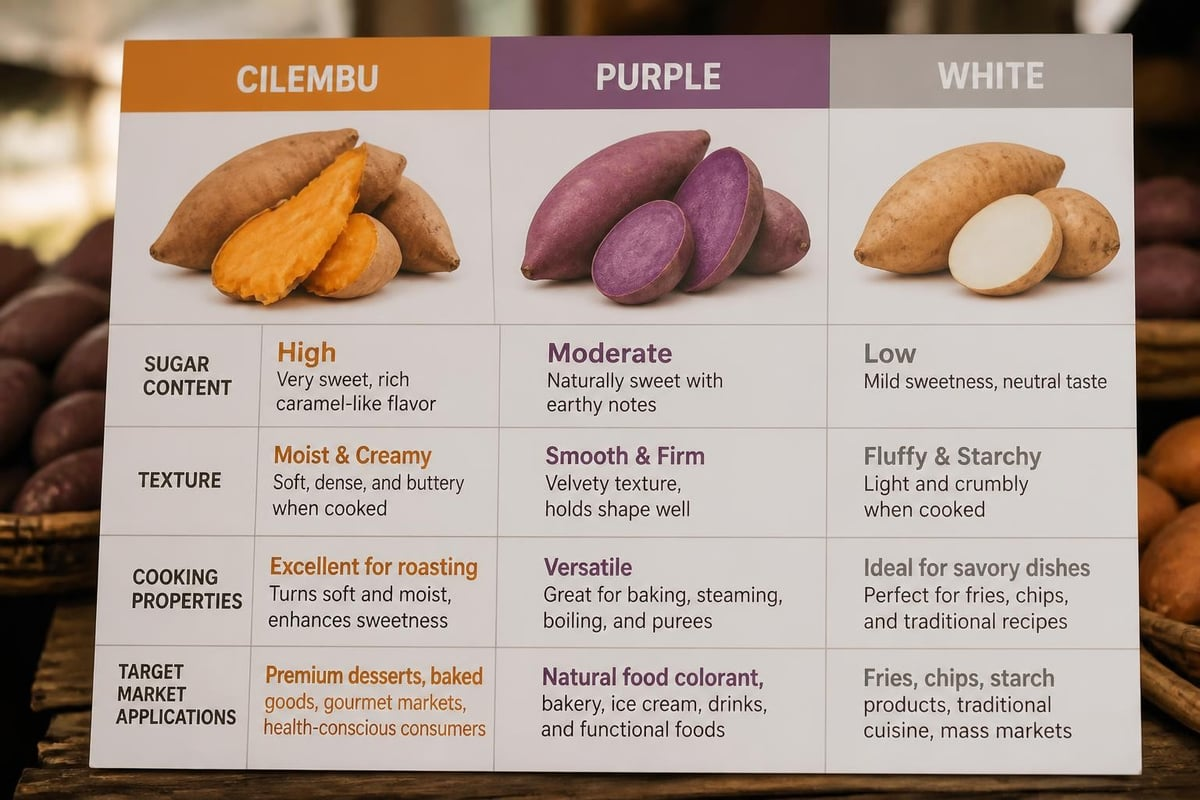
Indonesian Sweet Potato Varieties for Export
Indonesia produces several varieties suitable for different international markets.
| Variety | Flesh Color | Main Applications |
|---|---|---|
| Cilembu | Orange | Baking, roasting, desserts |
| Purple | Deep purple | Chips, powder, baking, specialty foods |
| White | Cream | Foodservice, frying, processing |
| Japanese-type | Yellow-cream | Roasting, snacks, Asian cuisine |
Cilembu Sweet Potatoes
Cilembu originates from West Java and occupies a premium position in Indonesia's sweet potato market. Its distinctive sweetness makes it attractive to specialty retailers, restaurants, and Asian supermarket chains.
International applications include:
-
Premium fresh produce
-
Baking and roasting
-
Desserts
-
Specialty food products
-
Natural sweetener applications
Purple Sweet Potatoes
Purple sweet potatoes are increasingly attractive to health-oriented consumers because of their distinctive color and anthocyanin content. Their natural purple pigmentation also creates opportunities for food manufacturers developing products with natural colors.
They are commonly used for:
-
Chips
-
Bakery products
-
Powder
-
Desserts
-
Natural food coloring
-
Specialty health foods
White and Japanese-Type Varieties
White-fleshed varieties have a relatively mild flavor and can be suitable for institutional foodservice and processing applications.
Japanese-type varieties appeal particularly to Asian markets and consumers familiar with Japanese-style sweet potatoes. They are suitable for roasting, baking, and snack applications.
Why West Java Is Important for Premium Sweet Potatoes
West Java is one of Indonesia's most important sweet potato production regions. Areas around Cilembu, Garut, and Tasikmalaya provide favorable agricultural conditions for premium production.
Important regional advantages include:
-
Volcanic soils rich in minerals and organic matter
-
Favorable rainfall patterns
-
Suitable temperature conditions
-
Long-established farming knowledge
-
Existing agricultural and post-harvest infrastructure
Highland production areas can also provide temperature conditions that support tuber development and flavor characteristics.
Direct Farm Partnerships
For international buyers, the supplier's relationship with farmers is an important consideration.
Direct partnerships can provide better control over:
-
Variety selection
-
Planting schedules
-
Cultivation practices
-
Harvest timing
-
Quality specifications
-
Traceability
-
Supply planning
Sweet potato farming in Indonesia
This approach can reduce dependence on spot-market sourcing and improve consistency across commercial shipments.
Quality Assurance and Food Safety
International buyers increasingly require documented evidence that imported sweet potatoes comply with food safety and plant health regulations.
Pre-Export Quality Control
Quality control should continue throughout the supply chain rather than occurring only at the packing facility.
Important control points include:
-
Harvest inspection
-
Initial grading
-
Curing monitoring
-
Pre-packing inspection
-
Final container inspection
This process helps remove damaged or unsuitable tubers before shipment.
Professional exporters can also provide photographs, inspection records, and shipment documentation to give buyers greater visibility into product quality.

Export Documentation
Depending on the destination country, buyers may require:
-
Phytosanitary certificate
-
Pesticide residue laboratory reports
-
Packing house documentation
-
Certificate of origin
-
Packing list
-
Commercial invoice
-
Temperature records when applicable
Import requirements vary by country, so buyers should confirm current regulations before placing commercial orders.
Packaging and Logistics
Packaging must protect sweet potatoes from mechanical damage while providing sufficient ventilation during transportation.
Common export formats include:
| Packaging | Typical Weight | Main Application |
|---|---|---|
| Ventilated cartons | 10–15 kg | Retail distribution |
| Mesh bags | 15–20 kg | Wholesale |
| Consumer packs | 1–2 kg | Supermarkets |
| Bulk bins | 400–500 kg | Food processing |
Premium retail programs often favor smaller consumer-ready packaging, while processors and wholesalers may prefer larger formats.
Shipping Conditions
Premium Indonesian sweet potatoes commonly travel by ocean freight. Proper temperature management helps preserve quality during transit.
A typical storage and transit temperature is approximately 13–15°C, depending on variety and destination requirements.
Buyers should confirm:
-
Container temperature settings
-
Humidity requirements
-
Expected transit time
-
Temperature monitoring procedures
-
Insurance coverage
-
Procedures for shipping delays
Transit times from Indonesia can vary significantly depending on the destination and shipping route.
Importing sweet potatoes from Indonesia
Major Market Applications
Premium Indonesian sweet potatoes serve several important buyer segments.
Supermarket Retail
Supermarkets increasingly use premium sweet potatoes to appeal to consumers looking for nutritious and versatile produce.
Retail programs typically require:
-
Consistent sizing
-
Attractive appearance
-
Reliable weekly supply
-
Clear product specifications
-
Competitive pricing
-
Consumer-friendly packaging
Cilembu and purple varieties can provide additional differentiation compared with standard commodity sweet potatoes.
Restaurants and Foodservice
Restaurants require varieties that deliver consistent cooking performance and flavor.
Japanese, Korean, Indonesian, and other Asian restaurants may seek specific varieties to reproduce traditional dishes. Purple sweet potatoes can also add visual appeal to modern dishes and desserts.
Indonesian sweet potato varieties
Food Processing
Processors often prioritize consistency, volume, and technical specifications over perfect cosmetic appearance.
Potential applications include:
-
Frozen sweet potato products
-
Fries and chunks
-
Purees
-
Sweet potato powder
-
Chips
-
Bakery ingredients
-
Natural food coloring
-
Baby food
This segment can provide opportunities for products with minor cosmetic imperfections that do not affect internal quality.
Pricing Factors for Premium Indonesian Sweet Potatoes
Premium sweet potatoes generally command higher prices than commodity grades because of additional production, grading, quality control, and logistics costs.
Important price factors include:
-
Variety
-
Grade
-
Size
-
Harvest season
-
Farmgate cost
-
Sorting and grading
-
Curing
-
Packaging
-
Certification
-
Shipping costs
-
Order volume
Premium pricing should therefore be evaluated against the complete landed cost rather than the farmgate or FOB price alone.
Payment Terms
International transactions can use different payment structures depending on the relationship between buyer and supplier.
Common options include:
-
Letter of Credit for new or higher-risk relationships
-
Documentary Collection for established transactions
-
Net 30–60 terms for qualified buyers
-
Partial advance payment to secure production
Payment terms should be clearly established before production begins.
How to Evaluate an Indonesian Sweet Potato Supplier
Choosing the right supplier is one of the most important decisions for an international buyer.
Key evaluation criteria include:
-
Export experience
-
Direct farm relationships
-
Production capacity
-
Quality control systems
-
Food safety documentation
-
Packaging capabilities
-
Financial stability
-
Communication quality
-
International customer references
-
Quality claim and dispute procedures
InaExport supplier information
Start With Samples
Before committing to a large contract, buyers should request samples and evaluate:
-
Physical appearance
-
Size consistency
-
Flesh color
-
Taste and texture
-
Cooking performance
-
Packaging quality
-
Shelf life
-
Varietal authenticity
For larger programs, testing samples from different harvest periods provides a better indication of long-term consistency.
Building Long-Term Supply Partnerships
The strongest international sourcing relationships are based on cooperation rather than one-time price negotiations.
Buyers and suppliers should communicate regularly about:
-
Crop development
-
Expected harvest volumes
-
Quality requirements
-
Packaging changes
-
Seasonal planning
-
Market demand
-
Potential supply disruptions
Fair pricing is also important. Excessive price pressure can reduce a supplier's ability to maintain farming, grading, packaging, and quality-control standards.
Long-term agreements can provide suppliers with production certainty while giving buyers greater supply stability.
Regulatory Compliance for Importers
Fresh sweet potato imports are subject to plant health, food safety, pesticide residue, and customs requirements that differ between countries.
Phytosanitary Compliance
Many destination markets require a phytosanitary certificate issued by the appropriate Indonesian agricultural authority.
Before shipment, buyers should confirm:
-
Destination-country import requirements
-
Required treatments
-
Documentation requirements
-
Variety restrictions, if applicable
-
Current plant health regulations
Pesticide Residue Testing
Developed markets may enforce strict maximum residue limits for agricultural chemicals.
Professional exporters should be able to provide laboratory testing when required, including:
-
Accredited laboratory reports
-
Representative sampling procedures
-
Appropriate testing methods
-
MRL compliance results
-
Corrective procedures for non-compliant results
Proper documentation reduces customs and market-access risks.
Why Choose Premium Indonesian Sweet Potatoes?
Premium Indonesian sweet potatoes combine several advantages for international buyers:
-
Diverse varieties
-
Favorable growing conditions
-
Competitive production costs
-
Experienced farming communities
-
West Java premium production
-
Flexible packaging options
-
Export-oriented quality control
-
Potential year-round supply
-
Growing international demand
For buyers, however, product quality should always be evaluated together with supplier reliability, documentation, logistics capability, and consistency.
Conclusion
Premium Indonesian sweet potatoes offer international buyers an attractive combination of quality, variety, competitive value, and supply potential. From naturally sweet Cilembu to visually distinctive purple varieties and versatile Japanese-type sweet potatoes, Indonesian producers can serve retail, foodservice, and food-processing markets.
Successful sourcing depends on more than selecting the right variety. Buyers should evaluate farm partnerships, quality-control procedures, export documentation, packaging, logistics, and supplier communication before establishing a long-term program.
PT Cakra Baja Niaga works directly with partner farms in West Java to supply premium Indonesian sweet potatoes to international buyers. With a focus on consistent quality, reliable supply, transparent sourcing, and export support, PT Cakra Baja Niaga helps importers, distributors, retailers, and food manufacturers develop dependable sweet potato supply programs.
Looking to source premium Indonesian sweet potatoes?
PT Cakra Baja Niaga supplies export-grade Cilembu, Purple, and Murasaki varieties to buyers worldwide.
Continue reading
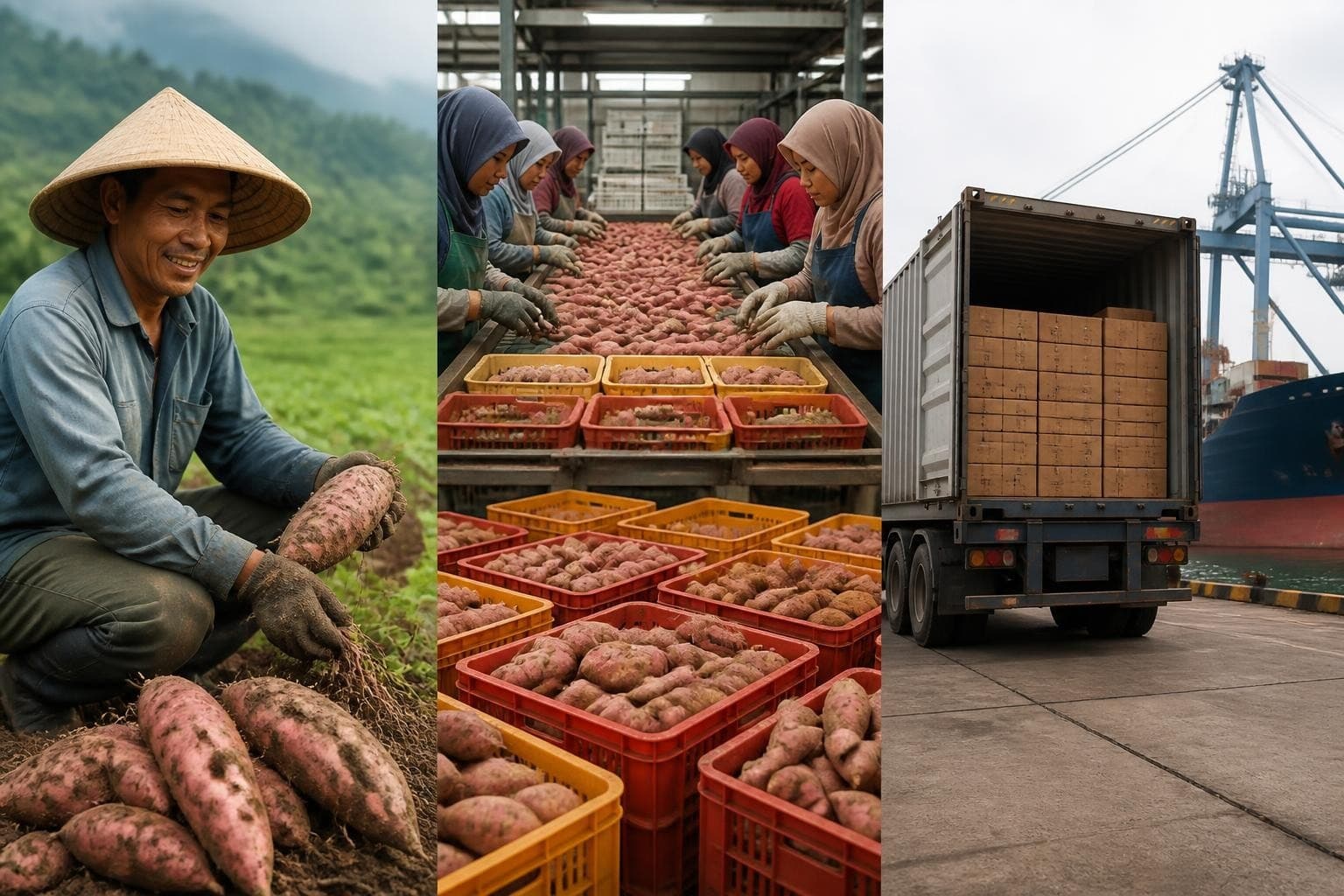
Wholesale Sweet Potatoes Indonesia: B2B Export Guide 2026
Source premium wholesale sweet potatoes Indonesia for import. Quality standards, export logistics, varieties, pricing & supplier partnerships.
Read article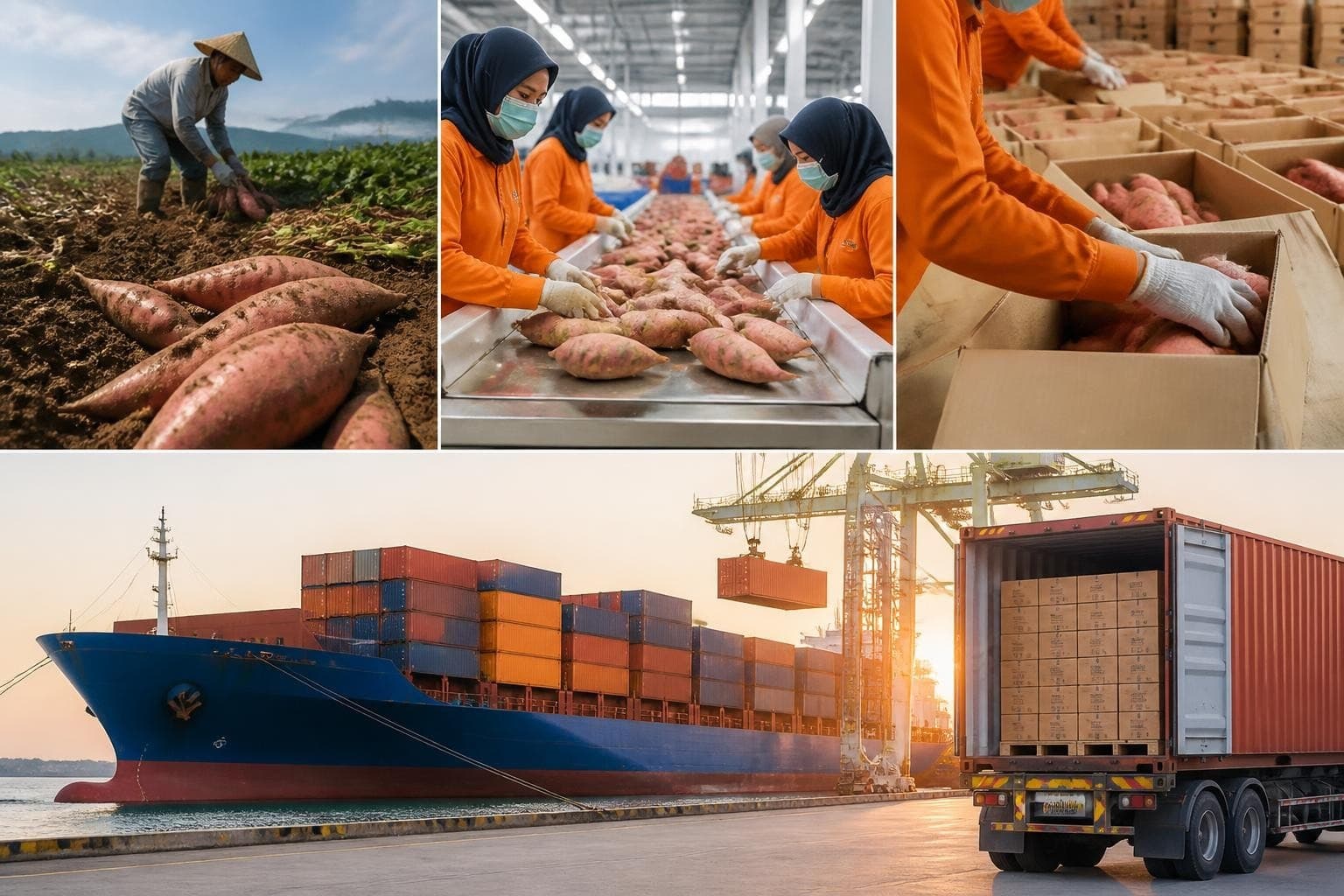
Sweet Potatoes Supplier Indonesia: Quality & Export Guide
Find reliable sweet potatoes supplier Indonesia offering premium export quality. Learn about sourcing, grading, logistics, and partnerships.
Read article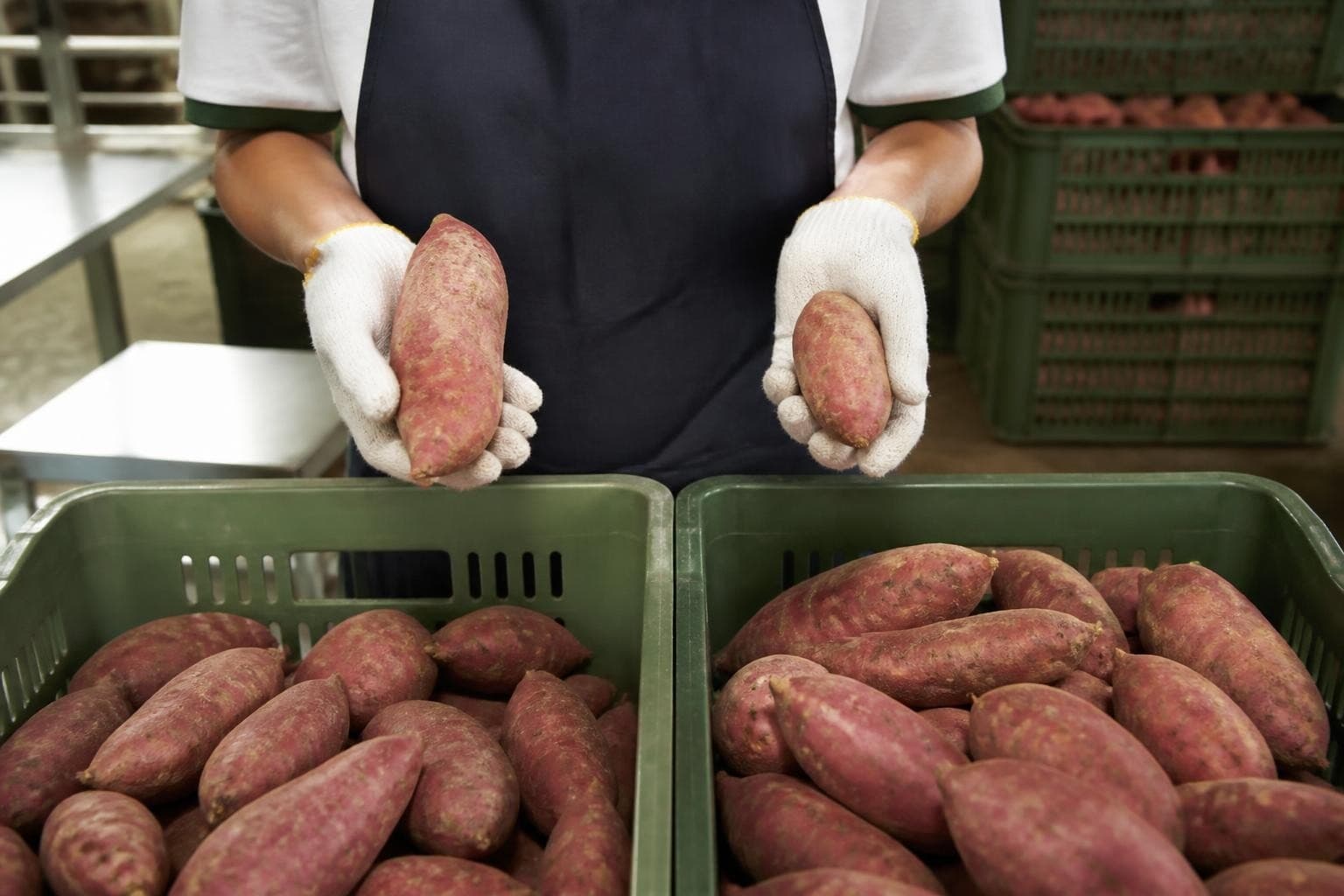
Sweet Potatoes Grading Guide for International Buyers
Comprehensive sweet potatoes grading guide for exporters and importers. Learn USDA standards, size classification, defect tolerance, and quality control.
Read article