
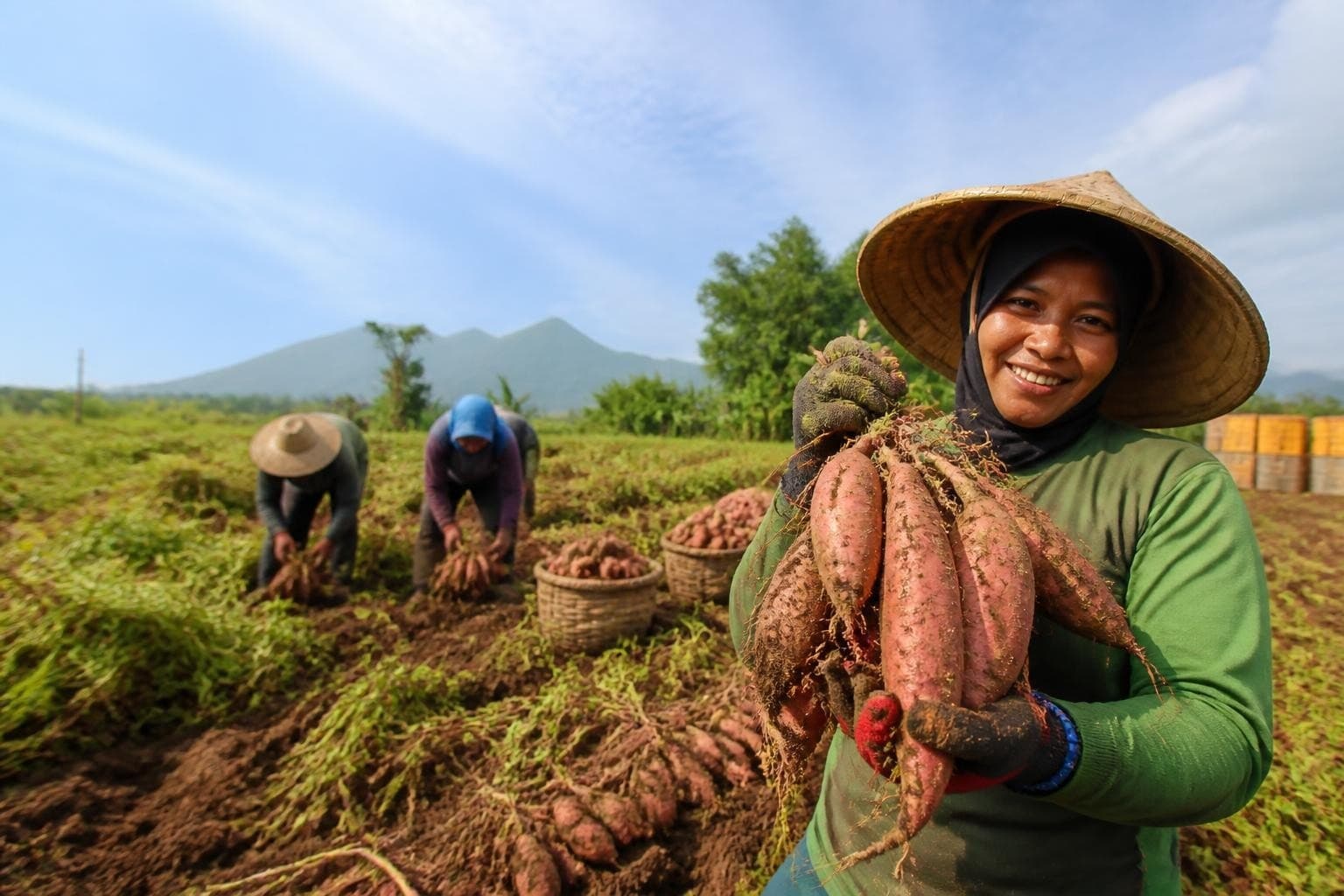
Sweet Potatoes Harvest in Indonesia: A Guide for Buyers
Comprehensive guide to sweet potatoes harvest in Indonesia. Learn timing, quality control, post-harvest handling, and export-grade standards.
Indonesia's tropical climate and volcanic soils create ideal conditions for year-round sweet potato cultivation, making the country a reliable source for international buyers seeking consistent supply. Understanding the sweet potatoes harvest in Indonesia provides importers with critical insights into quality expectations, seasonal availability, and post-harvest practices that directly impact product shelf life and market performance. For B2B buyers, distributors, and food manufacturers, knowledge of Indonesian harvest methods translates into better sourcing decisions and stronger supplier partnerships.
Regional Harvest Cycles Across Indonesian Growing Areas
Sweet potatoes harvest in Indonesia varies significantly by region, with West Java, Central Java, and Papua representing the primary production zones. West Java provinces such as Cianjur, Tasikmalaya, and Bandung maintain continuous planting and harvesting throughout the year, though peak harvest periods typically occur during dry seasons from April through October.
Major harvesting regions and their characteristics:
- West Java: Three to four harvest cycles annually, specializing in premium varieties like Cilembu sweet potatoes
- Central Java: Two to three cycles, focusing on high-starch varieties for processing
- Papua: Year-round cultivation with emphasis on traditional varieties
- East Java: Seasonal production aligned with regional rainfall patterns
The staggered planting schedules across these regions ensure that exporters like PT Cakra Baja Niaga can maintain consistent supply for international contracts regardless of seasonal fluctuations in individual growing areas.
Climate Considerations and Harvest Timing
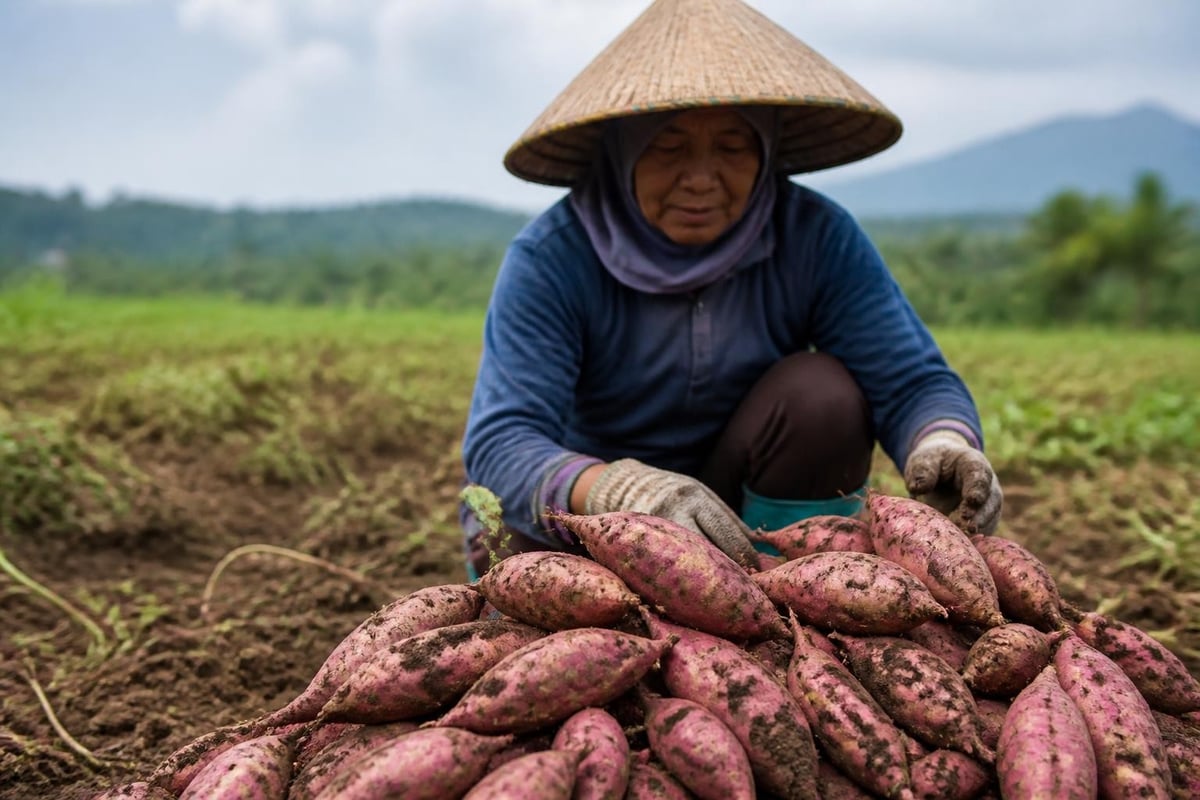
Indonesian farmers monitor several environmental indicators before initiating harvest operations. Soil moisture levels, leaf yellowing patterns, and tuber maturity indicators guide harvest timing decisions that directly affect export quality grades.
Optimal harvest timing occurs 90 to 150 days after planting, depending on variety and intended market use. Export-grade tubers typically require full maturation to achieve desired sugar content, skin integrity, and storage characteristics that international buyers expect.
Harvest Techniques and Quality Preservation
The sweet potatoes harvest in Indonesia employs both manual and mechanized methods, with export-focused farms increasingly adopting hybrid approaches that balance efficiency with damage prevention. Manual harvesting remains dominant for premium varieties destined for export markets where cosmetic quality commands price premiums.
Manual Harvesting Methods
Professional harvest crews use specialized digging forks to loosen soil around plants before carefully extracting tubers by hand. This method minimizes skin abrasions, cuts, and bruising that can compromise shelf life and create entry points for post-harvest diseases.
Critical manual harvest procedures:
- Remove vines 7-10 days before digging to allow skin setting
- Harvest during dry soil conditions to reduce clinging soil
- Handle tubers gently to prevent skin breaks and bruising
- Sort immediately in the field to remove damaged or undersized tubers
- Transport to curing facilities within 4-6 hours of harvest
According to proper harvesting practices, timing and handling during extraction significantly influence post-harvest quality outcomes.
Mechanized Harvesting Operations
Larger commercial operations serving bulk export contracts implement mechanical harvesters adapted for Indonesian soil conditions. These machines work effectively in well-drained volcanic soils common in West Java production zones, though they require skilled operators to minimize tuber damage rates below acceptable thresholds.
| Harvest Method | Damage Rate | Labor Cost | Suitability for Export |
|---|---|---|---|
| Manual | 3-5% | High | Premium grades |
| Semi-mechanical | 8-12% | Medium | Standard grades |
| Fully mechanical | 15-20% | Low | Processing grades |
Export suppliers carefully select harvest methods based on contract specifications and quality requirements established with international buyers.
Post-Harvest Handling and Curing Protocols
Immediately following the sweet potatoes harvest in Indonesia, exporters implement standardized post-harvest protocols that determine final product quality and storage potential. Proper curing represents the most critical post-harvest intervention for maintaining tuber quality during international shipping.
Curing Process Requirements
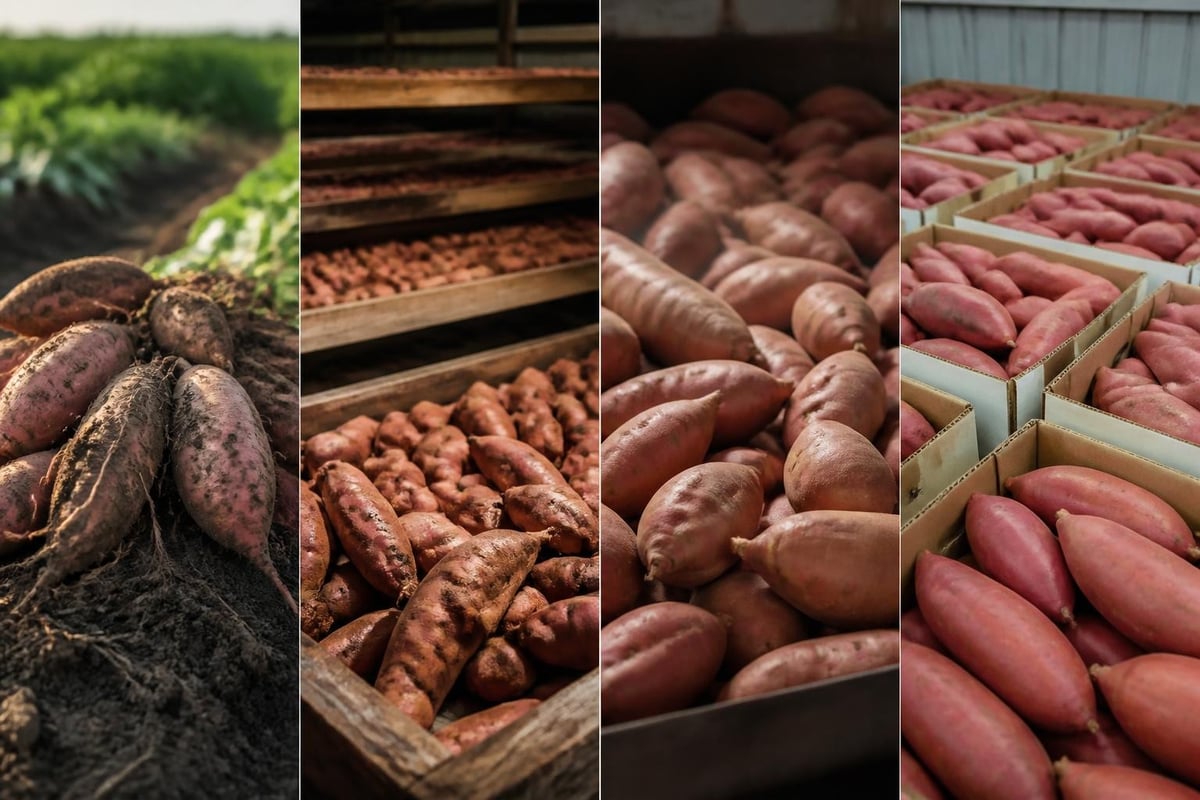
Indonesian export facilities cure freshly harvested sweet potatoes at controlled temperatures between 28-30°C (82-86°F) with relative humidity maintained at 85-90% for 5-7 days. This process heals minor skin injuries, converts starches to sugars, and develops the characteristic sweetness international markets expect.
Professional curing facilities monitor conditions continuously and adjust ventilation, temperature, and humidity based on variety-specific requirements. The complete curing and storage guide provides detailed protocols that align with international quality standards.
Benefits of proper curing for export quality:
- Wound healing reduces post-harvest disease incidence by 60-75%
- Skin toughening improves handling tolerance during logistics
- Flavor development enhances consumer acceptance in target markets
- Extended shelf life supports longer shipping routes and storage periods
Export-focused producers invest in purpose-built curing rooms that deliver consistent results across harvest batches, ensuring uniform quality that meets buyer specifications.
Cleaning and Grading Operations
Following curing, export sweet potatoes undergo thorough cleaning using dry brushing methods that remove soil without introducing moisture that could promote decay. Wet washing occurs only for specific markets where regulations require it, followed by immediate drying to prevent skin damage.
Grading operations sort tubers by size, shape, color uniformity, and absence of defects according to internationally recognized standards and buyer-specific requirements. Understanding premium Indonesian sweet potatoes specifications helps buyers communicate exact quality expectations to suppliers.
Export-Grade Standards and Quality Control
The sweet potatoes harvest in Indonesia for export markets follows rigorous quality control protocols that exceed domestic market standards. International buyers rely on consistent grading systems that classify tubers according to measurable criteria affecting commercial value and consumer acceptance.
Size and Weight Classifications
Export sweet potatoes typically fall into standardized size grades that facilitate pricing, packaging, and market positioning strategies:
| Grade | Diameter Range | Weight Range | Primary Markets |
|---|---|---|---|
| Small | 4-6 cm | 100-200g | Retail consumer packs |
| Medium | 6-8 cm | 200-350g | Food service, retail |
| Large | 8-10 cm | 350-500g | Processing, wholesale |
| Jumbo | 10+ cm | 500g+ | Processing, special orders |
Buyers specify grade preferences based on their target market segments and customer preferences. Working with experienced sweet potatoes manufacturers in Indonesia ensures accurate grade compliance across shipments.
Visual Quality Parameters
Export-grade sweet potatoes must meet strict visual standards that affect consumer purchasing decisions in destination markets. Skin color uniformity, absence of growth cracks, minimal scarring, and characteristic varietal appearance all influence grade classifications.
Defect tolerance thresholds for export grades:
- Grade A: Maximum 5% minor defects, 0% major defects
- Grade B: Maximum 10% minor defects, 2% major defects
- Processing: Cosmetic defects acceptable if internal quality meets specifications
Quality control teams inspect random samples from each harvest lot, documenting defect rates and initiating corrective measures when thresholds are exceeded.
Seasonal Quality Variations and Supply Planning
Understanding how the sweet potatoes harvest in Indonesia varies throughout the year enables buyers to optimize procurement timing and manage inventory cycles effectively. While Indonesian production continues year-round, subtle quality variations occur based on seasonal weather patterns and regional growing conditions.
Dry Season Harvest Characteristics
Sweet potatoes harvested during Indonesian dry seasons (April-October) generally exhibit superior storage characteristics, lower disease pressure, and enhanced sugar content development. These periods align with peak export demand from Northern Hemisphere markets entering winter months when sweet potato consumption increases.
Dry season harvests facilitate field curing operations and reduce post-harvest handling challenges associated with excessive soil moisture. Buyers planning large volume contracts often prefer dry season shipments for these quality advantages.
Wet Season Considerations
Harvests during wet seasons require enhanced post-harvest interventions to maintain export quality standards. Increased disease pressure, higher soil moisture content, and field access limitations can impact harvest efficiency and quality outcomes.
Professional exporters implement compensating measures including accelerated curing protocols, enhanced disease monitoring, and selective field harvesting during weather windows. Understanding these seasonal dynamics helps buyers establish realistic quality expectations and delivery schedules.
Variety-Specific Harvest Requirements
The sweet potatoes harvest in Indonesia encompasses numerous varieties, each with distinct harvest timing, handling requirements, and quality characteristics. Export markets show particular interest in specialty varieties that offer unique flavor profiles, nutritional benefits, or visual appeal.
Premium Cilembu Variety
The renowned Cilembu variety from West Java requires specific harvest timing to achieve its characteristic honey-like sweetness when baked. Farmers harvest Cilembu sweet potatoes at full maturity, typically 120-130 days after planting, when sugar content reaches optimal levels.
This variety demands gentle handling throughout harvest and post-harvest operations due to its tender skin and high moisture content. Buyers seeking honey sweet potato varieties should understand these handling requirements affect logistics costs and minimum order quantities.
Purple-Fleshed Varieties
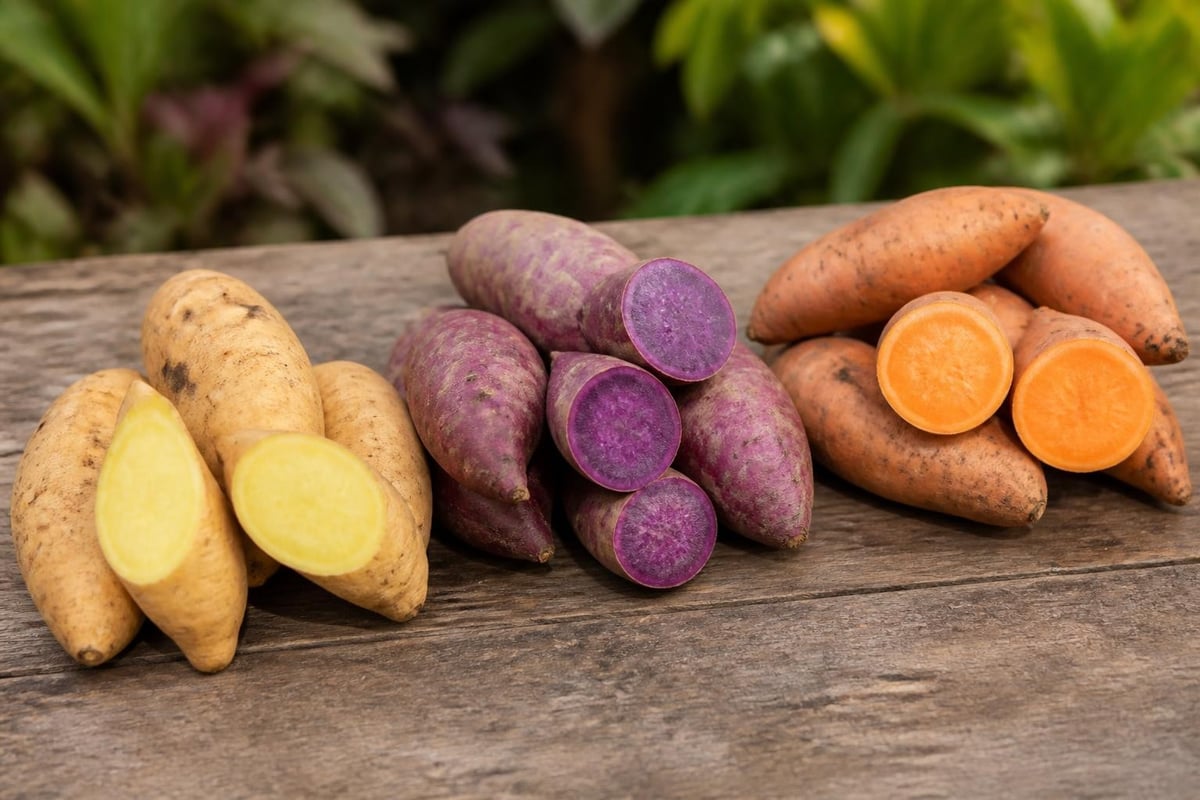
Indonesian purple sweet potato varieties including Japanese purple types have gained international market traction due to their antioxidant content and visual appeal. These varieties often require longer maturation periods and specific post-harvest handling to preserve their distinctive coloration.
Harvest timing for purple flesh sweet potato varieties focuses on achieving full color development while maintaining appropriate sugar-starch ratios. Export specifications typically include color intensity measurements using standardized scales.
Farm-Level Harvest Planning and Execution
Professional sweet potato farms partnering with export companies implement comprehensive harvest planning systems that coordinate field operations, labor allocation, and post-harvest facility capacity. The sweet potatoes harvest in Indonesia for export markets requires significantly more planning and quality control than domestic market production.
Pre-Harvest Field Assessments
Export-focused farms conduct systematic pre-harvest assessments 2-3 weeks before planned harvest dates. These evaluations examine crop maturity indicators, estimate yield volumes, identify quality issues requiring corrective measures, and verify harvest crew readiness.
Field assessments enable accurate delivery forecasts that support buyer planning and logistics coordination. Reputable suppliers maintain detailed harvest schedules that account for weather variables, labor availability, and curing facility capacity constraints.
Labor Management and Training
Harvest quality depends heavily on crew training and supervision standards. Export-oriented farms invest in worker training programs covering proper digging techniques, handling protocols, field sorting criteria, and damage prevention practices.
Key training components for harvest crews:
- Proper tool usage and maintenance
- Tuber extraction techniques that minimize damage
- Field sorting and grading standards
- Hygiene and food safety protocols
- Transport container handling procedures
Consistent training programs ensure uniform quality outcomes across multiple harvest events and different field locations.
Quality Assurance and Traceability Systems
International buyers increasingly require comprehensive traceability linking exported sweet potatoes to specific harvest lots, fields, and production dates. The sweet potatoes harvest in Indonesia for premium export markets incorporates digital traceability systems that document the complete supply chain from planting through shipment.
Harvest Documentation Protocols
Professional exporters maintain detailed harvest records including field identification numbers, harvest dates, crew assignments, yield data, initial quality assessments, and any notable field conditions affecting product characteristics.
This documentation supports food safety compliance, enables rapid response to quality issues, and provides verification for sustainability certifications increasingly required by international retail chains. Buyers can reference specific harvest lot numbers when communicating quality feedback or placing repeat orders.
Third-Party Certification and Inspection
Many Indonesian sweet potato exporters pursue international certifications that verify production practices, food safety systems, and quality management protocols. Third-party inspections during harvest operations provide independent quality verification that buyers value when establishing new supplier relationships.
Understanding sweet potatoes export from Indonesia regulations and certification requirements helps buyers identify qualified suppliers capable of meeting destination market compliance standards.
Export Packaging and Logistics Considerations
Post-harvest activities following the sweet potatoes harvest in Indonesia directly connect to packaging and logistics operations that protect product quality during international transport. Export packaging decisions begin during harvest planning to ensure appropriate container availability and packing facility readiness.
Packaging Material Selection
Export sweet potatoes typically ship in ventilated cartons, mesh bags, or bulk bins depending on variety, destination market, and buyer specifications. Sweet potatoes export packaging choices balance protection requirements against weight restrictions and handling efficiency considerations.
Packaging occurs in climate-controlled facilities within 24-48 hours of harvest completion, minimizing field heat retention and optimizing storage temperature management. Professional exporters maintain inventory of approved packaging materials that comply with destination country phytosanitary regulations.
Cold Chain Management
While sweet potatoes tolerate wider temperature ranges than many fresh produce items, maintaining optimal storage temperatures between 13-16°C (55-60°F) during export transit preserves quality and extends shelf life. Temperature excursions below 10°C can cause chilling injury, while temperatures above 18°C accelerate sprouting and decay.
Export logistics providers implement temperature monitoring throughout the shipping process, documenting conditions that affect product quality at destination. Buyers should verify supplier capabilities for maintaining appropriate cold chain protocols aligned with their quality expectations.
Supplier Selection Criteria for Import Buyers
Successful procurement of Indonesian sweet potatoes requires careful supplier evaluation focusing on harvest capabilities, quality systems, export experience, and supply reliability. The sweet potatoes harvest in Indonesia involves thousands of small and medium farms, but only a limited number possess the infrastructure and expertise required for consistent export supply.
Essential Supplier Capabilities
Professional import buyers evaluate potential Indonesian suppliers across multiple criteria that indicate export readiness and long-term partnership viability:
| Evaluation Criteria | Minimum Standards | Premium Suppliers |
|---|---|---|
| Farm partnerships | 10+ contracted farms | 25+ farms with multi-year contracts |
| Curing facilities | Basic curing rooms | Climate-controlled facilities |
| Quality systems | Manual grading | Automated grading with documentation |
| Certifications | GAP certification | Multiple international certifications |
| Export history | 2+ years | 5+ years with reference customers |
Thorough supplier vetting reduces procurement risks and establishes foundations for productive long-term trading relationships. Buyers seeking bulk sweet potatoes supplier options should prioritize suppliers demonstrating consistent quality delivery across multiple shipments.
Communication and Transparency
Effective suppliers maintain proactive communication throughout harvest seasons, providing advance notice of harvest schedules, quality updates, and potential supply constraints. Transparency regarding weather impacts, quality variations, and logistics challenges enables buyers to manage their own inventory and customer commitments effectively.
Regular communication should include harvest progress reports, quality photos, sample shipments when requested, and detailed shipping documentation supporting customs clearance and regulatory compliance.
Market Trends Affecting Indonesian Sweet Potato Harvest
International demand patterns influence how Indonesian producers approach the sweet potatoes harvest, with market signals affecting variety selection, quality investments, and harvest timing decisions. Understanding these trends helps buyers anticipate supply dynamics and identify emerging opportunities.
Growing Demand for Specialty Varieties
Consumer interest in nutrient-dense foods drives increasing demand for purple sweet potatoes, organic production, and heritage varieties with unique flavor profiles. Indonesian producers respond by expanding specialty variety cultivation, though these products typically command premium prices reflecting higher production costs and more demanding harvest requirements.
Buyers interested in colors of sweet potatoes diversity should engage suppliers early in planting cycles to ensure adequate production volumes for their market requirements.
Sustainability and Certification Requirements
Major retail chains and food service operators increasingly require sustainability certifications, carbon footprint documentation, and social responsibility verification from produce suppliers. These requirements influence Indonesian harvest operations through implementation of sustainable farming practices, worker welfare programs, and environmental monitoring systems.
Forward-thinking exporters invest in certification programs and sustainable production methods that position Indonesian sweet potatoes competitively in premium market segments. Buyers should evaluate supplier sustainability credentials as part of comprehensive supplier assessment processes.
Understanding the complexities of sweet potatoes harvest in Indonesia empowers international buyers to make informed sourcing decisions, establish realistic quality expectations, and build productive supplier partnerships. Professional harvest practices, rigorous post-harvest protocols, and comprehensive quality systems distinguish export-ready suppliers from domestic market producers. For importers, distributors, and food manufacturers seeking reliable Indonesian sweet potato supply, PT Cakra Baja Niaga offers direct farm partnerships in West Java, consistent export-grade quality, and transparent communication throughout harvest and shipping processes. Contact our export team for detailed product specifications, harvest schedules, and competitive quotations tailored to your market requirements.
Looking to source premium Indonesian sweet potatoes?
PT Cakra Baja Niaga supplies export-grade Cilembu, Purple, and Murasaki varieties to buyers worldwide.
Continue reading
Wholesale Sweet Potatoes Indonesia: B2B Export Guide 2026
Source premium wholesale sweet potatoes Indonesia for import. Quality standards, export logistics, varieties, pricing & supplier partnerships.
Read article
Sweet Potatoes Supplier Indonesia: Quality & Export Guide
Find reliable sweet potatoes supplier Indonesia offering premium export quality. Learn about sourcing, grading, logistics, and partnerships.
Read article
Sweet Potatoes Grading Guide for International Buyers
Comprehensive sweet potatoes grading guide for exporters and importers. Learn USDA standards, size classification, defect tolerance, and quality control.
Read article