
Sweet Potatoes Export from Indonesia: A Guide for International Buyers
Complete guide to sweet potatoes export from Indonesia covering sourcing, quality standards, shipping logistics, and market opportunities.
Indonesia has become an increasingly attractive source for international sweet potato buyers, supported by its tropical climate, experienced farming communities, competitive production costs, and strategic location in Southeast Asia. The sweet potatoes export from Indonesia sector offers opportunities for importers, distributors, retailers, and food manufacturers seeking reliable supply and diverse varieties.
For international buyers, understanding Indonesia's production regions, export varieties, quality standards, pricing, logistics, and supplier selection can help build a more reliable procurement strategy.
Indonesia's Position in the Global Sweet Potato Trade
The sweet potatoes export from Indonesia industry has expanded as demand grows for nutritious, versatile, and competitively priced produce. According to World Bank trade statistics, Indonesia exports sweet potatoes to several international markets, including destinations across Southeast Asia and beyond.
Indonesia's geographic position provides an important logistical advantage. Buyers in nearby Asian markets can benefit from relatively short shipping distances, while established connections through major Indonesian ports support longer-distance exports.
Major Sweet Potato Production Regions
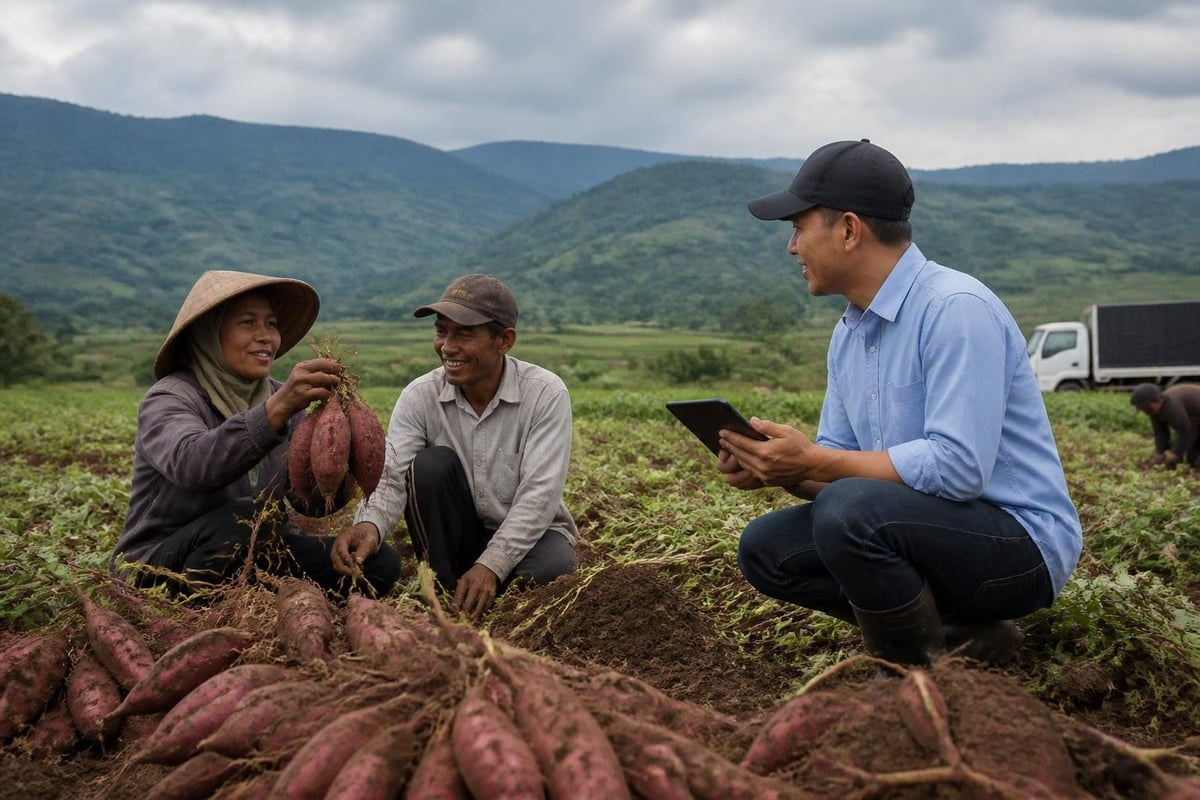
West Java, Central Java, and Papua are among Indonesia's important sweet potato-producing regions. West Java is particularly relevant to export-oriented supply because of its established farming communities and favorable growing conditions.
Key advantages include:
-
Nutrient-rich volcanic soils
-
Tropical conditions suitable for year-round cultivation
-
Multiple growing areas and harvest periods
-
Access to major logistics and port infrastructure
-
Established agricultural communities
-
Proximity to major export hubs
For buyers, sourcing from multiple partner farms can also help reduce supply interruptions and maintain more consistent availability throughout the year.
Seasonal Availability
Indonesia's tropical climate provides opportunities for year-round production. However, harvest timing varies by region, elevation, variety, and farming schedule.
Exporters working with multiple farms can coordinate planting and harvesting schedules to provide more consistent supply. This is particularly valuable for importers supplying supermarkets, foodservice operators, and food manufacturers that require regular shipments.
Quality Standards for Export
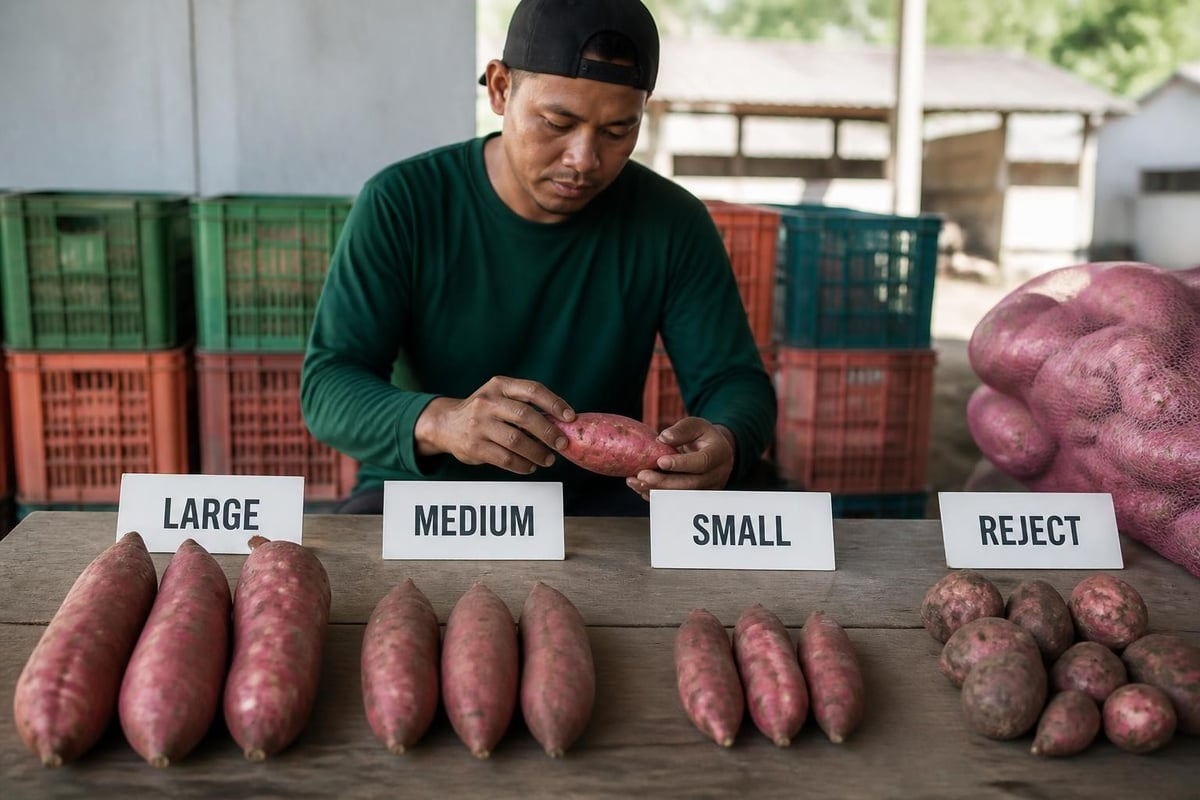
Quality consistency is one of the most important considerations when purchasing Indonesian sweet potatoes. International buyers typically require uniform sizing, good skin condition, appropriate maturity, and freedom from significant defects.
Common Export Grades
Export specifications can vary between suppliers and destination markets, but products may generally be separated into:
-
Premium Grade – Uniform sizing, attractive appearance, smooth skin, and minimal defects.
-
First Grade – Good overall appearance with limited cosmetic imperfections.
-
Commercial Grade – Greater size and cosmetic variation, often suitable for processing.
Premium products generally command higher prices because they require stricter sorting and have lower acceptable rejection rates.
Important Quality Parameters
Buyers should establish specifications covering:
-
Size and weight range
-
Skin appearance and blemish tolerance
-
Shape and uniformity
-
Firmness
-
Internal quality
-
Absence of rot, pests, and serious mechanical damage
-
Packaging requirements
-
Maximum acceptable rejection percentage
Clear specifications should be agreed before the first commercial shipment to minimize disputes.
Export Compliance and Documentation
Successful sweet potatoes export from Indonesia requires appropriate documentation and compliance with both Indonesian regulations and the requirements of the destination country.
Common export documentation may include:
-
Export declaration
-
Phytosanitary certificate
-
Certificate of origin
-
Commercial invoice
-
Packing list
-
Bill of lading
-
Fumigation documentation when required
Destination markets may also impose specific pesticide residue limits, food safety requirements, labeling rules, and plant-health regulations.
For buyers importing into highly regulated markets, it is important to confirm the supplier's documentation capabilities before placing a large order.
Pricing and Market Considerations
Sweet potato export prices depend on variety, grade, season, order volume, packaging, destination, freight costs, and contractual terms.
Rather than evaluating suppliers solely on FOB price, buyers should calculate the landed cost, including:
-
Product price
-
Grading and packing
-
Inland transportation
-
Port and documentation charges
-
Ocean freight
-
Insurance
-
Import duties and taxes
-
Destination handling
Premium varieties and tighter specifications generally command higher prices. Larger annual commitments may also provide opportunities for more competitive contract pricing.
Packaging Options for Export
Packaging should protect the sweet potatoes from physical damage while allowing sufficient ventilation during storage and transportation.
Common options include:
-
10 kg mesh bags – Suitable for wholesale distribution
-
5 kg cartons – Appropriate for retail-oriented shipments
-
Wooden crates – Used for selected markets and applications
-
Individual wrapping – Suitable for premium presentation
-
Bulk packaging – Appropriate for processing customers
Packaging should use food-contact-safe materials and comply with the requirements of the destination market.
Logistics and Shipping from Indonesia
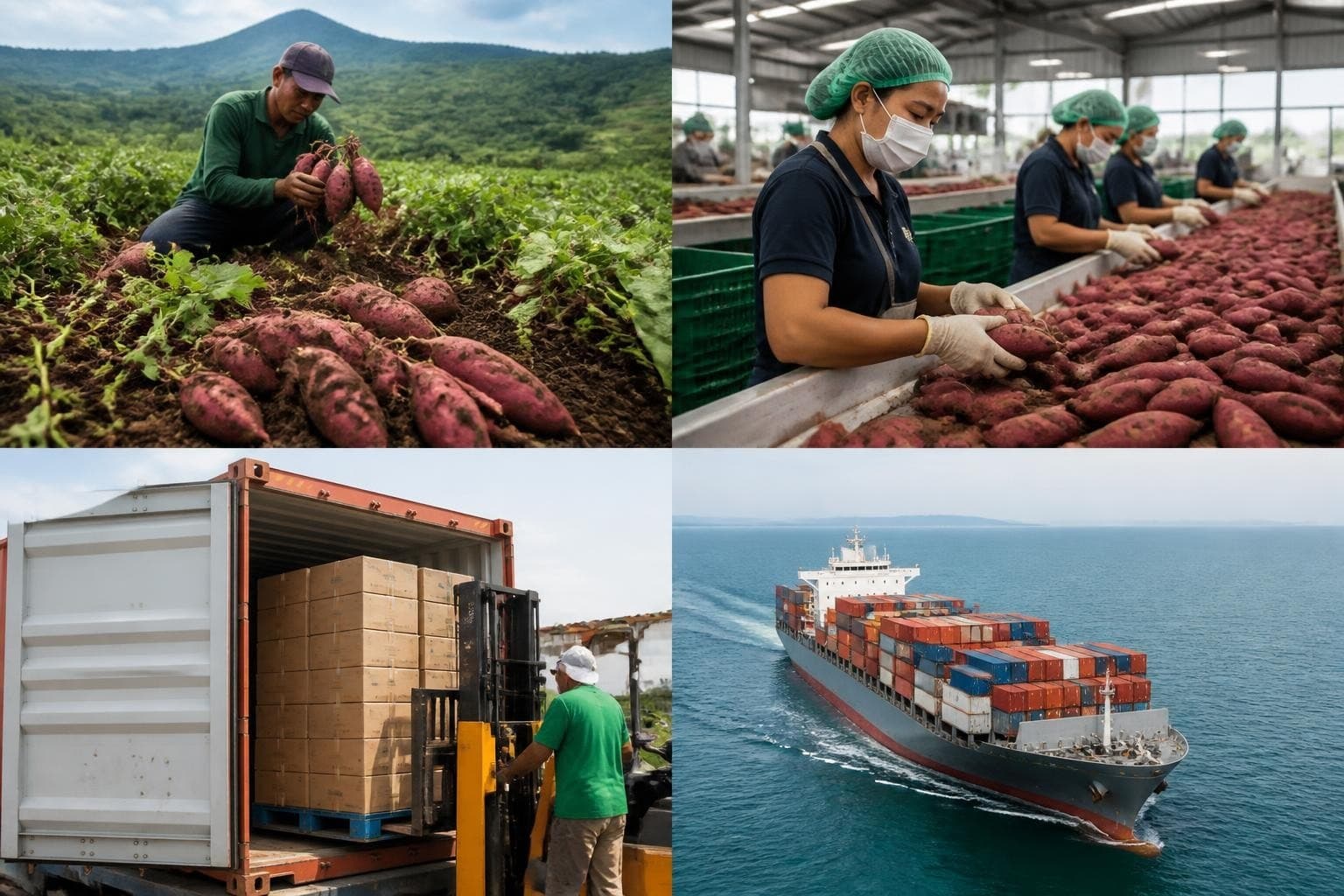
The logistics process normally involves harvesting, sorting, packing, documentation, inland transportation, port handling, and ocean freight.
A typical export workflow includes:
-
Harvesting and initial field sorting
-
Transportation to the packing facility
-
Grading and quality inspection
-
Washing or cleaning where required
-
Drying and packaging
-
Final inspection and documentation
-
Container loading
-
Port transportation and customs clearance
-
Ocean shipment
-
Delivery to the buyer's receiving facility
Temperature and humidity management should be determined according to the specific variety and shipping conditions. Buyers should agree on handling requirements with their exporter before shipment rather than applying a single storage specification to every variety.
Major Export Markets
Indonesia's geographic location creates particularly attractive opportunities in Asian markets.
| Market | Key Buyer Considerations |
|---|---|
| Southeast Asia | Competitive pricing, freshness, frequent shipments |
| Japan & South Korea | Variety consistency, appearance, food safety |
| Middle East | Larger sizes, shelf life, consistent quality |
| Europe | Sustainability, traceability, retail presentation |
| Australia & New Zealand | Quality, consistency, and compliance |
Transit time should be considered when selecting varieties, packaging, and shipment schedules.
How to Choose an Indonesian Sweet Potato Exporter
Selecting the right supplier is more important than simply finding the lowest quoted price. International buyers should evaluate several aspects of an exporter's operation.
Key Supplier Evaluation Criteria
Look for suppliers with:
-
Direct or well-established farm partnerships
-
Reliable production capacity
-
Documented quality-control procedures
-
Export and documentation experience
-
Responsive communication
-
Consistent packaging standards
-
Transparent pricing
-
Ability to provide samples
-
Experience with the destination market
Companies such as PT Cakra Baja Niaga work with partner farms in West Java to connect international buyers with Indonesian sweet potatoes while coordinating quality and export requirements.
Recommended Purchasing Process
A staged purchasing process can reduce risk:
-
Sample evaluation – Confirm variety, size, appearance, and eating quality.
-
Trial shipment – Test commercial packing, documentation, and logistics.
-
Regular orders – Establish recurring shipment schedules.
-
Long-term agreement – Develop volume commitments and pricing arrangements.
This approach allows buyers to evaluate actual shipment performance before committing to larger volumes.
Growing Market Opportunities
Demand for sweet potatoes is supported by several consumer and food-industry trends.
Health-Conscious Consumers
Sweet potatoes are naturally rich in carbohydrates, fiber, vitamins, and other nutrients. Health benefits of sweet potatoes contribute to their appeal among consumers seeking nutrient-dense alternatives to conventional carbohydrate sources.
Specialty and Premium Varieties
Purple and Japanese-style varieties are attracting attention because of their distinctive colors, flavors, and culinary applications. Products such as Japanese Murasaki sweet potatoes can serve premium retail and specialty food markets.
Food Manufacturing
Sweet potatoes can also be processed into:
-
Chips and snacks
-
Purees
-
Flour
-
Frozen products
-
Baby food
-
Bakery ingredients
This creates opportunities for exporters capable of supplying consistent specifications at commercial volumes.
Quality Control from Farm to Shipment
Consistent export quality starts before harvest. Exporters working with dedicated sweet potato farms can establish production requirements covering planting, crop management, harvesting, and post-harvest handling.
Important controls include:
-
Variety selection
-
Planting schedules
-
Crop protection practices
-
Harvest maturity
-
Gentle handling
-
Grading and sorting
-
Packaging inspection
-
Traceability
-
Shipment documentation
Proper post-harvest handling is particularly important because bruising, cuts, and poor storage conditions can reduce shelf life and increase rejection rates.
Addressing Common Buyer Concerns
Supply Continuity
Buyers requiring regular shipments should ask whether the exporter has access to multiple farms and production areas. A diversified supply network can reduce the impact of weather or localized crop problems.
Quality Variation
Detailed specifications should define acceptable size ranges, cosmetic defects, internal quality, and rejection limits. Photos or physical samples can help both parties establish a common quality reference.
Payment and Commercial Risk
New buyers may begin with smaller trial orders before moving to larger contracts. As the relationship develops, both parties can negotiate payment terms, annual volumes, pricing mechanisms, and delivery schedules that provide greater commercial certainty.
Future Outlook for Sweet Potatoes Export from Indonesia
The outlook for sweet potatoes export from Indonesia remains promising as international buyers continue looking for competitive sources of nutritious and versatile produce. Indonesia's agricultural base, tropical growing conditions, strategic location, and expanding export capabilities provide a solid foundation for further market development.
Opportunities are likely to come from:
-
Greater demand for premium varieties
-
Growth in health-focused food categories
-
Expansion of processed sweet potato products
-
Increasing interest in traceable supply chains
-
Development of new international markets
-
Long-term partnerships between Indonesian farms and overseas buyers
For importers, the key is to evaluate suppliers based on quality, consistency, documentation, logistics, and total landed cost—not price alone.
Indonesia offers international buyers a compelling sourcing opportunity for sweet potatoes, combining competitive production with diverse varieties and access to growing Asian and global markets. A reliable supplier can help buyers manage quality, documentation, logistics, and supply continuity from farm to destination.
For international buyers looking to source Indonesian sweet potatoes, PT Cakra Baja Niaga provides access to premium products from West Java partner farms, supported by quality-focused sourcing and export coordination.
Looking to source premium Indonesian sweet potatoes?
PT Cakra Baja Niaga supplies export-grade Cilembu, Purple, and Murasaki varieties to buyers worldwide.
Continue reading
Wholesale Sweet Potatoes Indonesia: B2B Export Guide 2026
Source premium wholesale sweet potatoes Indonesia for import. Quality standards, export logistics, varieties, pricing & supplier partnerships.
Read article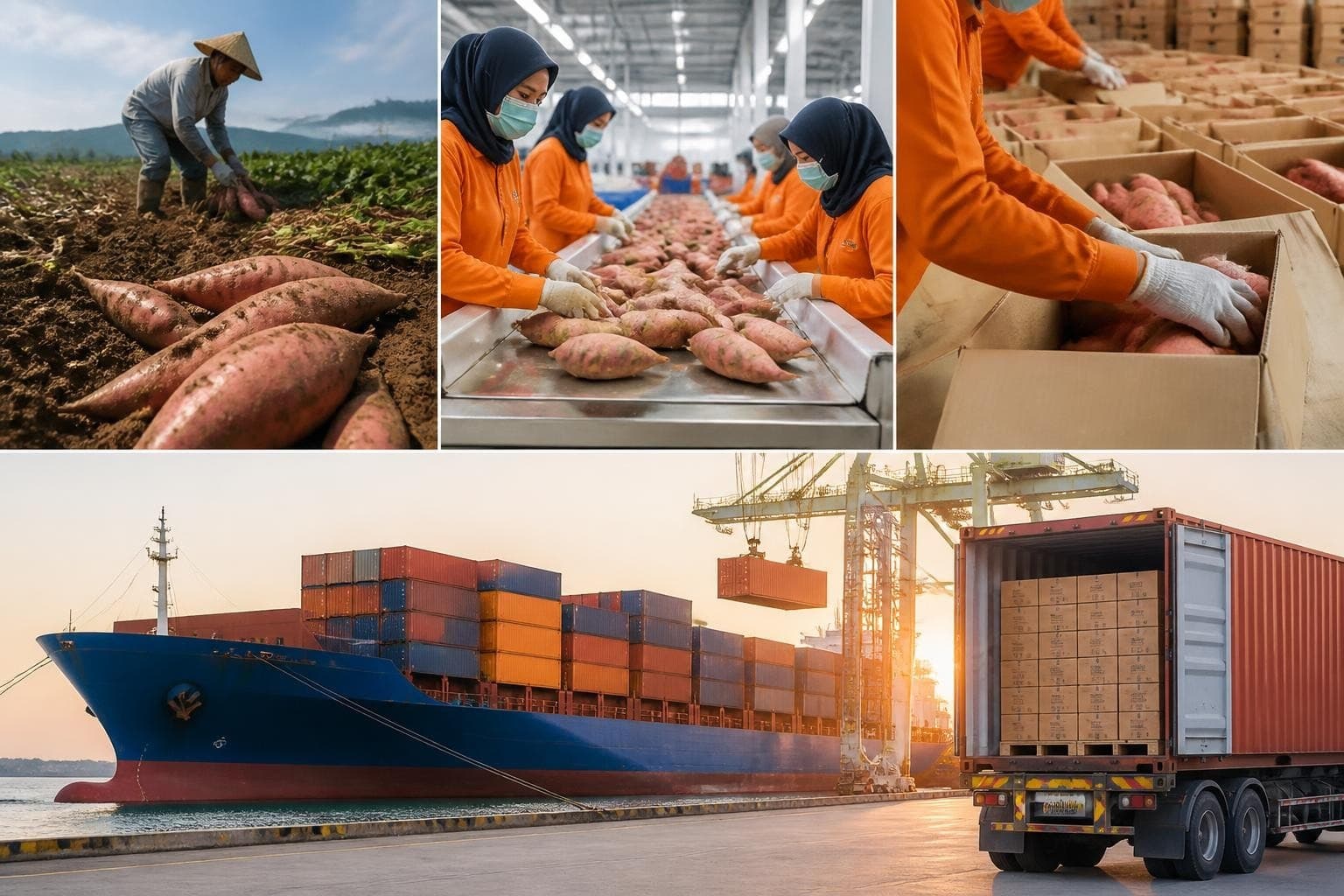
Sweet Potatoes Supplier Indonesia: Quality & Export Guide
Find reliable sweet potatoes supplier Indonesia offering premium export quality. Learn about sourcing, grading, logistics, and partnerships.
Read article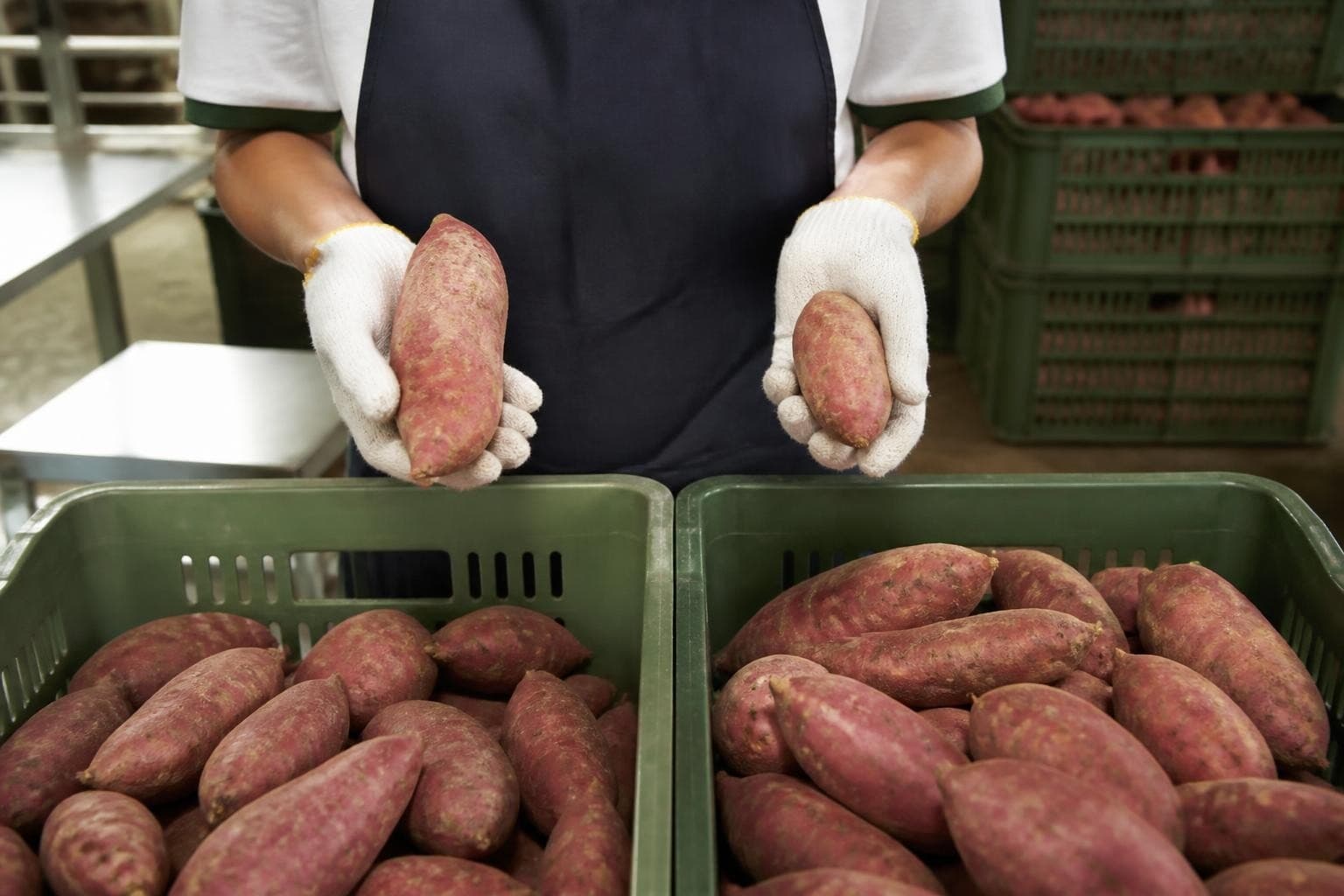
Sweet Potatoes Grading Guide for International Buyers
Comprehensive sweet potatoes grading guide for exporters and importers. Learn USDA standards, size classification, defect tolerance, and quality control.
Read article