
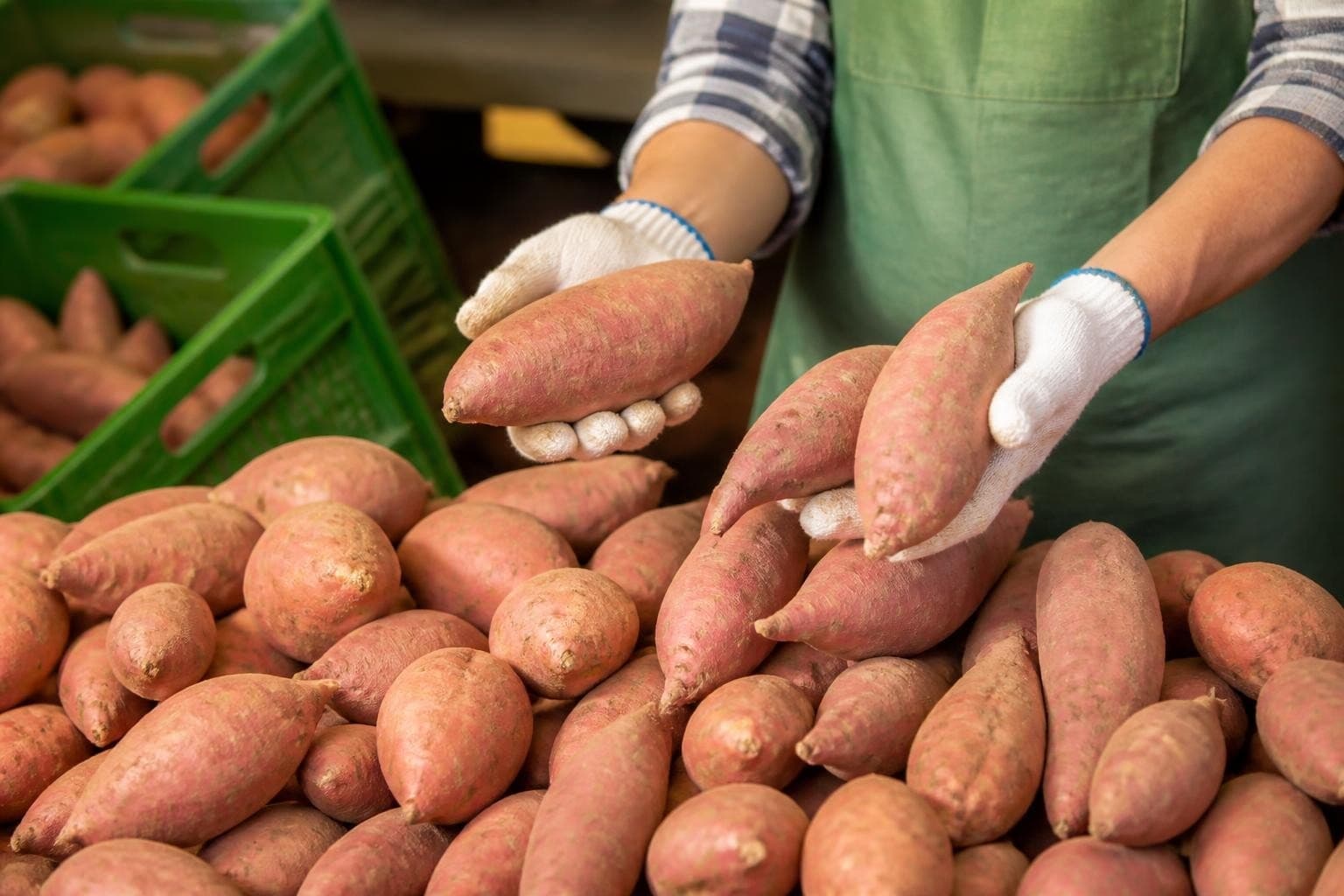
Sweet Potatoes Quality Standards for Export in 2026
Comprehensive guide to sweet potatoes quality standards for international trade. Learn grading criteria, USDA standards, and export requirements.
International buyers sourcing sweet potatoes face a complex landscape of quality requirements, grading systems, and regulatory frameworks. Understanding sweet potatoes quality standards is essential for importers, distributors, and retailers who need consistent, premium products that meet their market specifications. These standards govern everything from physical appearance and size uniformity to internal defects and storage conditions, directly impacting shelf life, consumer acceptance, and commercial value. For exporters working with international markets, implementing rigorous quality control based on recognized standards ensures compliance, reduces rejection rates, and builds long-term buyer confidence.
Understanding USDA Sweet Potato Quality Standards
The United States Department of Agriculture (USDA) establishes comprehensive grading standards that serve as a global benchmark for sweet potatoes quality standards in international trade. These classifications provide a common language between exporters and buyers, defining specific requirements for each grade level.
Primary USDA Grade Classifications
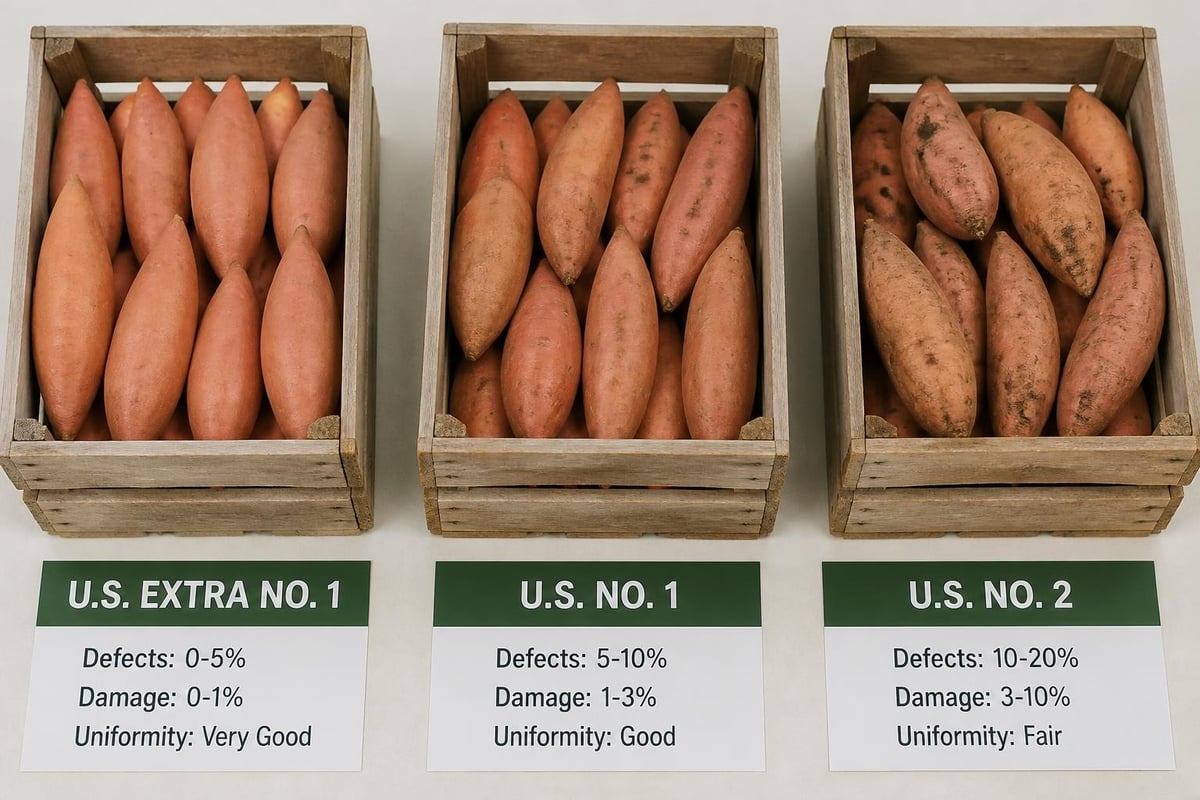
The USDA recognizes three main grades for sweet potatoes intended for fresh market distribution:
- U.S. Extra No. 1: The highest grade, requiring excellent appearance, uniform shape, minimal defects, and superior marketability
- U.S. No. 1: The most commonly traded grade, balancing quality with commercial practicality for most retail applications
- U.S. No. 2: A lower grade permitting more defects but still suitable for processing or budget retail segments
Each grade has specific tolerance levels for defects, size variations, and damage. U.S. No. 1 grade permits no more than 10% by weight with defects, while maintaining strict limits on serious damage that affects edibility or storage stability. Postharvest handling guidelines from NC State provide detailed tolerance tables that exporters reference when preparing shipments for quality-conscious markets.
Size and Shape Requirements
Size uniformity significantly impacts market value and buyer acceptance. Sweet potatoes quality standards typically categorize roots by diameter and length measurements:
| Size Classification | Diameter Range | Typical Weight | Primary Market Use |
|---|---|---|---|
| Small | 1.75 - 2.25 inches | 3-5 oz | Food service, processing |
| Medium | 2.25 - 3.25 inches | 5-9 oz | Retail supermarkets |
| Large | 3.25 - 3.75 inches | 9-16 oz | Premium retail |
| Jumbo | Over 3.75 inches | 16+ oz | Processing, institutional |
Buyers specify their preferred size profiles based on packaging requirements and consumer preferences in their target markets. For example, export quality sweet potatoes from Indonesia are often selected in the medium to large range to meet supermarket specifications across Asia, Middle East, and European destinations.
Physical Quality Parameters and Defect Assessment
Implementing effective sweet potatoes quality standards requires systematic assessment of physical characteristics that influence marketability and storage performance. Exporters must establish clear inspection protocols that identify and categorize defects according to severity.
Surface and Skin Quality
The external appearance of sweet potatoes represents the first quality impression for buyers and consumers. Standard defect categories include:
Acceptable defects in limited quantities:
- Minor skin abrasions covering less than 5% of surface area
- Healed cuts or scratches that do not penetrate the flesh
- Light russeting or corking that does not affect appearance significantly
Serious defects that reduce grade or cause rejection:
- Deep cuts or punctures exposing internal flesh
- Sunscald or freezing injury showing discoloration
- Disease symptoms including soft rot, black rot, or fungal growth
- Sprouting or internal breakdown visible from exterior
Professional inspection teams use standardized lighting and sample sizes to maintain consistency. A representative 50-pound sample typically undergoes examination, with defective roots counted and weighed to calculate percentage tolerances.
Internal Quality Characteristics
Internal defects often remain hidden until cutting or processing, making pre-shipment quality verification essential. Sweet potatoes quality standards address several internal factors:
- Flesh color uniformity: Consistent pigmentation without white streaks or discoloration that indicates stress or disease
- Texture and firmness: Proper density without fibrous zones, hollow areas, or spongy tissue that reduces culinary quality
- Sugar content: Adequate starch-to-sugar conversion during curing, measured through Brix testing for processed products
Destructive sampling provides the only reliable method for internal quality assessment. Exporters typically inspect 2-5% of containers through random sampling, cutting selected roots to verify flesh quality meets specifications. This practice, though labor-intensive, prevents costly rejections at destination ports.
Curing and Storage Standards for Export Quality
Post-harvest handling directly influences the final quality that buyers receive. Sweet potatoes quality standards incorporate specific curing and storage protocols that enhance shelf life and maintain commercial value during transit.
Curing Requirements
Proper curing heals surface wounds, develops desirable sweetness, and creates a protective periderm layer that reduces moisture loss. Standard curing conditions include:
- Temperature: 82-86°F (28-30°C)
- Relative humidity: 85-95%
- Duration: 5-7 days minimum
- Ventilation: Adequate airflow without excessive drying
Washington State University's storage guidance emphasizes that incomplete curing leads to increased shrinkage and decay during storage. Indonesian exporters working with premium sweet potatoes from West Java typically extend curing to 7-10 days to ensure optimal skin set before packing for international shipment.
Long-term Storage Specifications
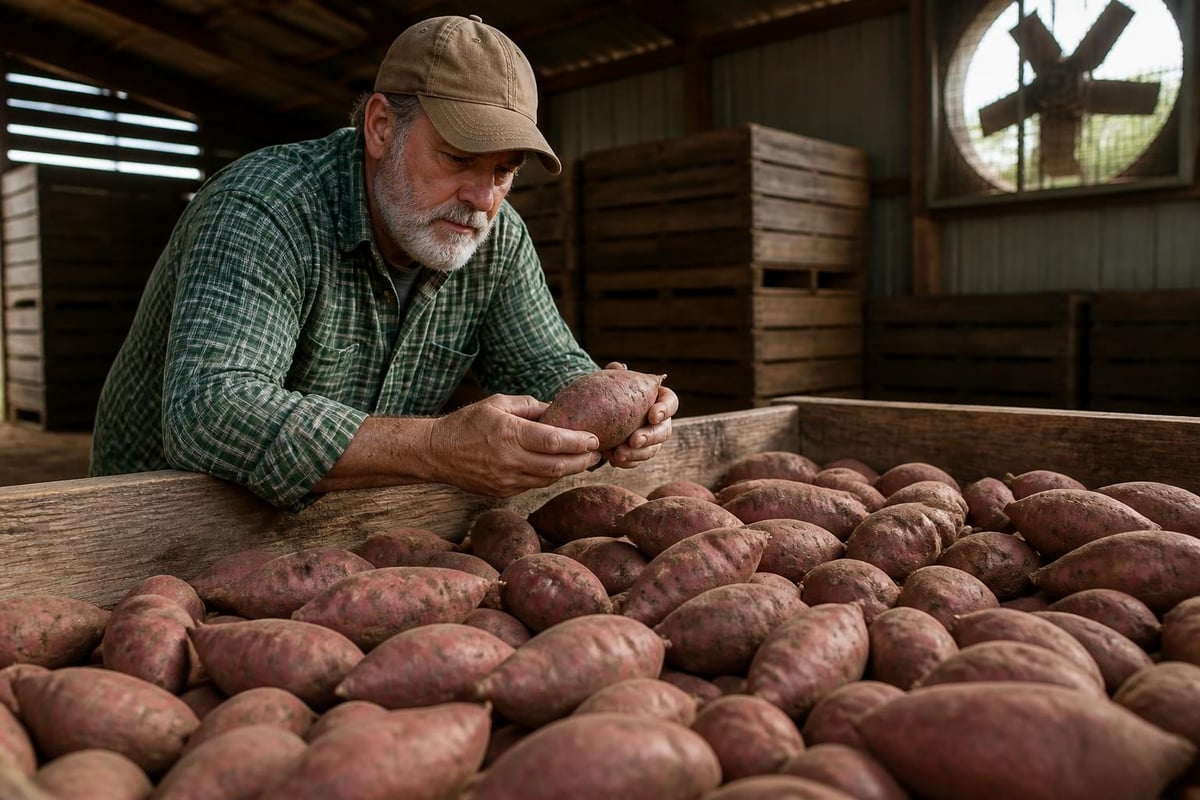
After curing, sweet potatoes require specific environmental conditions to maintain quality during the weeks or months between harvest and consumption:
| Storage Parameter | Optimal Range | Impact of Deviation |
|---|---|---|
| Temperature | 55-60°F (13-16°C) | Higher temps cause sprouting; lower temps cause chilling injury |
| Relative Humidity | 85-90% | Lower humidity increases shrinkage; higher promotes disease |
| Air Circulation | Gentle, continuous | Prevents moisture accumulation and hot spots |
| Storage Duration | 6-12 months | Quality gradually declines; monitor regularly |
The extended shelf life requirements for export markets demand strict adherence to these parameters throughout the supply chain. Temperature breaks during transportation or inadequate storage facilities at destination ports cause rapid quality deterioration that violates buyer specifications.
International Quality Framework and Codex Standards
While USDA standards dominate North American and many Asian markets, international sweet potatoes quality standards continue evolving through organizations like Codex Alimentarius. These frameworks aim to harmonize requirements across borders and facilitate smoother trade flows.
Codex Standards Development
The FAO Codex working groups actively develop group standards for roots and tubers, including sweet potatoes. These international discussions address:
- Minimum quality requirements applicable across member nations
- Sizing and classification systems that accommodate different varieties
- Packaging and labeling standards for consumer protection
- Contaminant limits and food safety parameters
Proposals for sweet potato flour standards demonstrate how quality frameworks extend beyond fresh products to processed categories. Exporters supplying ingredients for food manufacturing must understand these evolving standards as downstream quality requirements increasingly reference Codex guidelines.
Regional Variation in Quality Requirements
Different markets emphasize specific aspects of sweet potatoes quality standards based on consumer preferences and regulatory priorities:
European Union markets prioritize traceability, pesticide residue limits below maximum residue levels (MRLs), and organic certification where applicable. Documentation requirements exceed simple quality grades, demanding complete supply chain transparency.
Middle Eastern buyers often specify larger size profiles, particular skin colors (orange or purple varieties), and halal certification for processing facilities. Quality standards incorporate cultural preferences alongside technical specifications.
Asian importers may accept wider tolerance ranges for minor defects while maintaining strict requirements for internal quality, sweetness levels, and variety authentication. Markets like Japan and South Korea pay premium prices for specific purple sweet potato varieties that meet exacting standards.
Quality Control Implementation for Exporters
Establishing robust quality management systems enables exporters to consistently meet sweet potatoes quality standards across shipments. This requires investment in infrastructure, training, and verification protocols throughout the supply chain.
Farm-level Quality Programs
Quality begins at production, where agricultural practices directly influence the final product characteristics. Leading Indonesian exporters implement:
- Variety selection: Choosing cultivars with proven export performance and disease resistance
- Soil management: Maintaining optimal pH (5.5-6.5) and fertility levels that produce uniform roots
- Harvest timing: Digging at physiological maturity when starch content and size distribution meet market requirements
- Gentle handling: Using proper tools and techniques to minimize skin breaks and bruising
Exporters who work directly with partner farms can enforce quality protocols from planting through harvest. This vertical integration or close coordination proves essential for meeting premium market standards consistently.
Packing House Standards
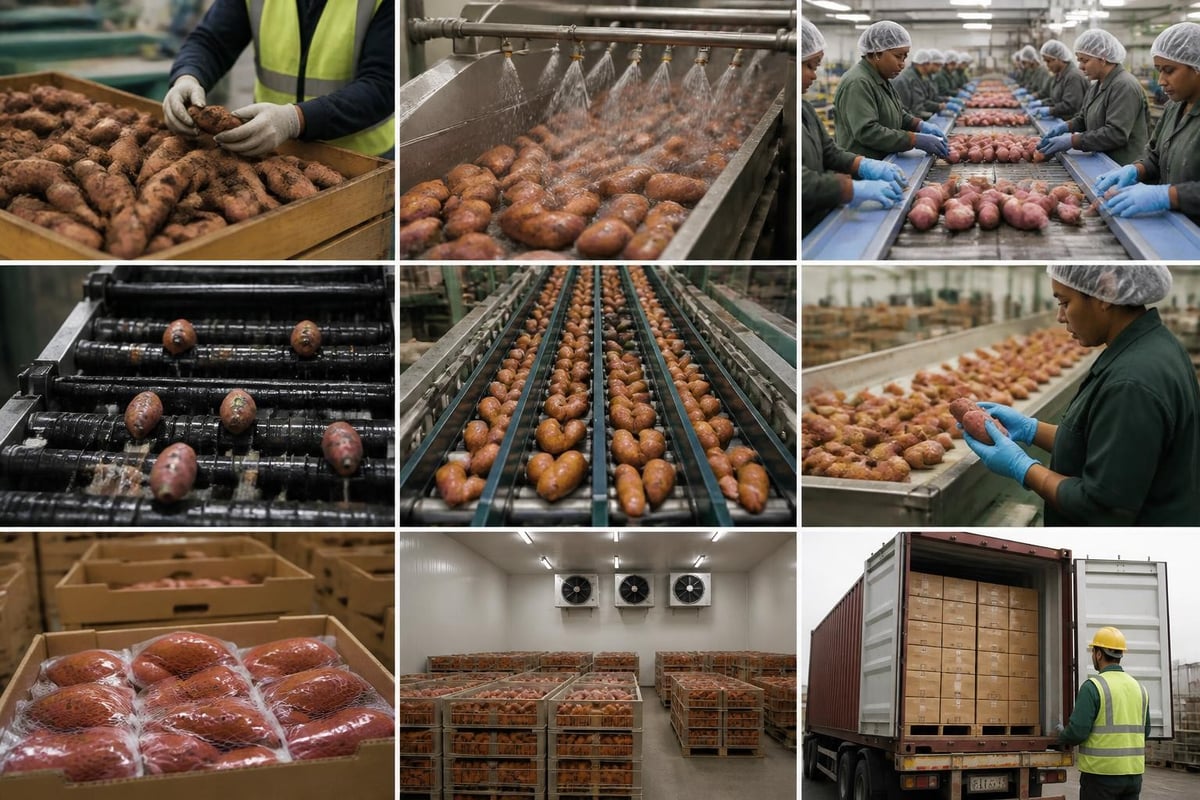
Modern packing facilities serve as the critical quality control checkpoint where sweet potatoes undergo grading, sizing, and packaging according to buyer specifications:
- Reception inspection: Evaluate incoming loads for field heat, visible defects, and variety conformity
- Washing and sanitizing: Remove soil and reduce microbial load using food-grade sanitizers
- Grading line sorting: Trained personnel remove defective roots based on quality standards
- Sizing equipment: Mechanical or electronic sizers separate roots into specified diameter ranges
- Quality verification: Supervisory inspection confirms grade compliance before packing
- Packaging: Place graded roots in approved containers with proper ventilation and cushioning
- Labeling: Apply all required information including variety, grade, size, origin, and traceability codes
Temperature management during packing prevents condensation that promotes decay. Professional export packaging systems use refrigerated holding areas and rapid loading to maintain the cold chain from packing house to refrigerated container.
Advanced Quality Assessment Technologies
Modern sweet potatoes quality standards increasingly incorporate objective measurement technologies that reduce subjectivity and improve consistency in quality determination.
Non-destructive Testing Methods
Several technologies enable quality assessment without cutting or damaging the product:
- Near-infrared spectroscopy (NIR): Measures internal composition including moisture, sugar, and starch content through light reflection patterns
- Acoustic firmness testing: Evaluates internal integrity by analyzing sound wave transmission through the root
- Computer vision systems: Automated cameras with image analysis software identify and classify surface defects with consistent criteria
- X-ray imaging: Detects internal voids, hollow heart, or foreign material without destructive sampling
While these technologies require significant capital investment, large-volume exporters achieve rapid return through reduced labor costs and improved consistency. Research continues advancing practical applications, with preservation quality studies demonstrating how objective measurements predict shelf life and commercial performance.
Sampling and Statistical Quality Control
Professional quality programs use statistical methods to make reliable inferences about entire shipments from representative samples. Sweet potatoes quality standards typically reference sampling protocols such as:
Random sampling: Select samples from different locations within each lot to capture variation Minimum sample sizes: Inspect at least 50 pounds or 10% of smaller lots Acceptance quality limits (AQL): Define maximum acceptable defect percentages that still permit shipment
Statistical process control charts track quality trends across multiple shipments, enabling exporters to identify declining performance before buyer complaints arise. This proactive approach maintains compliance with sweet potatoes quality standards while minimizing rejection risks.
Food Safety Integration with Quality Standards
Contemporary sweet potatoes quality standards extend beyond appearance and storage characteristics to encompass comprehensive food safety requirements that protect consumer health and ensure regulatory compliance.
Microbial Quality Parameters
Fresh sweet potatoes typically maintain low microbial loads when properly handled, but contamination risks require attention:
- Pathogen testing: Verification that products remain free from Salmonella, E. coli O157:H7, and Listeria monocytogenes
- Indicator organisms: Monitoring for total coliforms and aerobic plate counts that suggest sanitation issues
- Wash water quality: Regular testing ensures cleaning systems don't introduce contamination
Buyers increasingly request third-party laboratory certificates confirming microbial compliance. Export programs incorporate regular testing schedules that verify wash water sanitizer levels, environmental monitoring in packing facilities, and finished product validation.
Chemical Residue Compliance
Pesticide residues represent a significant concern for international buyers who must comply with increasingly stringent maximum residue limits. Sweet potatoes quality standards now integrate:
Good Agricultural Practices (GAP) certification: Demonstrates proper pesticide application, pre-harvest intervals, and record-keeping Residue testing programs: Periodic laboratory analysis for pesticide panels relevant to production region Traceability systems: Ability to identify specific fields and application histories if residue questions arise
Indonesian exporters serving European, Japanese, or North American markets implement comprehensive residue monitoring because buyer specifications often require compliance with the most restrictive global MRLs, regardless of destination country requirements.
Variety-specific Quality Considerations
Different sweet potato varieties exhibit unique characteristics that influence how sweet potatoes quality standards apply in practice. Exporters must understand these distinctions when sourcing for specific market segments.
Orange-fleshed Varieties
Standard Beauregard, Covington, and similar orange varieties dominate global trade due to their:
- High beta-carotene content: Nutritional appeal and vibrant color when cooked
- Moderate sugar levels: Balanced sweetness suitable for diverse culinary applications
- Good storage stability: Reliable performance during extended supply chains
Quality standards for orange varieties emphasize uniform color development, absence of white flesh streaks, and adequate moisture content that produces creamy texture when baked. Fresh sweet potato exports in this category serve mainstream retail and food service customers worldwide.
Purple and Specialty Varieties
Purple-fleshed sweet potatoes command premium prices but require specialized quality management:
- Anthocyanin stability: Color intensity must remain vibrant, not fade or brown
- Uniformity verification: Purple varieties show more variation; selection demands extra care
- Niche market specifications: Buyers often request specific cultivars like Murasaki or Stokes Purple
These specialty products serve health-conscious consumers and premium restaurant segments. Quality standards emphasize authenticity verification and superior internal appearance since buyers pay substantial premiums for genuine purple varieties.
Documentation and Certification Requirements
Comprehensive documentation supports sweet potatoes quality standards by providing evidence of compliance, enabling traceability, and facilitating regulatory clearance at international borders.
Essential Export Documentation
Professional shipments include standardized quality certificates and supporting documents:
- Phytosanitary certificate: Government-issued document certifying freedom from quarantine pests
- Commercial invoice: Details quantity, value, quality grade, and specifications
- Packing list: Itemizes container contents with product codes and lot numbers
- Certificate of origin: Verifies Indonesian production for tariff and trade agreement purposes
- Quality inspection certificate: Third-party or exporter certification of grade compliance
Advanced buyers request additional documentation including Good Agricultural Practice certificates, organic certifications where applicable, and laboratory test results for residues or microbiological quality. Maintaining complete documentation packages prevents customs delays and demonstrates professionalism that builds buyer confidence.
Traceability System Requirements
Modern food safety regulations worldwide mandate traceability-the ability to track products from retail back through distribution, export, packing, and farm origin. Effective traceability systems for sweet potatoes quality standards incorporate:
- Unique lot identification: Assign codes linking packed products to specific harvest dates and field locations
- Record maintenance: Retain production records, inspection data, and transaction documents for minimum 2-3 years
- One-up/one-back traceability: Document immediate suppliers and immediate customers for each transaction
- Mock recall capability: Demonstrate ability to identify and locate specific lots within 4 hours
Indonesian sweet potato exporters serving major retail chains face mandatory traceability audits. Systems combining barcode scanning, database management, and document control enable compliance while supporting quality investigations when issues arise.
Buyer Verification and Audit Processes
Sophisticated international buyers conduct verification activities to confirm that suppliers maintain advertised sweet potatoes quality standards consistently across shipments and over time.
Pre-shipment Inspection Protocols
Many importers employ third-party inspection companies or their own quality personnel to verify shipment conformity before container loading:
- Sample selection: Random sampling from packed boxes following statistical protocols
- Physical examination: Count and measure defects against tolerance specifications
- Documentation review: Verify certificates, test reports, and traceability records
- Temperature verification: Confirm proper pulp temperature before loading
- Container inspection: Assess cleanliness and refrigeration function
Failed pre-shipment inspections trigger corrective actions, delayed shipments, or cancellations that damage supplier relationships and financial performance. Exporters minimize these risks through robust internal quality systems that catch problems before external inspectors arrive.
Supplier Audit Programs
Strategic buyers conducting regular purchases implement periodic supplier audits examining systems, facilities, and capabilities:
Document review: Evaluate written procedures, training records, and quality data trends Facility inspection: Assess cleanliness, equipment maintenance, and pest control programs Process observation: Watch actual operations to verify compliance with documented procedures Interview personnel: Confirm understanding of quality standards and proper execution
Successful audits qualify suppliers for approved vendor lists and larger purchase volumes. Bulk sweet potato suppliers serving institutional buyers or processing companies often undergo annual audits as a condition of continued business relationships.
Mastering sweet potatoes quality standards requires comprehensive attention to grading criteria, post-harvest handling, food safety protocols, and documentation systems that meet evolving international requirements. Success in competitive export markets depends on consistent delivery of specified quality backed by transparent verification and professional supplier relationships. PT Cakra Baja Niaga partners with quality-focused farms across West Java to deliver premium Indonesian sweet potatoes that meet stringent international standards, supported by full traceability, professional packing, and reliable logistics for importers, distributors, and retailers worldwide seeking dependable Asian sourcing.
Looking to source premium Indonesian sweet potatoes?
PT Cakra Baja Niaga supplies export-grade Cilembu, Purple, and Murasaki varieties to buyers worldwide.
Continue reading
Wholesale Sweet Potatoes Indonesia: B2B Export Guide 2026
Source premium wholesale sweet potatoes Indonesia for import. Quality standards, export logistics, varieties, pricing & supplier partnerships.
Read article
Sweet Potatoes Supplier Indonesia: Quality & Export Guide
Find reliable sweet potatoes supplier Indonesia offering premium export quality. Learn about sourcing, grading, logistics, and partnerships.
Read article
Sweet Potatoes Grading Guide for International Buyers
Comprehensive sweet potatoes grading guide for exporters and importers. Learn USDA standards, size classification, defect tolerance, and quality control.
Read article